
Rokinon Cine DS DS85M-C 85mm T1.5
4.5Editor score
T1.5 to T22 Range
Unified Gear Positions
Full Frame Coverage
This guide compares the top 10 Cine Lens options for filmmakers, covering budget primes, versatile kits, and high-performance zooms to help you choose.
Choosing the right Cine Lens is crucial for capturing professional-quality footage that stands out in a crowded digital landscape. Whether you are shooting independent films, documentaries, or high-end commercial work, the lens you select defines the look and feel of your final product. A good Cine Lens offers precise manual control, consistent optical performance, and a build quality that withstands the rigors of production.
To compile this list, we evaluated a wide range of cine lenses based on optical quality, build construction, mount compatibility, and value for money. We looked at features like aperture range, focus throw, color consistency across sets, and how well the lenses perform in various lighting conditions. Our goal is to provide you with a comprehensive overview of the best options available right now.
Each pick in this guide highlights specific strengths, from affordable primes for beginners to high-end zooms for professional crews. You will find detailed breakdowns of specifications, pros and cons, and practical advice on how to integrate these lenses into your workflow. Please note that prices and availability can change frequently, so always verify current details before making a purchase decision.
4.5Editor score
5.0Editor score

5.0Editor score
The following table provides a side-by-side comparison of all ten selected Cine Lens models, highlighting their key specifications, ratings, and unique features to help you make an informed decision quickly.


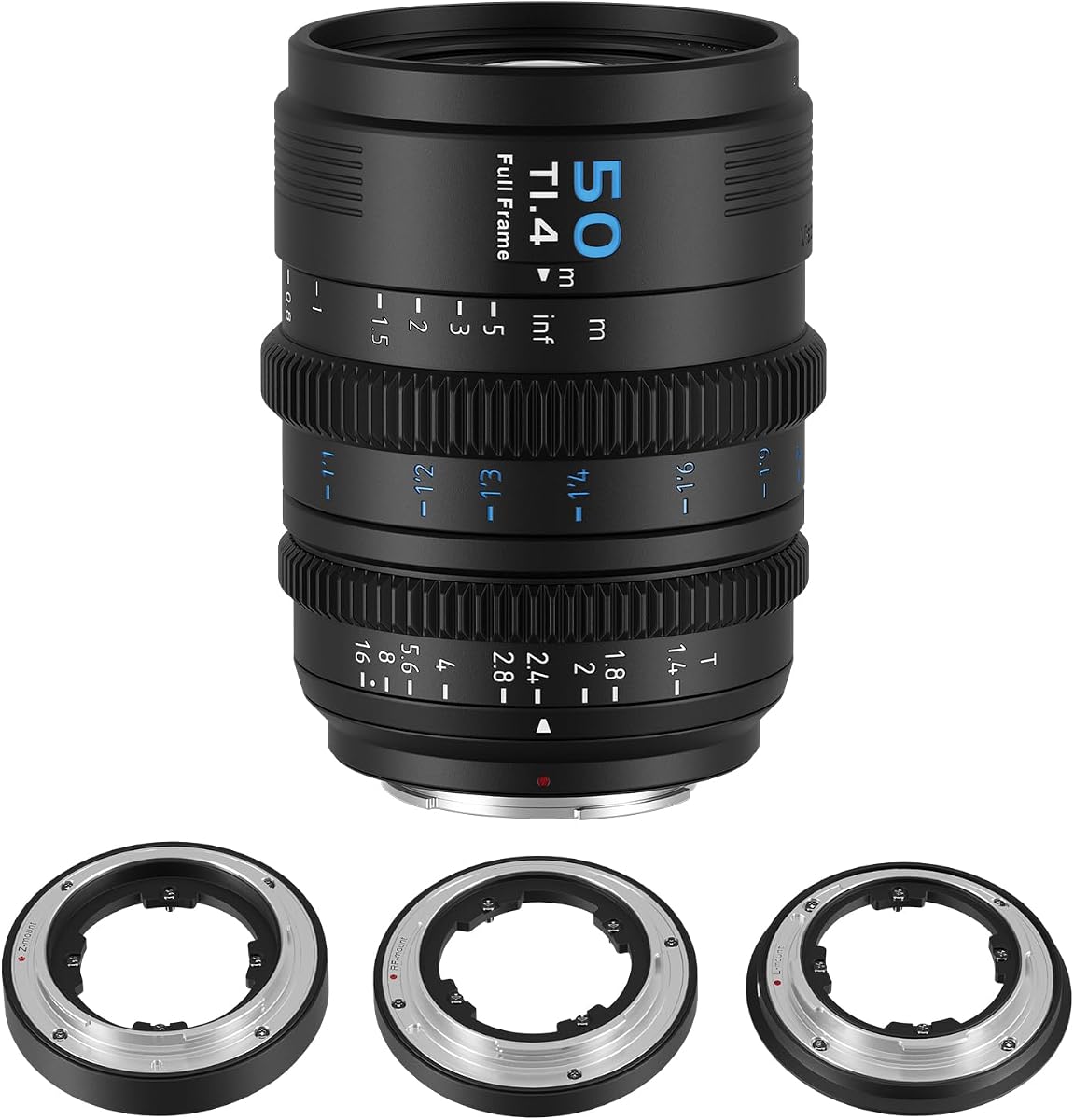


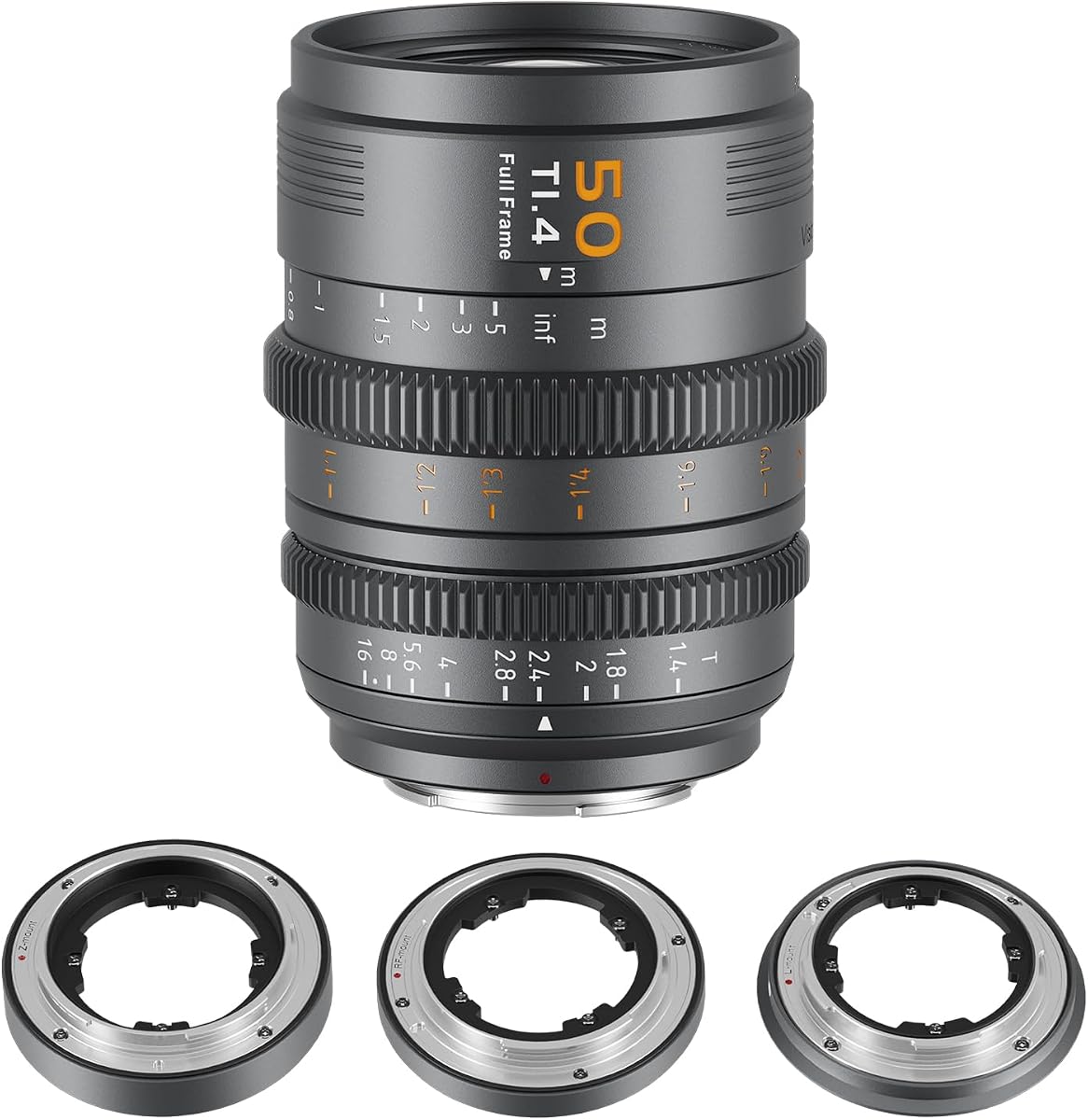
The SIRUI VP-1 Vision Prime 1 50mm T1.4 stands out as the top choice for filmmakers seeking high performance without compromising on versatility. With a perfect rating of 5.0, this lens delivers edge-to-edge sharpness and a creamy bokeh that enhances subject separation beautifully. Its standout feature is the interchangeable mount system, allowing seamless transitions between Sony, Canon, Nikon, and Panasonic cameras without swapping entire lenses.
We may earn a commission when you buy through this link, at no additional cost to you.
Engineered for 8K storytelling, this lens integrates aspherical elements and advanced glass to minimize distortions and chromatic aberrations. The T1.4 aperture allows for low-light shooting without pushing ISO too high, maintaining clean and detailed footage. The consistent design across the VP-1 set means you can swap focal lengths quickly while maintaining matching color tones and gear positions for professional workflows.
While the lens offers exceptional optical quality, it is strictly manual focus, which requires practice for smooth pulling. Additionally, the interchangeable mount system, while versatile, means users must ensure they have the correct mount installed for their current camera setup before heading to a shoot. These trade-offs are generally acceptable given the high performance and flexibility offered.
This lens is ideal for hybrid shooters who use multiple camera systems or need to upgrade their bodies frequently. Whether you are shooting documentaries, travel videos, or narrative films, the VP-1 provides the reliability and image quality needed for professional results. We highly recommend this lens for anyone looking to invest in a future-proof prime lens.
The interchangeable mount system allows you to adapt the lens to different camera bodies quickly, saving money on buying separate lenses for each system.
Advanced glass elements ensure that every pixel is resolved sharply, making this lens suitable for high-resolution capture required by modern cinema cameras.
We may earn a commission when you buy through this link, at no additional cost to you.
The Rokinon Cine DS DS85M-C 85mm T1.5 offers an exceptional entry point into the world of cinema lenses with a rating of 4.5. It provides full frame coverage and a bright aperture range from T1.5 to T22, making it versatile for various lighting conditions. The new DS line ensures color matching and unified gear positions with other Rokinon lenses, simplifying the setup for multi-lens shoots.
We may earn a commission when you buy through this link, at no additional cost to you.
This lens features an 8-blade iris that creates attractive bokeh, helping to isolate subjects effectively. The angle of view is suitable for portraits and detailed shots, with a minimum focusing distance of 3.6 feet. The build quality is robust, ensuring durability during production, while the manual focus ring provides precise control for intentional framing and depth of field manipulation.
Users might find the weight slightly higher than some ultra-lightweight alternatives, which could impact gimbal balancing. However, for the price, the optical quality and build are hard to beat. The manual focus requirement means it is not ideal for run-and-gun situations where autofocus is critical, but for controlled shoots, it performs admirably.
Ideal for indie filmmakers and content creators on a budget, this lens delivers professional results without breaking the bank. It pairs well with other Rokinon Cine DS lenses to build a consistent kit. We recommend this lens for those looking to upgrade from standard lenses to cinema optics affordably.
The DS line ensures that all lenses have matching gear positions, making lens swapping faster and reducing setup time during production.
Despite the low cost, the optical construction and aperture range provide a cinematic look that rivals much more expensive options.
We may earn a commission when you buy through this link, at no additional cost to you.
The DZOFILM Pictor 50-125mm T2.8 represents the pinnacle of zoom performance in the Cine Lens category, earning a perfect 5.0 rating. Its parfocal design ensures that focus remains sharp across the entire zoom range, a critical feature for professional productions. The minimal focus breathing adds to its cinematic appeal, allowing for smooth zooms without distracting shifts in framing.
We may earn a commission when you buy through this link, at no additional cost to you.
Equipped with a 16-slat iris, this lens produces exceptionally smooth bokeh and aperture transitions. The aperture range from T2.8 to T25 offers flexibility in controlling exposure and depth of field. Designed to be compatible with standard Cine lens accessories, it fits seamlessly into established workflows, making it a reliable choice for high-end crews needing versatile focal lengths.
While the price is higher than prime lenses, the versatility of a parfocal zoom justifies the investment for many productions. It is heavier than primes, which might require additional support gear on smaller cameras. However, the optical stability and build quality provide a level of professionalism that is essential for broadcast or commercial work.
This lens is perfect for professional crews shooting events, documentaries, or narrative content where changing lenses frequently is not practical. The ability to zoom without losing focus saves time and enhances creativity during shooting. We recommend this lens for professionals who need a reliable and versatile zoom solution.
Unlike typical video lenses, this zoom keeps focus locked while changing focal lengths, ensuring consistent sharpness throughout the shot.
Standard accessory compatibility means you can use existing matte boxes, follow focus units, and cages without needing special adapters.
We may earn a commission when you buy through this link, at no additional cost to you.
The ROKINON CINE DS T1.5 Cinema Lens Kit provides a comprehensive solution for filmmakers needing a full range of focal lengths. With a 4.9 rating, this kit includes 24mm, 35mm, 50mm, and 85mm lenses, all matching in color and gear position. This consistency simplifies production workflows, allowing seamless transitions between shots without adjusting settings or worrying about color shifts.
We may earn a commission when you buy through this link, at no additional cost to you.
Each lens in the kit features a T1.5 to T22 aperture range with multi-layer coating to reduce flare. The dual side focus and T-stop scales aid in precise manual control, while the de-clicked aperture ring allows for smooth exposure changes during video recording. The Canon EF mount ensures compatibility with a wide range of popular cameras used in cinema production.
Managing four lenses requires organization and space, which might be a challenge for solo shooters or travel-focused productions. Additionally, the upfront investment is significant compared to buying a single prime, but the value of having a matched set is high. The manual nature of these lenses means they are best suited for deliberate and controlled shooting styles.
This kit is an excellent choice for studios and independent teams looking to build a professional lens collection from scratch. It covers standard focal lengths needed for most narrative and documentary work. We recommend this kit for anyone prioritizing consistency and versatility in their gear setup.
All lenses share the same physical design and gear placement, making it easy to swap lenses quickly during a shoot without re-rigging.
From wide 24mm to telephoto 85mm, this kit covers almost every scenario you might encounter, reducing the need to buy individual lenses later.
We may earn a commission when you buy through this link, at no additional cost to you.
The SIRUI Night Walker 35mm S35 is designed specifically for challenging lighting conditions, boasting a massive T1.2 aperture. With a rating of 4.4, this lens allows you to shoot in low light without excessive ISO noise, maintaining pure and clean night scenes. The large aperture also creates a shallow depth of field for pleasing bokeh and clear subject separation.
We may earn a commission when you buy through this link, at no additional cost to you.
Built with a strong aluminum cine housing, this lens is sturdy yet portable, weighing only around 500g. This makes it perfect for gimbal or handheld filmmaking where weight is a concern. The optical performance is outstanding, achieving sharpness even at maximum aperture with well-controlled aberrations and minimal focus breathing for smooth transitions.
Since it covers S35, it is optimized for APS-C sensors, which limits its utility for full-frame cameras without vignetting. The manual focus requirement also demands skill to pull focus accurately in dim environments where contrast is low. However, for its target use case of low-light storytelling, it offers an unbeatable combination of speed and portability.
This lens is ideal for documentary shooters and indie filmmakers working in unpredictable lighting environments. Whether capturing urban nightscapes or intimate indoor scenes, the T1.2 aperture ensures you get the shot. We recommend this lens for those who prioritize light gathering and mobility in their cinema lens choices.
The T1.2 aperture lets in significantly more light than standard lenses, enabling cleaner footage in dark settings without artificial lighting.
At just 500g, it balances easily on gimbals and handheld rigs, reducing fatigue during long shooting days without sacrificing build quality.
We may earn a commission when you buy through this link, at no additional cost to you.
The SIRUI Night Walker 24mm RF brings a wide-angle perspective with the speed of a T1.2 aperture. Rated at 4.3, it is excellent for dynamic cinematic storytelling, balancing a broad field of view with natural-looking composition. The 0.3m close focus allows for immersive compositions and detailed environmental shots that capture visual impact in tight spaces.
We may earn a commission when you buy through this link, at no additional cost to you.
Designed with advanced optical technology, this lens delivers high sharpness with controlled aberrations. The 270° focus rotation enables smooth and precise manual focusing, which is crucial for repeatable shots. The RF Mount compatibility ensures it works seamlessly with cameras like the RED Komodo and Canon EOS R7, making it a versatile option for mirrorless cinema cameras.
The fixed focal length limits flexibility compared to zooms, requiring camera movement to change framing. Additionally, it is designed for S35 coverage, so users with full-frame bodies will experience a crop effect. However, for those shooting on compatible APS-C systems, the optical performance and close focus capabilities make it a powerful tool for creative shots.
This lens is perfect for creators who need a wide-angle prime for landscapes, street scenes, or interior documentary work. The combination of speed and close focus allows for creative framing that other lenses might miss. We recommend this lens for users of RF mount systems looking for a high-quality wide prime.
With a minimum focus distance of 0.3m, you can get very close to subjects for intimate details while maintaining a wide perspective.
The long throw provides fine control over focus pulling, allowing for smooth transitions that match professional production standards.
We may earn a commission when you buy through this link, at no additional cost to you.
The SIRUI VP-1 Vision Prime 1 50mm is a versatile prime lens optimized for professional travel and documentary filmmaking. With a rating of 4.0, it features a durable aluminum alloy body and weighs only around 600g, making it effortless to stabilize. Its compact design allows for easy stabilization, ideal for gimbal and handheld use on the go.
We may earn a commission when you buy through this link, at no additional cost to you.
Engineered for 8K storytelling, this lens integrates advanced glass elements to deliver edge-to-edge sharpness. The T1.4 aperture creates beautiful subject separation and soft bokeh. Consistency across the VP-1 set allows for easy swaps between lenses with identical gear positions and color tones, streamlining production workflows significantly.
The lack of electronic controls means all adjustments are manual, which might slow down quick shooting scenarios. Additionally, the interchangeable mount requires the user to handle physical mount changes. However, for those who value optical quality and compactness, these trade-offs are minimal compared to the benefits of portability.
This lens is ideal for travelers and documentarians who need to carry minimal gear without compromising on image quality. The 50mm focal length is a classic choice for natural perspective shots. We recommend this lens for anyone prioritizing weight and versatility in their prime lens selection.
At just 600g, this lens is light enough to carry all day without fatigue, perfect for shooting documentaries in remote locations.
The optical design ensures that images remain sharp even on high-resolution sensors, future-proofing your investment for 8K projects.
We may earn a commission when you buy through this link, at no additional cost to you.
The SIRUI Night Walker 24mm M4/3 is a top-rated option for Micro Four Thirds users, achieving a high 4.9 rating. With a T1.2 aperture, it captures more light in challenging conditions and creates shallow depth of field for expressive cinematic footage. This lens is equivalent to a 34mm full frame, suitable for landscape and street filming.
We may earn a commission when you buy through this link, at no additional cost to you.
It features a premium aluminum housing that is sturdy yet portable, weighing only around 500g. The optical performance is outstanding, with perfect sharpness and well-controlled aberrations. The 12-blade iris ensures pleasing bokeh quality, giving footage extra expressiveness and aesthetics even at low-light settings.
Since it is designed for M4/3, it is not directly compatible with full-frame or APS-C cameras without an adapter. The manual focus requirement also means it relies on the user's skill to pull focus smoothly. However, for owners of BMPCC or GH series cameras, it offers a perfect balance of speed and portability.
This lens is ideal for content creators and filmmakers using M4/3 mirrorless systems for video production. The wide angle and fast aperture make it versatile for various storytelling needs. We recommend this lens for M4/3 shooters looking to upgrade to professional cine optics.
Specifically designed to match the sensor size and mount of popular cameras like the GH series, ensuring perfect coverage and image quality.
With a near-perfect user rating, this lens has proven itself reliable and high-performing for a wide range of filming scenarios.
We may earn a commission when you buy through this link, at no additional cost to you.
The Rokinon DSX85 DSX 85mm T1.5 offers a high-speed telephoto option for Canon EF users, rated at 4.7. It features an aperture range of T1.5 to T34, providing flexibility for creative control. The optical design consists of 9 elements in 7 groups, contributing to sharp and clear image reproduction across the frame.
We may earn a commission when you buy through this link, at no additional cost to you.
With ultra multi-coated glass and 9 aperture blades, this lens delivers excellent contrast and beautiful bokeh. The angle of view is 28.4 degrees on full frame, ideal for portraits and detailed shots. It uses a 72mm filter size and includes optical design and compatibility features for specific Canon EF setups.
Users may notice that the focus throw is shorter compared to some dedicated cinema primes, which can make manual focusing slightly more challenging. The lens is manual focus only, which is standard for this category but requires practice. Despite this, the optical quality and speed make it a compelling option for narrative and portrait work.
This lens is perfect for filmmakers who need a fast telephoto prime without breaking the budget. It is well-suited for controlled environments where precise manual control is possible. We recommend this lens for Canon EF users looking to expand their prime lens collection.
The T1.5 aperture allows for shooting in lower light than standard lenses, giving you more flexibility on set without extra lighting.
Multi-coated glass reduces flare and ghosting, ensuring clean and sharp images even when shooting against strong light sources.
We may earn a commission when you buy through this link, at no additional cost to you.
The Rokinon 35mm T1.5 Cine DS is a standard prime lens that delivers solid performance for Canon EF shooters. With a rating of 4.6, it features a T1.5 to T22 aperture range and full frame coverage. As part of the DS line, it is color matched and has unified gear and aperture positions with other Rokinon Cine DS lenses.
We may earn a commission when you buy through this link, at no additional cost to you.
The angle of view is 63.1 degrees on full frame, making it versatile for many shooting scenarios. The minimum focusing distance of 12 inches allows for close-up details, and it uses a 77mm filter size. The optical construction ensures consistent quality across shots, which is vital for matching footage in post-production.
Users might find the manual focus ring requires some adjustment to get used to smooth pulling. Additionally, the lens is not autofocus, which can be limiting for run-and-gun shoots. However, for controlled filmmaking, the build and optical consistency are strong assets for a budget-friendly kit.
This lens is ideal for filmmakers seeking a reliable standard prime that integrates well into a larger Rokinon set. The 35mm focal length is a classic choice for storytelling. We recommend this lens for users building a cohesive cinema lens system economically.
Being part of the DS line ensures it matches seamlessly with other lenses, simplifying color grading and gear setups for larger kits.
The 35mm focal length provides a natural perspective that is comfortable to watch, making it a staple for narrative and documentary work.
We may earn a commission when you buy through this link, at no additional cost to you.
Selecting the right Cine Lens requires considering several critical factors that impact your footage quality and workflow efficiency.
Ensure the lens mount matches your camera body exactly. Some lenses like the SIRUI VP-1 offer interchangeable mounts which can save money if you switch camera systems later.
Always verify the sensor coverage to avoid vignetting or cropping issues.
Look for a T-stop value as low as possible, such as T1.2 or T1.4, to ensure better low-light performance and more control over depth of field.
Faster apertures are generally preferred for cinematic looks with blurred backgrounds.
Decide whether you need full frame coverage or if an APS-C/S35 lens fits your needs. Full frame offers wider angles and shallower depth of field.
Crop lenses are often lighter and cheaper but have a narrower field of view on smaller sensors.
Check if the lens has an aluminum housing or plastic components for durability. Lightweight lenses around 500g are better for gimbals and handheld work.
Heavier lenses provide stability but may require additional support systems.
Standardized gear positions make lens swapping easier. Long focus throws allow for smoother manual focusing during video recording.
Verify the focus ring rotation to ensure it matches your follow focus setup.
Look for lenses with aspherical elements and low dispersion glass to minimize aberrations and distortions at high resolutions.
Sharpness across the entire frame is crucial for modern high-resolution cinema cameras.
Compare the cost against the features offered. Kits can offer better value than buying individual lenses separately.
Balance your budget with your specific production needs to find the best return on investment.
When using a Cine Lens, always check the mount alignment carefully to avoid damaging the contacts or sensor. Secure the lens properly on the camera body and use a follow focus system if available to assist with smooth pulling.
Store your lenses in a dry and cool environment to prevent moisture buildup that can damage optical elements. Use lens caps on both ends when not in use to protect against scratches and dust accumulation.
Clean the lens surface gently with a microfiber cloth and appropriate cleaning fluid if needed. Avoid touching the glass directly with fingers to prevent oils from smearing the coatings.
T-stop measures the actual amount of light transmitted through the lens, while F-stop is a theoretical value. T-stops are more accurate for video exposure and are preferred in Cine Lenses.
Yes, you can use them on autofocus cameras, but you will need to switch to manual focus mode as most Cine Lenses are manual only.
Cine Lenses are generally heavier due to their metal build and mechanical features like long focus throws and gear rings designed for video.
While not mandatory, a follow focus is highly recommended to achieve smooth and repeatable focus pulls during video production.
Parfocal lenses maintain focus when zooming, ensuring your shot stays sharp while changing focal lengths, which is vital for professional video.
Use a blower brush to remove dust first, then gently wipe the glass with a microfiber cloth designed for optics. Avoid harsh chemicals.
The Cine Lens market offers diverse options ranging from budget primes to professional zooms. Our top picks include the SIRUI VP-1 Vision Prime for versatility and the DZOFILM Pictor for premium performance.
Prioritize optical quality and build durability that match your specific shooting style. Whether you shoot on a gimbal or in a studio, there is a lens designed for your needs.
Prices and availability can fluctuate, so always check the latest details before purchasing. Investing in the right lens will significantly enhance your storytelling capabilities.