
Portable UHF VHF Frequency Counter
4.1Editor score
Compact handheld design
VHF and UHF coverage
Simple one button operation
Explore our top 10 frequency counter for ham radio picks for 2026. Compare features accuracy and ranges to choose the perfect tool for your station today.
Finding the right frequency counter for ham radio is essential for maintaining accurate transmission levels. These devices help operators verify frequencies and ensure compliance with regulations while optimizing signal performance across various bands.
Our team evaluated ten top-rated models based on accuracy portability and ease of use. We analyzed technical specifications user feedback and real-world performance to compile this definitive list for enthusiasts and professionals alike.
Each pick highlights key strengths and ideal use cases to help you decide quickly. Prices and availability change often so please check current listings before purchasing to ensure you get the best deal available now.
4.1Editor score

4.3Editor score

5.0Editor score
This side-by-side comparison highlights the key specifications and capabilities of each model. Use this table to quickly identify which device meets your specific frequency range and accuracy requirements for your ham radio operations.


The Mcbazel Surecom SF401 Plus stands out as a reliable tool for verifying walkie-talkie frequencies. With a rating of 4.1 stars it offers solid performance for hobbyists needing quick frequency checks.
We may earn a commission when you buy through this link, at no additional cost to you.
This device measures continuous carrier signals from 27MHz up to 3000MHz making it versatile for many radio types. The TCXO ensures stability across temperatures while the signal strength indicator adds extra utility for field use.
Its main limitation is the focus on continuous wave signals rather than wide bandwidth measurements. However for standard two-way radio maintenance the accuracy and range provided are more than adequate for most users.
Anyone needing a dependable handheld frequency counter should consider this model. It balances cost functionality and portability well making it a top choice for ham radio operators maintaining their gear.
The TCXO technology maintains accuracy between -45C and 65C ensuring reliable readings in various environments.
Built-in CTCSS and DCS decoders help identify tone squelch settings essential for modern radio communication.
We may earn a commission when you buy through this link, at no additional cost to you.
This variant of the SF401 Plus holds a slightly higher rating of 4.3 stars reflecting strong user approval. It continues to deliver precise frequency measurements for continuous wave signals across a broad spectrum.
We may earn a commission when you buy through this link, at no additional cost to you.
The package includes specific antennas for VHF and UHF bands which simplifies setup right out of the box. Its compact size and simple four-button interface make it easy to carry to field days or repair shops.
While it lacks advanced spectrum analysis capabilities the dedicated frequency counting is highly effective for its intended purpose. The signal strength indicator helps users gauge transmission power without needing extra equipment.
If you prioritize portability and ease of use this model is an excellent candidate. It serves ham radio enthusiasts who need to verify frequencies quickly without complex setup procedures or heavy gear.
Included antennas for 144/430MHz and 400-470MHz bands ensure immediate usability for common ham radio frequencies.
Operating within -45C to 65C with ±4ppm accuracy ensures consistent performance even in extreme outdoor conditions.
We may earn a commission when you buy through this link, at no additional cost to you.
The FC-2800M boasts a 4.4 rating making it one of the highest-rated options in this lineup. It is specifically tailored for CB amateur Ham Radio and DMR applications ensuring relevance for dedicated users.
We may earn a commission when you buy through this link, at no additional cost to you.
You can choose between different frequency ranges to optimize measurement speed and accuracy for your specific band. The built-in DCS CTCSS Decoder and low PPM crystal time base contribute to highly reliable frequency identification results.
Its user-friendly four-button control simplifies operation even for those less familiar with digital counters. The compact design ensures it fits easily into any field kit for on-the-go verification tasks.
Considering the two-year warranty this model offers strong value and peace of mind. It is particularly recommended for operators who need consistent accuracy across multiple bands without investing in expensive lab equipment.
Select between 2MHz-200MHz or 27MHz-2800MHz to match your specific testing needs and improve measurement precision.
Designed for durability with high accuracy crystal time base ensuring long-term reliability in daily operations.
We may earn a commission when you buy through this link, at no additional cost to you.
This TinySA Spectrum Analyzer offers more than simple frequency counting by providing visual spectrum analysis. With a 4.4 rating it appeals to users needing deeper insights into signal characteristics and interference patterns.
We may earn a commission when you buy through this link, at no additional cost to you.
The 2.8-inch touchscreen displays up to 290 scan points allowing detailed visualization of MF HF VHF and UHF signals. The built-in signal generator enables calibration and testing of antennas and other RF components effectively.
Connectivity options include USB control for remote adjustments which is useful for automated testing or integration with computers. Its rechargeable battery supports field operations making it a versatile tool for both stationary and mobile setups.
While it requires more technical knowledge than basic counters the added functionality is worth the investment. This tool is best for enthusiasts who want comprehensive RF testing capabilities within a portable form factor.
The color touchscreen provides clear visual representation of signal strength and frequency distribution for better analysis.
Self-test and calibration source features ensure accurate measurements without needing external reference equipment constantly.
We may earn a commission when you buy through this link, at no additional cost to you.
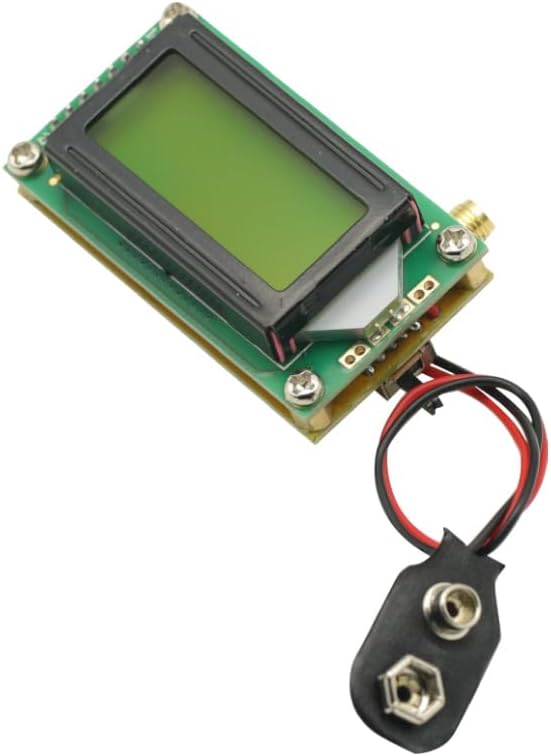
This handheld frequency counter is perfect for those focused strictly on VHF and UHF bands at a low cost. With a 4.1 rating it delivers reliable results for basic frequency verification tasks in local communication scenarios.
We may earn a commission when you buy through this link, at no additional cost to you.
The device measures within specific ranges of 136-174MHz for VHF and 400-470MHz for UHF ensuring precision where it matters most. Its mini size of 9×5.5x2cm makes it incredibly easy to carry in a pocket or small pouch.
Operation is simplified to a single button which reduces complexity for users who just need quick checks. The included 9V battery and antenna ensure you can start testing immediately upon arrival.
Budget-conscious operators looking for essential functionality will find this model highly satisfying. While it lacks broad frequency coverage its affordability and portability make it a practical choice for routine maintenance.
Measuring only 9×5.5x2cm it fits easily into any gear bag ensuring you always have a checker on hand.
Standard 9V battery power simplifies replacement and keeps the unit running long in the field.
We may earn a commission when you buy through this link, at no additional cost to you.
The Anysecu SF-103 serves as an upgraded version of previous models targeting maintenance personnel and wireless enthusiasts. It covers a broad range from 2MHz to 2.8GHz which suits most two-way radio frequency requirements effectively.
We may earn a commission when you buy through this link, at no additional cost to you.
Its design focuses on continuous wave signal counting with a signal strength indicator to aid troubleshooting. The simple button control ensures that even novice users can measure transmission frequencies without complex calibration steps.
The small size allows it to be carried anywhere supporting flexible use in diverse environments. This adaptability makes it a strong tool for technicians who service multiple devices across various locations frequently.
If you need a robust upgrade over entry-level units this model provides the necessary range and reliability. It balances cost and performance well making it suitable for both hobbyists and professional maintenance teams alike.
Covering 2MHz to 2.8GHz ensures compatibility with nearly all common two-way radio bands used today.
Integrated signal strength testing allows quick assessment of transmission power alongside frequency accuracy checks.
We may earn a commission when you buy through this link, at no additional cost to you.
Rated 4.3 stars this handheld counter is favored for its precision across common amateur radio bands. It offers extensive coverage from 2MHz to 2.8GHz making it suitable for diverse two-way radio testing needs daily.
We may earn a commission when you buy through this link, at no additional cost to you.
The TCXO ensures stable measurements even when ambient temperatures vary significantly. Additionally the GUI battery level warning prevents unexpected shutdowns during critical testing sessions in remote locations or repair workshops.
Users must avoid connecting directly to radio antenna outputs to prevent damage to the internal components. Despite this precaution the four-button control remains simple and effective for rapid frequency measurements in field conditions.
Operators needing high accuracy with clear status indicators will appreciate this model. It stands out for reliability and ease of use making it a solid choice for those focused on maintenance or signal verification tasks.
TCXO technology maintains ±4ppm accuracy between -45C and 65C ensuring consistent readings in varying weather.
Four-button design and battery indicators provide intuitive control without needing complex menu navigation steps.
We may earn a commission when you buy through this link, at no additional cost to you.
This module targets DIY enthusiasts willing to integrate a frequency counter into custom projects or kits. With a 3.1 rating it offers basic functionality within a 1 to 500MHz range for general RF testing applications.
We may earn a commission when you buy through this link, at no additional cost to you.
The PCB FR4 material provides durability for embedded setups while the 0802 LCD display gives clear digital readouts for measured signals. However precision is limited to the second digit of the decimal point for basic verification tasks.
Installation requires basic electronics knowledge as it is sold as a module rather than a standalone handheld unit. This makes it suitable for those building custom test gear rather than users needing out-of-the-box portability.
For hobbyists creating custom RF measurement tools this module provides a cost-effective foundation. It serves well for educational purposes or low-cost station setups where maximum accuracy is not a critical requirement.
Designed as a module for easy integration into custom RF test setups or educational electronics projects easily.
The digital 0802 LCD provides straightforward readouts though precision is adjusted to second decimal digit only.
We may earn a commission when you buy through this link, at no additional cost to you.
This board offers a new entry into frequency counting for ham radio enthusiasts with a 3.6 rating. It operates from 1MHz to 500MHz with a LCD display suitable for basic frequency verification in amateur projects.
We may earn a commission when you buy through this link, at no additional cost to you.
Low power consumption extends battery life in portable setups or custom devices. The new condition ensures fresh components though users must handle integration into a housing or project themselves effectively.
Assembly and setup demand some electronics experience since it lacks built-in controls or enclosures. It works best for those creating specific test gear rather than needing quick ready-to-use handheld testing devices today.
For budget builds requiring simple frequency checks this board provides a functional starting point. It supports educational projects where understanding internal circuitry adds value beyond just using a finished commercial device.
Low power consumption ensures the board can run efficiently on small battery sources for portable custom setups.
As a bare board it invites creative housing and integration solutions for personalized test equipment needs.
We may earn a commission when you buy through this link, at no additional cost to you.
The TinyGTC stands alone with a perfect 5.0 rating offering unmatched precision for serious calibration and testing. Its built-in GPS-disciplined oscillator ensures stable measurements that exceed standard laboratory requirements significantly.
We may earn a commission when you buy through this link, at no additional cost to you.
With 40ps time resolution it measures frequency phase and time intervals up to 5e-12 accuracy per second. The touchscreen and jog wheel provide intuitive operation while USB logging allows detailed analysis and long running tests easily.
This device supports battery power for field work which is rare for such high-end precision equipment. It fits easily in toolkits for on-site antenna tuning and radio gear calibration where accuracy is non-negotiable.
Professional operators and serious DIY electronics enthusiasts will find this the ultimate reference tool. Though it costs more its unmatched accuracy and portability justify the investment for critical calibration and high-performance RF work.
Integrated GPSDO locks to satellites for excellent long-term frequency stability ensuring reference grade precision.
Real-time charting histograms and FFT analysis provide deep insights directly on the touchscreen display.
We may earn a commission when you buy through this link, at no additional cost to you.
Selecting the right frequency counter requires balancing accuracy range and portability for your specific needs. Understanding these key factors helps you avoid overspending or compromising on essential features for your station.
Ensure the device covers the bands you operate most frequently such as VHF UHF or HF. Broader ranges like 27MHz to 3000MHz offer flexibility but may come at a higher cost or complexity.
Check if the counter supports both amateur and commercial bands to avoid limitations in the future.
Look for Temperature Compensated Crystal Oscillators (TCXO) which maintain accuracy across varying environmental temperatures. Higher accuracy measured in parts per million (ppm) is crucial for precise calibration tasks.
Models with GPS-disciplined oscillators provide the highest stability for professional or critical calibration work.
Handheld units allow you to carry the device to field days or remote repair sites easily. Compact designs often sacrifice some features but are essential for mobile operations.
Consider weight and battery life to ensure the device lasts during long field operations without interruptions.
Clear LCD or touchscreen displays make reading frequencies easier especially in low light conditions. Simple button layouts reduce learning curves for casual users or quick checks.
Advanced touch interfaces offer more data visualization but may require more power and careful handling.
Always verify the maximum input signal rating to prevent damaging the device when testing transmitters. High power signals should be attenuated or coupled through safe methods to protect internal circuitry.
Built-in attenuation or warning indicators add safety layers for direct connection scenarios.
Features like CTCSS/DCS decoders signal strength indicators or USB connectivity add significant value. These tools help diagnose broader issues beyond just frequency counting.
Choose models that include specific antennas or software compatibility to save on accessory costs later.
Balance your budget with the required features since prices vary widely from basic modules to professional tools. Longer warranties indicate manufacturer confidence and provide protection against defects.
Investing slightly more often brings better build quality and support which saves costs over time.
Start by connecting the correct antenna or probe based on the frequency range you intend to measure. Most handheld units have specific connectors for VHF or UHF bands to optimize signal reception accuracy.
Power on the device and allow it to warm up briefly for optimal stability especially if it uses a TCXO. Use the simple buttons or touchscreen to select the appropriate frequency range before starting measurement.
Store the unit in a dry and cool place when not in use to protect sensitive electronic components. Always remove batteries if storing long term to prevent corrosion and ensure the device remains ready for future use.
A frequency counter measures the exact frequency of radio signals to ensure transmitters operate within legal limits. It helps operators verify signal accuracy calibrate equipment and troubleshoot interference issues in the station.
Use a frequency counter for simple frequency verification and a spectrum analyzer for visualizing signal bandwidth and interference. If you only need to check if a frequency is correct a counter is sufficient and more affordable.
For general communication purposes ±4ppm accuracy is usually sufficient to stay within allocated frequency allocations. However precise calibration of oscillators requires higher accuracy tools like those with GPS-disciplined oscillators for reference work.
Most handheld counters cannot connect directly to high power transmitter outputs due to voltage limits. You should use attenuators or directional couplers to safely sample the signal without damaging the sensitive measurement input.
CW measurement targets continuous wave signals typical in legacy walkie-talkies while wide bandwidth captures complex modulated signals. Many affordable counters focus on CW so ensure the device supports your signal type.
Yes many models like the SF401 Plus and TinySA are designed for portability with built-in antennas and batteries. These handheld units are ideal for field days remote operations or quick checks outside your home station.
Choosing the right frequency counter for ham radio depends on balancing accuracy range and budget to match your usage. The models listed here cover a wide spectrum from budget-friendly handhelds to precision laboratory grade tools.
Prioritize features like temperature stability and ease of use to ensure the device remains reliable for years. Whether you need basic verification or deep analysis there is an option tailored to every operator's requirements.
Always check current pricing and availability before purchasing as product offers and stock levels change frequently. Select the model that best fits your specific operational needs to ensure reliable and precise measurements.