
Bambu Lab A1
4.7Editor score
High-speed precision printing
Full-auto calibration system
Quiet operation mode
Finding the right 3D Printer for Dnd Miniatures can transform your tabletop gaming experience by allowing you to create custom characters and props with incredible detail and precision for every session.
We compared top models based on resolution, speed, ease of use, and community support to help you choose the best machine for printing high-quality miniatures without frustration or wasted materials.
Each pick shows key features, pros, cons, and ideal use cases so you can decide quickly. Keep in mind that stock and pricing vary by region and time of purchase.
4.7Editor score

4.4Editor score

4.5Editor score
As an Amazon Associate we earn from qualifying purchases.
This side-by-side comparison highlights the core strengths of each machine to help you match the right tool to your specific printing goals and experience level.






The phrozen Sonic Mini 8K S stands out as an excellent choice for those seeking high-resolution prints without breaking the bank. Its 8K monochrome LCD delivers stunning detail perfect for intricate miniatures and small props used in tabletop roleplaying games.
We may earn a commission when you buy through this link, at no additional cost to you.
This printer shines in precision thanks to its 22 micron XY resolution which captures fine details like facial expressions and armor textures. The user-friendly setup makes it accessible even for first-time resin printer owners who want professional results quickly.
While resin printing requires safety precautions and post-processing steps like washing and curing, the trade-off is worth it for the level of detail achieved. The compact size fits easily on most desks while still offering sufficient volume for multiple miniatures per batch.
If you prioritize detail and are willing to manage liquid resin, this model delivers outstanding value. It remains a top recommendation for hobbyists looking to elevate their miniature printing game with reliable performance and clear visuals.
The 8K LCD screen ensures every layer is crisp and clear which is critical for small details on miniatures that define character identity.
Setup is straightforward with clear instructions and stable software support allowing new users to start printing successfully within hours of unboxing.
We may earn a commission when you buy through this link, at no additional cost to you.
The Bambu Lab A1 offers an exceptional balance of performance and affordability making it ideal for beginners entering the world of 3D printing for tabletop gaming. It delivers fast accurate prints with minimal user intervention due to its advanced automation features.
We may earn a commission when you buy through this link, at no additional cost to you.
Its high-speed precision and active flow rate compensation ensure clean lines and consistent layers which are essential for smooth miniature surfaces. The full-auto calibration removes much of the frustration often associated with leveling beds and setting Z offsets.
While the build volume is modest and may require batch planning for large armies the speed and reliability compensate well. You can produce multiple miniatures quickly and with minimal downtime thanks to the quiet and efficient operation.
For those seeking an easy entry point into FDM printing with reliable results the A1 is a strong contender. It simplifies the process without sacrificing quality making it a favorite among hobbyists who value time and consistency.
Automatic calibration handles Z-offset and bed leveling automatically reducing failed prints and giving you confidence that every batch will succeed.
Active motor noise canceling keeps operation levels low so you can print during evenings without disturbing others around you.
We may earn a commission when you buy through this link, at no additional cost to you.
The Snapmaker U1 brings professional-grade multi-color and multi-material printing to makers who demand flexibility and speed. With four independent toolheads and a fast five-second tool changer it minimizes waste and maximizes efficiency for complex projects.
We may earn a commission when you buy through this link, at no additional cost to you.
Its CoreXY motion system delivers speeds up to 500mm/s while maintaining accuracy across a large build volume. This makes it possible to print detailed miniatures with vibrant colors or mixed materials like support structures and main parts in one run.
The price reflects the premium hardware and advanced features but for serious users the time saved and design freedom are invaluable. The built-in model library and intuitive slicing software also streamline workflow for both beginners and veterans.
If you are ready to invest in top-tier performance and multi-color capabilities this machine excels. It removes barriers to creativity and empowers users to push the boundaries of what is possible in tabletop miniature design.
Independent toolheads allow seamless switching between colors without manual filament swaps saving time and reducing material waste significantly.
Support for water-soluble supports and flexible materials expands design possibilities enabling intricate geometries and functional parts alike.
We may earn a commission when you buy through this link, at no additional cost to you.
The Bambu Lab P2S Combo combines speed and versatility with its AMS 2 Pro system enabling vibrant multi-color prints with minimal effort. It is tailored for users who want professional results without spending hours on calibration or filament changes.
We may earn a commission when you buy through this link, at no additional cost to you.
AI failure detection and automatic calibration ensure consistent output while the adaptive airflow system optimizes cooling for overhangs or chamber heat for engineering materials. These features make it highly reliable for detailed miniatures with complex geometry.
Although it requires the combo package for multi-color capabilities the workflow improvements justify the investment. The integrated filament drying keeps spools ready for use reducing moisture-related failures that can ruin delicate prints.
For creators focused on colorful models and reliable performance this printer is a top-tier choice. It simplifies complex tasks and delivers consistent high-quality results that stand out in any collection.
Adaptive airflow balances cooling and heat retention ensuring crisp overhangs and strong inter-layer adhesion across varied materials.
Built-in drying up to 65 degrees Celsius keeps filament dry for flawless prints and reduces the need for external drying units.
We may earn a commission when you buy through this link, at no additional cost to you.
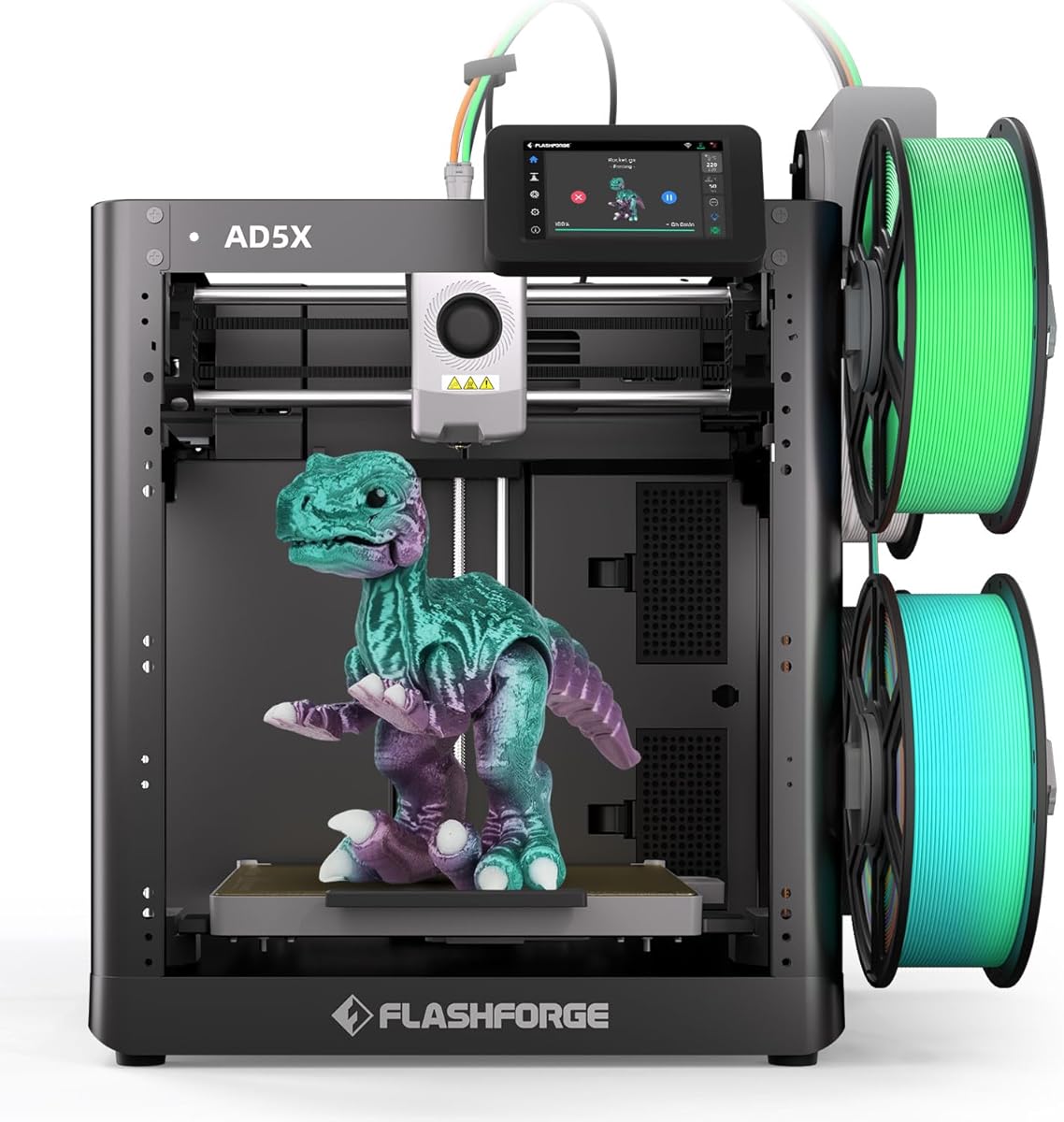
The FLASHFORGE AD5X delivers rapid production speeds with its 600mm/s capability and advanced vibration compensation ensuring sharp results even at high speeds. It supports four-color printing making it suitable for detailed miniatures that require vibrant finishes.
We may earn a commission when you buy through this link, at no additional cost to you.
Its Core XY structure provides stability during fast movements which minimizes ringing and ghosting artifacts. The Intelligent Filament System helps automate refills reducing interruptions and allowing longer print runs without constant monitoring.
While it offers high performance the interface may require time to master and support resources are limited compared to bigger brands. The large build volume also allows for multiple miniatures to be printed simultaneously improving overall throughput.
For users who value speed and color versatility without compromising stability this model is compelling. It balances automation with flexibility to meet diverse project needs efficiently and reliably.
All-metal CoreXY design reduces vibration at high speeds ensuring clean surfaces and precise details on small miniature parts.
Intelligent filament system detects low levels and refills automatically to minimize downtime and keep projects moving forward.
We may earn a commission when you buy through this link, at no additional cost to you.
The Bambu Lab P1S offers a fully enclosed body that improves performance with advanced filaments while maintaining high-speed printing. It is designed for reliability and ease of use making it suitable for both beginners and experienced makers.
We may earn a commission when you buy through this link, at no additional cost to you.
Its fast acceleration and auto bed leveling ensure consistent results and reduce setup time significantly. The support for multi-color printing when combined with AMS expands creative options for colorful miniatures and custom accessories.
While the base model does not include multi-color capability the enclosed environment supports a wider range of materials like ABS and ASA. This flexibility makes it a versatile workhorse for various project types beyond standard PLA.
For those seeking a reliable and fast printer with room to grow the P1S is an excellent option. It balances performance with user-friendly features that simplify daily printing tasks effectively.
Full enclosure maintains temperature stability for advanced materials and reduces drafts that can cause warping on large prints.
Accelerations up to 20000mm/s per second deliver rapid prints while keeping accuracy intact for detailed miniature features.
We may earn a commission when you buy through this link, at no additional cost to you.
The FLASHFORGE Adventurer 5M Pro emphasizes convenience with one-click auto printing and quick-swap nozzles that streamline maintenance and workflow. Its CoreXY frame ensures precision at speed while dual filtration keeps the environment clean.
We may earn a commission when you buy through this link, at no additional cost to you.
Built-in camera and mobile control allow remote monitoring so you can track progress without staying near the printer. The high-temperature extruder and heated bed support a broad range of materials including engineering-grade options for durable props.
While noise levels are low and performance is solid the smaller community means fewer shared files and tutorials compared to larger brands. Still the reliability and speed make it a strong choice for focused production of miniatures.
For users who value ease of use and automated features this model fits well. It reduces manual tasks and delivers consistent quality that suits regular printing schedules and detailed projects.
Tool-free nozzle changes take seconds reducing downtime when switching sizes or handling wear on high-volume jobs.
Integrated camera and Flash Studio app provide real-time views and alerts for status changes or print issues.
We may earn a commission when you buy through this link, at no additional cost to you.
This variant of the AD5X focuses on maximizing throughput with full-auto calibration and filament backup for uninterrupted prints. Its multi-material support and high-speed capabilities make it suitable for producing multiple detailed miniatures efficiently.
We may earn a commission when you buy through this link, at no additional cost to you.
The Intelligent Filament System enables simultaneous multi-color printing and broad material compatibility covering PLA PETG and TPU. Vibration compensation ensures clean layers even when running at top speed for quick project turnaround.
While the design is compact and space-efficient the learning curve may be steep for newcomers. However the productivity gains and automation features reward those willing to invest time in setup and calibration.
For workshop environments needing steady output and flexibility this printer delivers. It balances speed with precision to meet demand without compromising on visual quality or durability.
Intelligent filament system manages multiple colors and materials seamlessly eliminating manual swaps and reducing print interruptions.
Full-auto calibration and vibration suppression maintain alignment and surface quality even at high printing speeds.
We may earn a commission when you buy through this link, at no additional cost to you.
The Bambu Lab A1 Mini Combo brings the reliability of the A1 series to a smaller footprint with multi-color capabilities included. It is ideal for hobbyists with limited desk space who still want advanced features and high-quality results.
We may earn a commission when you buy through this link, at no additional cost to you.
Fast acceleration and full-auto calibration ensure precise prints without manual tweaking while the AMS lite enables vibrant color options. Its quiet operation and noise canceling keep environments peaceful during long print sessions.
While the build volume is restricted the speed and quality compensate for small-scale production. Multiple miniatures can be batch printed and arranged efficiently to maximize usage of the available space.
For compact setups needing professional-level features this model is a strong fit. It simplifies multi-color workflows and maintains consistency that appeals to careful designers and casual gamers alike.
Lightweight modular design allows flexible placement on desks or shelves without sacrificing performance or ease of access.
AMS lite integration enables vibrant multi-colored prints without requiring complex hardware upgrades or manual filament swaps.
We may earn a commission when you buy through this link, at no additional cost to you.
The Anycubic Kobra X stands out with native four-color capability that simplifies multi-color workflows without needing extra modules. Its hardened steel nozzle and high speeds deliver durable performance suitable for frequent printing of detailed miniatures.
We may earn a commission when you buy through this link, at no additional cost to you.
LeviQ auto leveling uses a 49-point calibration to ensure a perfect first layer every time. Combined with AI monitoring and remote app control it offers modern convenience that enhances workflow efficiency and reliability.
Filament is sold separately and software support is still growing but the performance and multi-color convenience are strong draws. The large model library provides ample starting points for new and returning users exploring design ideas.
For those wanting built-in multi-color and modern monitoring tools this printer delivers value. It reduces manual steps and streamlines setup for consistent colorful prints that stand out in collections.
Native four-color printing enables vibrant results without extra hardware simplifying setup and reducing potential points of failure.
LeviQ leveling algorithm ensures precise bed flatness for reliable adhesion and smooth first layers every time.
We may earn a commission when you buy through this link, at no additional cost to you.
Selecting the right printer requires balancing resolution speed and workflow to match your printing goals and experience level.
For DnD miniatures fine details are critical especially for facial features armor textures and weapon shapes. Resin printers typically deliver superior resolution with micron-level precision while high-quality FDM models with small nozzles can also achieve impressive results.
Prioritize printers with fine XY resolution and consistent Z-axis movement to ensure clean surfaces and sharp edges across multiple prints.
Speed affects how quickly you can produce armies or event props. Look for machines with high acceleration and steady speeds that maintain detail without sacrificing quality or causing vibrations.
Faster printers reduce wait time between design and play making them ideal for frequent creators or those with tight deadlines.
Beginner-friendly features like automatic leveling and calibration reduce frustration and failed prints. Interfaces that simplify setup and maintenance help you focus on creativity rather than troubleshooting.
Choose models with intuitive software and reliable hardware to minimize downtime and maximize your printing satisfaction.
Different materials suit different needs from PLA for detail to PETG for durability. Check compatibility with filaments or resins you plan to use and whether the printer supports flexible options like TPU.
A versatile printer expands your design options and ensures you can adapt to various miniature types and functional props.
Multi-color printing adds life to miniatures but can be complex. Look for systems with automatic filament changes or compatible add-ons that reduce waste and simplify color management.
Consider whether the printer supports seamless multi-color workflows to enhance visual storytelling without requiring post-print painting.
Build volume determines how many miniatures you can print at once. Larger beds allow batch printing but take more space while compact units save room but limit throughput.
Assess your available workspace and typical batch sizes to choose a build volume that supports your production needs efficiently.
A strong community provides files tutorials and troubleshooting tips that accelerate learning. Established brands often offer better warranties and software updates which improve long-term reliability.
Opt for printers with active user groups and responsive support to resolve issues quickly and expand your skill set.
Quiet operation is valuable for home offices or shared spaces. Enclosed designs and low-noise motors keep environments comfortable while safety features protect against fumes and moving parts.
Ensure the printer meets safety standards and includes noise management features to support consistent use over time.
Start by leveling the bed and calibrating Z-offset according to manufacturer instructions to ensure consistent adhesion and print quality for every session.
Keep the nozzle clean and replace it when signs of wear appear to maintain precise extrusion and prevent clogs that ruin detailed prints.
Store filaments in a dry environment and clean printed parts regularly to prolong machine life and ensure reliable performance over time.
Resin printers offer the finest detail for small miniatures while FDM models provide faster and easier maintenance. Choose based on whether you prioritize resolution or workflow simplicity.
Most printers work with common slicers that optimize layer height and support structures. Some models include proprietary software for streamlined workflows and better control over printing settings.
Printing time depends on size detail and printer speed. Resin prints may take hours while FDM prints can be faster but may require more post-processing to smooth layers.
Yes multi-color capable printers can produce vibrant results directly. Look for models with automatic filament systems to minimize waste and simplify color management during printing.
Work in a well-ventilated area especially with resin or ABS materials. Wear gloves when handling chemicals and keep moving parts away from loose items during operation.
Clean the build plate and nozzle regularly and check belts and calibration every few weeks. Routine maintenance ensures consistent print quality and extends the machine's lifespan.
Our top picks highlight models that balance resolution speed and ease of use to suit different needs whether you favor detail speed or multi-color capabilities.
Prioritize features like automatic calibration and strong community support to ensure reliable results and reduce the learning curve for new users.
Remember to check current availability and compatibility with your workflow before purchasing to ensure the best match for your tabletop printing goals.