
Zoom H5
4.7Editor score
Interchangeable capsules
Four-track recording
XLR inputs included
This guide compares the top handheld recorders for journalists in October 2026, evaluating audio quality, battery life, portability, and essential features for
Journalists need reliable audio tools to capture clear interviews and ambient sound in challenging environments. A quality handheld recorder ensures your stories are heard with professional clarity and minimal background noise interference.
We evaluated ten leading models based on microphone performance, recording formats, battery endurance, and ease of use. Each device offers unique strengths for different reporting scenarios ranging from quick notes to broadcast quality field audio.
Every selection highlights specific capabilities like noise reduction, file management, and connectivity options to match your workflow. Please note that prices and availability change frequently so verify current details before making your final purchasing decision today.
4.7Editor score
4.2Editor score

4.2Editor score
This side-by-side comparison details the core specifications of all ten selected recorders to help you quickly identify the model that best fits your specific journalism needs and budget constraints.




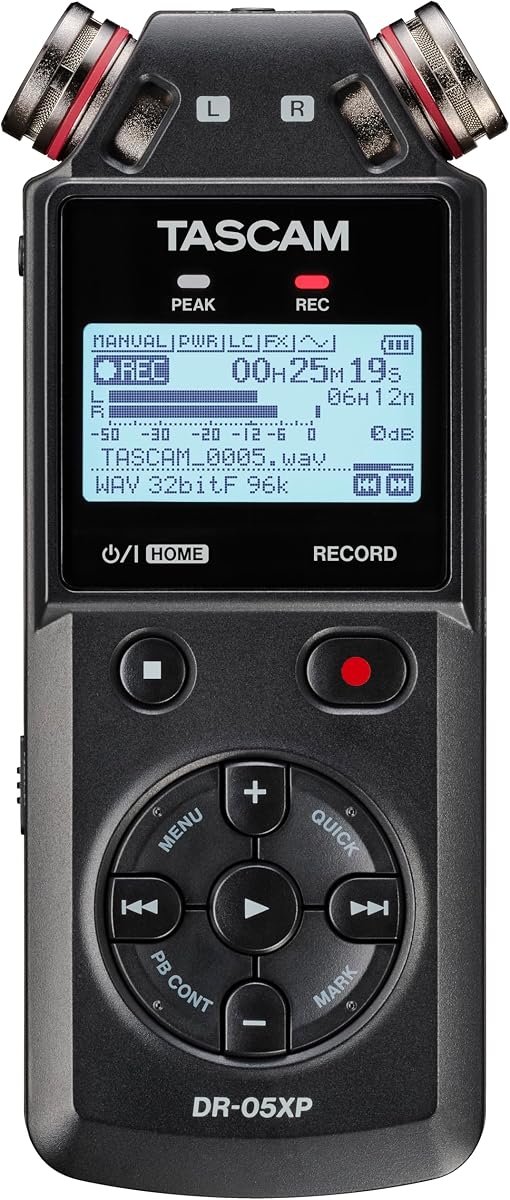
The TASCAM DR-05XP stands out as a top choice for journalists seeking professional quality without bulk. It earns a strong rating for its ability to handle dynamic sound ranges using 32-bit float technology which prevents clipping during unexpected loud noises.
We may earn a commission when you buy through this link, at no additional cost to you.
Its dual omnidirectional condenser microphones capture sound from all directions making it ideal for interviews or ambient street noise. The USB-C audio interface allows direct transfer to laptops simplifying the workflow for field reporters who need immediate file access.
While it lacks an SD card slot the internal memory management is efficient for shorter recording sessions. The reliance on AA batteries means you should carry spares for long days but the runtime is sufficient for most standard reporting tasks.
Journalists prioritizing ease of use and reliable audio fidelity will find this device indispensable. It balances portability with robust features ensuring your recordings remain clear regardless of the environmental conditions you face on assignment.
This technology ensures no audio distortion even if volumes spike suddenly during an interview or breaking news event.
The USB-C port acts as an audio interface allowing you to record directly into editing software without extra adapters.
We may earn a commission when you buy through this link, at no additional cost to you.
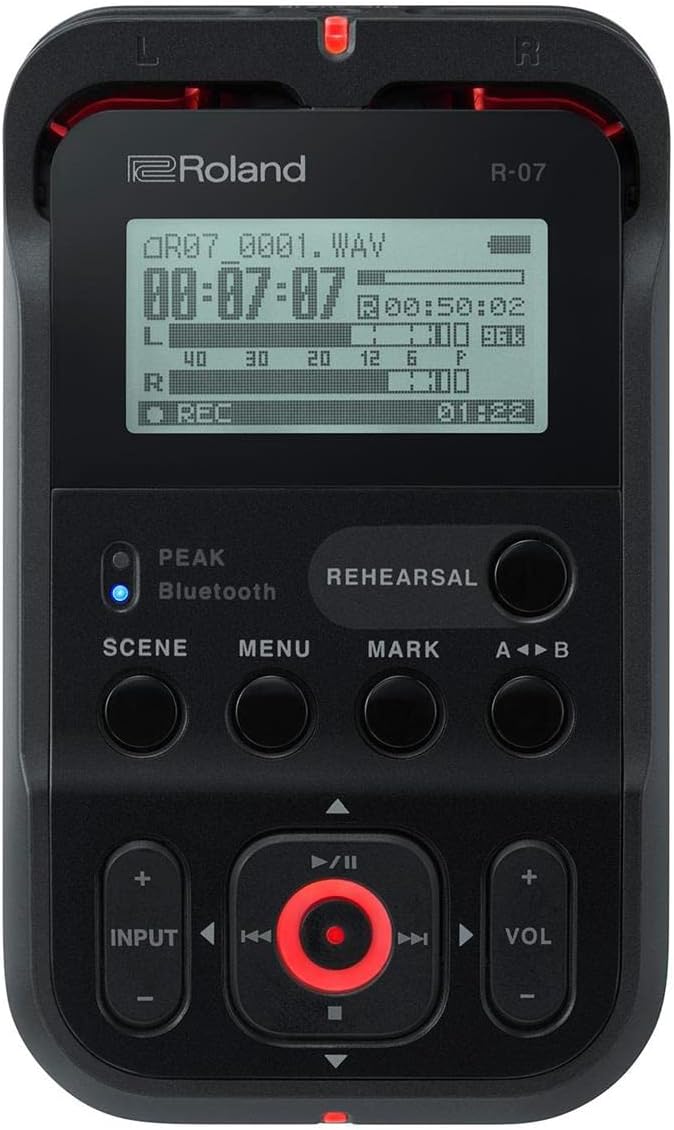
The Roland R-07 offers advanced features tailored for professionals who need quick setup and wireless control options. Its high-resolution recording capabilities ensure detailed audio capture suitable for broadcast quality reporting needs.
We may earn a commission when you buy through this link, at no additional cost to you.
One-touch templates allow you to switch between interview and ambient modes instantly saving valuable time during fast-paced news gathering. The Bluetooth functionality lets you monitor levels wirelessly which is helpful when you need to check sound without holding the device.
Simultaneous recording to MP3 and WAV provides a safety net ensuring you always have a usable file even if the high-res file encounters issues. The built-in speaker is convenient for quick playback checks without needing headphones.
This recorder is best for journalists who value flexibility and advanced connectivity. While the cost is higher the efficiency gains and audio quality justify the investment for serious field work requiring consistent professional results.
Pre-configured settings reduce the risk of user error by optimizing gain and format for specific recording scenarios automatically.
You can control playback and monitoring via smart devices reducing the physical strain of holding the recorder constantly.
We may earn a commission when you buy through this link, at no additional cost to you.
The EVISTR L357 delivers exceptional value for journalists needing high capacity without breaking the bank. Its 64GB memory allows for thousands of hours of recording which is perfect for long investigative projects or conference coverage.
We may earn a commission when you buy through this link, at no additional cost to you.
Voice activated recording saves battery and storage by only capturing when sound is detected. This ensures you do not miss important moments during pauses in conversation while keeping the final files concise and easy to manage.
The PCM intelligent noise reduction technology helps isolate voices from background noise improving clarity in busy environments. The metal casing adds durability making it robust enough for daily rough use in the field.
Budget conscious reporters will appreciate the balance of features and cost. It may lack some advanced connectivity but for straight forward voice and ambient capture it performs reliably and efficiently for daily journalistic tasks.
With 64GB you can record continuously for days without needing to offload files frequently or manage memory constraints.
This feature filters out ambient chatter ensuring that primary voices remain clear even in noisy public settings.
We may earn a commission when you buy through this link, at no additional cost to you.
The Tonfarb recorder focuses on ease of use and security which are critical for journalists handling sensitive information. The one-click record function ensures you never miss a sound because of complex menu navigation or delays.
We may earn a commission when you buy through this link, at no additional cost to you.
Password protection safeguards your files from unauthorized access which is vital when carrying confidential interview notes or sensitive field data. The large screen makes navigation easy even in varying light conditions without squinting at tiny indicators.
Recording performance is solid for general notes and interviews though it may not match high-end broadcast gear in extreme environments. The internal TF card provides ample space for a full day of continuous recording without external cards.
This model is ideal for reporters who prioritize security and simplicity over advanced audio engineering. It is a dependable tool for daily logging and secure storage of critical conversations without unnecessary complications.
Built-in password protection ensures that sensitive recordings remain private even if the device is lost or stolen.
The physical button allows immediate recording even when the device is powered off reducing reaction time.
We may earn a commission when you buy through this link, at no additional cost to you.
The Zoom H5 is a powerhouse for journalists requiring professional flexibility and high-end audio quality. Its interchangeable capsule system allows you to swap microphones based on the specific acoustic environment you are facing.
We may earn a commission when you buy through this link, at no additional cost to you.
Four-track simultaneous recording lets you capture multiple sources independently giving you maximum flexibility during post-production editing. This is particularly useful when you need to separate ambient noise from a primary interviewee voice.
The safety net mode records a backup track at a lower volume to prevent clipping if the main track gets too loud. XLR inputs mean you can connect professional microphones directly expanding the device's capabilities beyond standard handheld limits.
Journalists needing broadcast quality and multi-channel control will find this unit worth the investment. It bridges the gap between portable recorders and full studio gear ensuring top tier audio for major stories.
Swap the microphone head to change the recording pattern from stereo to surround sound depending on your location.
This feature creates a low volume backup track ensuring that loud unexpected noises never ruin your primary recording.
We may earn a commission when you buy through this link, at no additional cost to you.
The Tascam dr 40 offers a blend of style and function with its silver finish and robust recording capabilities. As a four-track recorder it allows for layered audio capture which is great for complex field interviews with multiple speakers.
We may earn a commission when you buy through this link, at no additional cost to you.
Its compact design fits easily into a pocket or bag making it convenient for reporters on the move. The standard inputs ensure compatibility with a wide range of microphones and audio sources found in various production kits.
While the interface may not be as immediate as other models the recording quality remains professional and consistent. It serves well as a backup or primary device for journalists who need multi-track flexibility without a large footprint.
This recorder is best for those who value a proven brand and versatile input options. It delivers reliable performance for demanding tasks where separating audio sources is necessary for clear final output.
Four-track recording allows you to isolate different sound sources for better control during the editing process.
The silver finish makes it a professional looking tool that stands out while remaining easy to carry daily.
We may earn a commission when you buy through this link, at no additional cost to you.
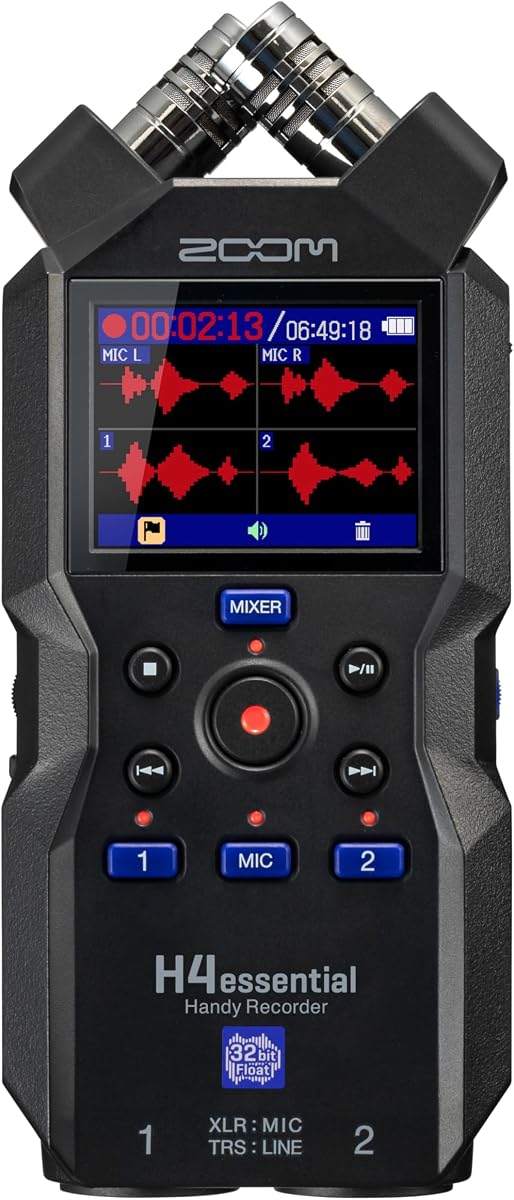
The Zoom H4 Essential is designed with creators in mind offering spoken menu guidance that makes navigation easier for visually impaired users. This accessibility feature sets it apart as a tool that welcomes diverse users in the field.
We may earn a commission when you buy through this link, at no additional cost to you.
With XLR inputs and USB-C streaming it offers versatile connectivity for connecting to mixers or computers directly. The four-track recording capability ensures you can handle complex soundscapes without sacrificing clarity or control over levels.
The spoken guides reduce the need to read small text on a screen which is beneficial when working in bright outdoor light. It balances professional features with user-friendly design making it a robust choice for general journalism work.
Journalists who value inclusive design and connectivity will appreciate this model. It combines professional audio quality with features that make the device more accessible and easier to use under pressure.
Audio prompts guide you through settings reducing the need to read small labels during operation in the field.
Connect directly to computers or tablets for streaming or file transfer without needing extra dongles or hubs.
We may earn a commission when you buy through this link, at no additional cost to you.
The Pocket AI Voice Recorder transforms traditional recording by providing instant transcription and summaries powered by artificial intelligence. This capability significantly reduces post-interview editing time allowing journalists to focus on writing instead of listening.
We may earn a commission when you buy through this link, at no additional cost to you.
One-tap recording ensures you capture conversations immediately without fumbling for menus. The MagSafe compatible design allows hands-free attachment to your phone making it easy to place on a table during a quiet interview.
Battery life is impressive with up to four days of power on a single charge. The Ask Pocket feature lets you query the recordings for key insights which helps in fact-checking and organizing thoughts quickly.
Journalists needing rapid turnaround and digital notes will find this device revolutionary. While it relies on cloud processing the speed of transcription makes it a powerful companion for modern digital reporting workflows.
The system automatically extracts action items and key points from recordings saving hours of manual review time.
Attaching to your phone allows the device to stay in place during conversations without needing to hold it.
We may earn a commission when you buy through this link, at no additional cost to you.
The Zoom H1 Essential is a compact solution for journalists who also create content for digital platforms. Its USB microphone mode lets you use the device for direct streaming or video calls enhancing audio quality beyond phone capabilities.
We may earn a commission when you buy through this link, at no additional cost to you.
The stereo audio capture is clear and detailed suitable for capturing ambient sounds and voiceovers alike. The small form factor makes it unobtrusive during interviews ensuring your focus remains on the subject rather than the equipment.
While battery life is shorter than some competitors the ease of use and streaming capabilities make it a strong contender. It is a versatile tool that transitions seamlessly from recording field audio to hosting remote meetings.
This model is ideal for digital journalists needing a versatile audio tool for both offline recording and online communication. It provides high quality sound in a package that is easy to carry and operate anywhere.
Switch between a standalone recorder and a high quality USB microphone for live streaming or remote calls instantly.
The small size ensures it fits in any pocket making it a reliable option for on-the-go reporting.
We may earn a commission when you buy through this link, at no additional cost to you.
The Zoom H2 Essential brings professional features to a compact package with a focus on accessibility for all users. It includes audible menu navigation in seven languages making it fully accessible for blind and visually impaired reporters.
We may earn a commission when you buy through this link, at no additional cost to you.
With nine selectable recording patterns you can adjust the microphone layout for different scenarios from interviews to ambient noise. The clip-free audio guarantee ensures you never lose a take due to unexpected volume spikes during critical moments.
Bluetooth timecode sync allows you to align multiple units wirelessly which is useful for complex multi-camera interviews. The USB mic mode adds flexibility for connecting directly to computers for high quality streaming or recording.
This recorder is a top pick for inclusive design and versatility. Journalists needing accessible tools and reliable audio will find the comprehensive features and clear feedback invaluable in daily reporting scenarios.
Full audible menu support ensures that users with visual impairments can operate the device independently without assistance.
Bluetooth timecode allows multiple recorders to stay in sync for multi-angle field interviews or events.
We may earn a commission when you buy through this link, at no additional cost to you.
Selecting the right audio recorder depends on your specific reporting needs and budget. This guide outlines the key factors to consider for optimal field performance.
The core of any recorder is its microphone. Look for units with high sensitivity and configurable patterns like stereo or omnidirectional to capture clear sound in varied environments.
Prioritize models with adjustable gain to handle loud noises without distortion while ensuring quiet voices remain audible.
Choose devices that support high-resolution formats like WAV at 24-bit or 32-bit float. This ensures your recordings have the necessary dynamic range for professional editing.
Higher bit depth reduces the risk of clipping and allows for better quality during post-processing adjustments.
Journalists often need to record for hours without accessing a computer. Internal memory or SD card slots provide the flexibility to store large files.
Ensure the device supports high-capacity cards to avoid running out of space during critical interviews.
Field work demands long battery life. Look for recorders that offer at least a full day of continuous recording on a single charge.
AA batteries are often more reliable in remote areas than proprietary rechargeable ones so check the power requirements before buying.
Quick file transfer is essential for breaking news. USB-C ports allow direct connection to laptops or smartphones for rapid uploads.
Some models offer Bluetooth streaming which can be useful for live feeds or remote control from a smartphone.
Background noise can ruin an interview. Devices with digital noise reduction or wind filters help isolate the subject voice.
Software-assisted noise cancellation is becoming common and helps maintain clarity in noisy urban settings.
A recorder used in the field must withstand bumps and weather. Metal bodies offer better protection than plastic casings.
Check if the device has a protective case or can withstand minor drops to ensure longevity.
Complex menus can lead to missed recordings. Look for intuitive layouts with dedicated record buttons for quick access.
Features like spoken menus or templates can significantly speed up setup time during high-pressure situations.
Always test your recorder before heading out to ensure the battery is charged and the SD card is formatted. This prevents technical issues during critical reporting moments.
Use headphones to monitor audio levels while recording to catch any distortion early. Adjust the gain manually if you are in a noisy environment to avoid clipping.
Keep your device clean and dry. Store it in a padded case when not in use and clean the microphone ports gently to remove dust that could affect sound quality.
For most journalism, 24-bit is sufficient for high-quality audio. However, 32-bit float is highly recommended for unpredictable environments because it prevents clipping regardless of volume levels.
It depends on the model. Some recorders have internal memory, but an SD card is generally recommended for longer sessions to ensure you do not run out of storage space during interviews.
Most modern recorders offer between 15 to 25 hours of continuous recording on a single charge. Always carry spare batteries if you are working long shifts in remote areas.
Yes, many models have USB-C interfaces that allow them to function as microphones for computer connections. Check the specific USB audio interface support before purchasing.
Voice activation saves battery and storage by only recording when sound is detected. This is ideal for long sessions where silence would otherwise fill the memory with unnecessary files.
Most are not fully waterproof but many offer splash resistance. For heavy rain, use a dedicated windscreen or place the recorder inside a protective plastic sleeve during field work.
Most devices connect via USB-C. You can plug them directly into a computer to transfer files like a drive. Some also support wireless transfer via Bluetooth or apps.
Hardware filters like wind muffs are better for wind noise. Digital noise reduction works well for steady background hums like traffic but should be used sparingly to preserve voice quality.
Choosing the right handheld recorder depends on your specific workflow and technical requirements. Whether you need high fidelity for broadcast or simple recording for notes the models listed here offer reliable performance.
Prioritize features like battery life and microphone quality to ensure you capture sound clearly in any situation. Accessibility and connectivity options are also becoming increasingly important for modern digital reporting needs.
Always verify the current availability and support for these models before purchasing. Technology evolves quickly so checking the latest user reviews will help you make the most informed decision.