
Intel Celeron G3900
4.6Editor score
Dual core processing
Low thermal design power
Affordable price point
This guide compares ten top low power CPU options for efficient computing, highlighting performance, thermal design power, and compatibility for diverse
Finding the right low power CPU is essential for building energy efficient systems that run quietly and stay cool under load. Whether you are creating a home server or a silent office PC the choosing the correct processor matters.
We evaluated ten distinct processors based on their core counts, thread counts, cache sizes, and thermal design power ratings. Each option offers unique strengths for specific use cases ranging from basic browsing to virtualization.
Every pick in this list highlights key specifications and real world suitability for different tasks. Please note that pricing fluctuates frequently so verify current costs before making your final purchase decision.
4.6Editor score
4.7Editor score

4.1Editor score
This table provides a side by side comparison of all ten low power CPU options including their core counts, thread counts, and key compatibility details to help you decide quickly.


The Intel Core i7-6700T is a processor designed for efficient computing tasks that do not require extreme clock speeds. It offers a solid quad core foundation with a lower thermal design power to keep system temperatures manageable.
We may earn a commission when you buy through this link, at no additional cost to you.
This CPU excels in scenarios where steady performance and low heat output are priorities. Its 2.8GHz base frequency ensures consistent task handling while the T configuration significantly reduces power draw compared to standard models.
A trade-off is that it comes as a tray unit without a retail box or bundled cooler. Users must source their own cooling solution which adds complexity to the build process but allows for custom cooling choices.
If you need a reliable low power CPU for a home office or light server setup this model remains a strong contender despite its age. It balances efficiency and performance well for users prioritizing quiet operation.
The T series designation indicates a reduced thermal design power making it ideal for silent or small form factor systems where heat dissipation is limited.
With four cores and eight threads this processor handles multiple applications smoothly without demanding excessive electrical power or generating significant heat.
We may earn a commission when you buy through this link, at no additional cost to you.
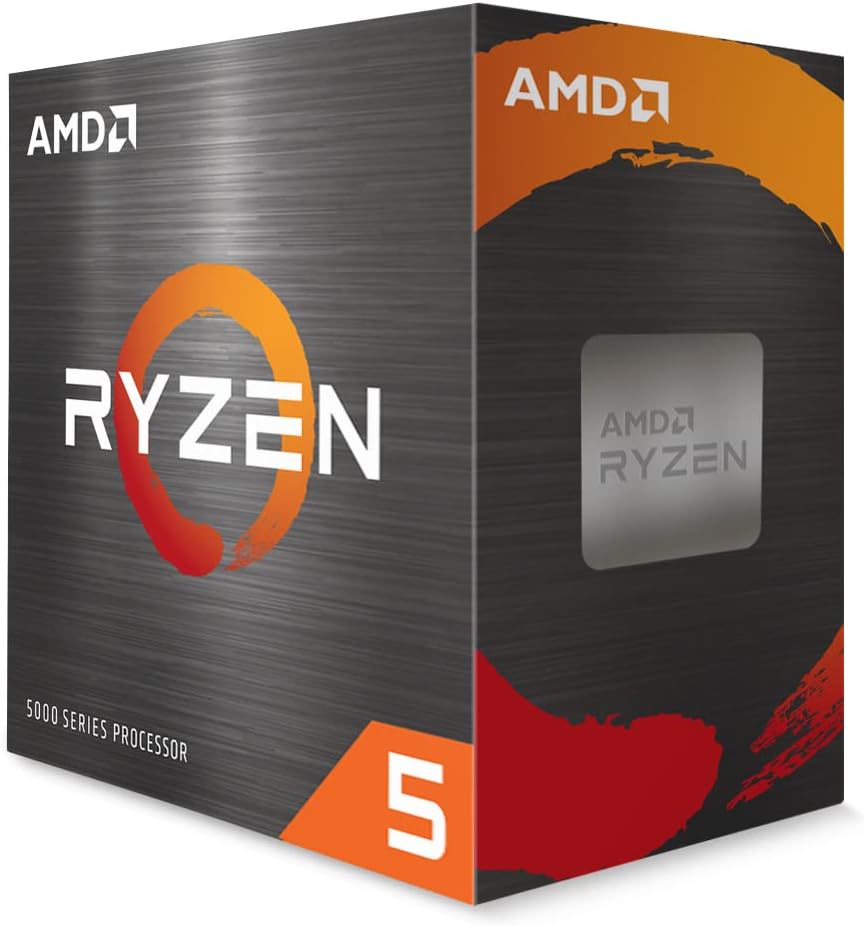
The AMD Ryzen 5 5500 stands out as the top recommendation for users seeking a balance of performance and efficiency. It delivers six cores and twelve threads which provide ample headroom for demanding workloads while maintaining reasonable power use.
We may earn a commission when you buy through this link, at no additional cost to you.
Its unlocked multiplier allows for overclocking if you want to push performance further. The included Wraith Stealth cooler simplifies installation and ensures adequate cooling out of the box for standard operations without extra cost.
While it is a powerful chip for multi-threaded tasks it does not include integrated graphics. You will need a dedicated graphics card for gaming or video editing which may increase the overall system cost slightly.
This processor is ideal for those building a versatile desktop that can handle gaming productivity and general tasks efficiently. Its combination of speed core count and included cooling makes it a standout value in this category.
With six physical cores and twelve logical threads this CPU handles parallel tasks like rendering and virtualization with ease while keeping thermal output controlled.
The unlocked design allows enthusiasts to increase clock speeds beyond factory settings to extract more performance without changing the underlying silicon architecture.
We may earn a commission when you buy through this link, at no additional cost to you.
The Intel Celeron G5900 provides a straightforward solution for basic computing needs without unnecessary complexity. It features two cores and two threads which are sufficient for web browsing document editing and light multitasking.
We may earn a commission when you buy through this link, at no additional cost to you.
Its compatibility with Intel 400 series chipsets makes it a versatile choice for budget builds. The processor supports Intel Optane Memory which can help improve storage performance when paired with compatible hard drives.
While it lacks advanced threading capabilities it remains stable and reliable for everyday tasks. The 58W TDP ensures that heat generation stays low making it easy to cool with standard case airflow.
This CPU is best suited for entry-level systems where cost and efficiency are primary concerns. If your workflow does not involve heavy processing this chip delivers consistent performance without draining electrical resources.
Two cores and two threads provide adequate responsiveness for standard office applications and media consumption without taxing the system resources.
Support for Intel Optane Memory allows users to speed up slower storage drives offering a cost effective way to improve overall system boot and load times.
We may earn a commission when you buy through this link, at no additional cost to you.
The Intel I-7 2600S is a legacy processor that continues to offer value for specific low power use cases. It provides four cores with a reduced power footprint allowing it to handle multi-threaded workloads efficiently.
We may earn a commission when you buy through this link, at no additional cost to you.
Its optimized cache subsystem delivers improved data transfer speeds which benefits applications that rely heavily on memory bandwidth. This makes it a solid choice for older systems still in operation that need stability.
However compatibility is limited to DDR3 memory and older motherboards which may require finding specific parts on the used market. This constraint can complicate the upgrade path for those looking to modernize their setups.
Despite its age this chip remains relevant for hobbyists or retro computing enthusiasts. It offers a proven track record of reliability and low energy consumption for systems where upgrading hardware is not an option.
The enhanced cache subsystem reduces latency during data access improving performance for tasks that frequently read and write to memory.
Support for three channels of DDR3 memory ensures broad compatibility with existing hardware reducing the need for complete system overhauls.
We may earn a commission when you buy through this link, at no additional cost to you.
The AMD Athlon 200GE delivers a cost effective solution for users who do not need a dedicated graphics card. It includes Radeon Vega 3 graphics which enable smooth video playback and light gaming without extra hardware.
We may earn a commission when you buy through this link, at no additional cost to you.
This processor runs on the AM4 socket which provides a clear upgrade path to more powerful Ryzen CPUs if future needs grow. It offers two cores and four threads for responsive multitasking in everyday scenarios.
The included near-silent cooler ensures that noise levels remain low during operation. This makes it suitable for small form factor builds or quiet home offices where acoustic performance matters.
It is best recommended for media centers or basic desktop systems requiring minimal energy usage. While it cannot handle heavy gaming its integrated graphics and efficient design make it a practical choice for budget builds.
Vega 3 graphics allow for playback of 4K video and light gaming tasks eliminating the need for a separate graphics card in budget systems.
The AM4 socket supports a wide range of processors allowing users to upgrade the CPU later without changing the motherboard.
We may earn a commission when you buy through this link, at no additional cost to you.
The Intel Celeron G3900 is designed for basic desktop tasks where cost and simplicity are paramount. It offers a dual core configuration that handles web browsing and document processing reliably without demanding high power.
We may earn a commission when you buy through this link, at no additional cost to you.
Available as a retail unit it often comes with a basic cooler making installation straightforward for users building a first PC. The Skylake architecture provides a balance of efficiency and capability for everyday computing.
This processor supports direct media interface speeds that ensure data flows quickly between components. While it lacks advanced features it provides a stable foundation for entry level systems requiring consistent uptime.
It is ideal for kiosks or home offices where heavy processing is not required. Its low cost and easy availability make it a practical choice for anyone looking to build an affordable and reliable computer.
Retail packaging typically includes necessary mounting hardware and a basic cooler simplifying the build process for new users.
The direct media interface facilitates fast communication between the processor and other system components ensuring smooth data transfer.
We may earn a commission when you buy through this link, at no additional cost to you.
The Intel Celeron G4900 offers a modest step up in clock speed compared to other entry level options. With a base frequency of 3.1GHz it provides slightly snappier performance for single thread tasks.
We may earn a commission when you buy through this link, at no additional cost to you.
It includes a thermal solution which simplifies the initial setup for new builds. The compatibility with Intel 300 Series chipset motherboards ensures users have a wide selection of affordable boards to choose from.
This processor is well suited for lightweight applications that do not require heavy computational power. Its 54W TDP ensures that it remains cool and quiet even during prolonged use.
It is recommended for users who need a reliable processor for basic computing without extra expense. While not designed for demanding workloads it handles daily tasks efficiently and quietly.
The package includes a cooling solution ensuring the processor runs within safe temperature limits right out of the box.
A base frequency of 3.1GHz offers better responsiveness for single threaded operations compared to lower clock speed alternatives.
We may earn a commission when you buy through this link, at no additional cost to you.
The Intel Celeron G3900 variant with ECC support offers a niche advantage for users needing data integrity. This feature is valuable for servers or workstations where memory errors can cause significant issues.
We may earn a commission when you buy through this link, at no additional cost to you.
It integrates Intel HD Graphics 510 which provides basic display capabilities without a dedicated card. The 51 Watt TDP indicates a focus on power efficiency allowing for quiet operation in small enclosures.
While it is a budget option it still provides essential functions for stable computing. The low power draw ensures that it does not stress power supplies even in small form factor systems.
This CPU is best for users building a quiet home server or office PC where reliability is key. The ECC support adds a layer of trust to data storage tasks that standard consumer CPUs may not offer.
Support for ECC memory helps detect and correct data corruption which is critical for servers and reliable storage systems.
Integrated HD Graphics 510 allows for basic display output enabling a system to boot and display without a separate GPU.
We may earn a commission when you buy through this link, at no additional cost to you.
The Intel Celeron G5905 delivers a higher base clock speed for improved responsiveness in everyday tasks. It is a boxed processor which typically includes a cooler and mounting hardware for a complete build experience.
We may earn a commission when you buy through this link, at no additional cost to you.
Compatible with FCLGA1200 sockets it fits modern motherboards that offer better features than older platforms. The higher frequency makes it slightly faster than its G5900 counterpart for single threaded operations.
This CPU is designed for users who want a simple low power system without extra complications. It handles web browsing and media consumption efficiently while keeping energy costs low.
It is recommended for general office PCs or lightweight home servers. The boxed packaging ensures you have everything needed to install it immediately without sourcing additional cooling solutions.
A base frequency of 3.5GHz provides faster single core performance compared to other Celeron options in the same class.
The boxed variant includes necessary hardware for installation reducing build time and complexity for first time users.
We may earn a commission when you buy through this link, at no additional cost to you.
This Mini-ITX motherboard with an integrated quad-core CPU is a premium solution for specialized low power builds. It combines the processor and board into one compact unit designed for NAS or firewall applications.
We may earn a commission when you buy through this link, at no additional cost to you.
The dual 2.5GbE network ports provide fast data transfer which is critical for home servers or virtualization tasks. It supports up to 32GB per memory slot ensuring ample capacity for demanding workloads.
Potential buyers should note the known sleep mode bug and longer boot times as honest trade-offs for such integrated efficiency. These issues are manageable with proper BIOS updates and patience during initial setup.
It is highly recommended for users needing a compact industrial server without building a custom motherboard and CPU combo. The inclusion of virtualization features and extensive storage ports makes it a unique high value option.
Support for VT-x and VT-d virtualization ensures smooth operation of multiple virtual machines on a single physical device.
The Mini-ITX form factor allows for small system builds while the high density PCB ensures stability in demanding industrial environments.
We may earn a commission when you buy through this link, at no additional cost to you.
Selecting the right low power CPU involves balancing processing power thermal constraints and platform compatibility to ensure your system meets all efficiency goals.
Thermal Design Power (TDP) measures the maximum amount of heat a processor generates. Lower TDP CPUs consume less electricity and produce less heat which simplifies cooling requirements.
For silent systems look for TDP ratings below 50 Watts to ensure quiet operation without large fans.
Cores and threads determine how many tasks a CPU can handle simultaneously. More cores improve performance for multi-threaded applications like video rendering or virtualization.
Choose at least four cores for general productivity to avoid bottlenecks when running multiple programs.
The base clock indicates steady performance while the boost clock shows the maximum speed under load. Higher clocks mean faster processing for single thread tasks.
Prioritize a higher base clock for consistent performance in servers or idle environments.
Ensure the CPU supports the memory type you plan to use such as DDR3 or DDR4. Older CPUs may limit upgrade options for future memory improvements.
Newer DDR4 compatible CPUs offer better bandwidth and upgrade paths than older generations.
Some CPUs include integrated graphics which eliminate the need for a dedicated GPU. This reduces overall system cost and power consumption for basic display tasks.
If you need visual output without a graphics card confirm that the model includes an integrated GPU.
Modern sockets allow for future upgrades without replacing the motherboard. Check how long a platform is supported before committing to an older generation.
AM4 and LGA1200 platforms offer better upgrade potential than older legacy sockets.
Retail boxes include coolers and support while trays are often cheaper but lack accessories. This impacts the ease of installation and total system cost.
Select boxed units if you need a complete solution without sourcing extra parts separately.
Features like ECC support or virtualization extensions provide extra value for specific use cases such as servers or security appliances.
Look for these features if you require data integrity or virtual machine capabilities.
Install the CPU carefully following the motherboard manual to ensure proper alignment with the socket. Apply thermal paste correctly before attaching the cooler to maintain good heat transfer.
Keep the system clean by regularly dusting out fans and vents. Dust buildup can reduce airflow and cause higher temperatures even with low power components.
Monitor system temperatures using software tools to ensure the CPU stays within safe limits. Adjust fan curves if needed to balance noise and cooling effectively.
A low power CPU is designed to consume less electricity and generate less heat than standard processors. These chips are ideal for systems where quiet operation and energy efficiency are important priorities.
Yes modern low power CPUs offer impressive performance for everyday tasks. While they may not match high-end gaming processors they handle multitasking and productivity efficiently.
Absolutely low power CPUs are excellent for home servers or NAS builds. Their reduced heat output and power draw help maintain stable operation without high electricity costs.
TDP stands for Thermal Design Power which indicates how much heat a CPU generates. A lower TDP means the processor runs cooler and requires simpler cooling solutions.
Some low power CPUs are unlocked for overclocking but many are locked. Always check the product specs to confirm if overclocking is supported before attempting to increase speeds.
Most low power CPUs do not require special coolers due to their low heat output. Many include a basic cooler in the box which is sufficient for standard use cases.
AM4 and LGA1200 sockets offer good support for current low power CPUs. Older sockets may have limited availability and fewer upgrade options.
The AMD Ryzen 5 5500 leads our list as the best overall option for balancing power and efficiency. Other options like the Celeron G5900 serve well for basic and budget friendly builds.
Prioritize TDP and core count based on your specific tasks. For silent systems prioritize lower TDP but for productivity choose more cores to ensure smooth operation.
Always verify current prices and stock levels before purchasing as availability changes frequently. Selecting the right CPU ensures your system remains efficient and reliable for years to come.