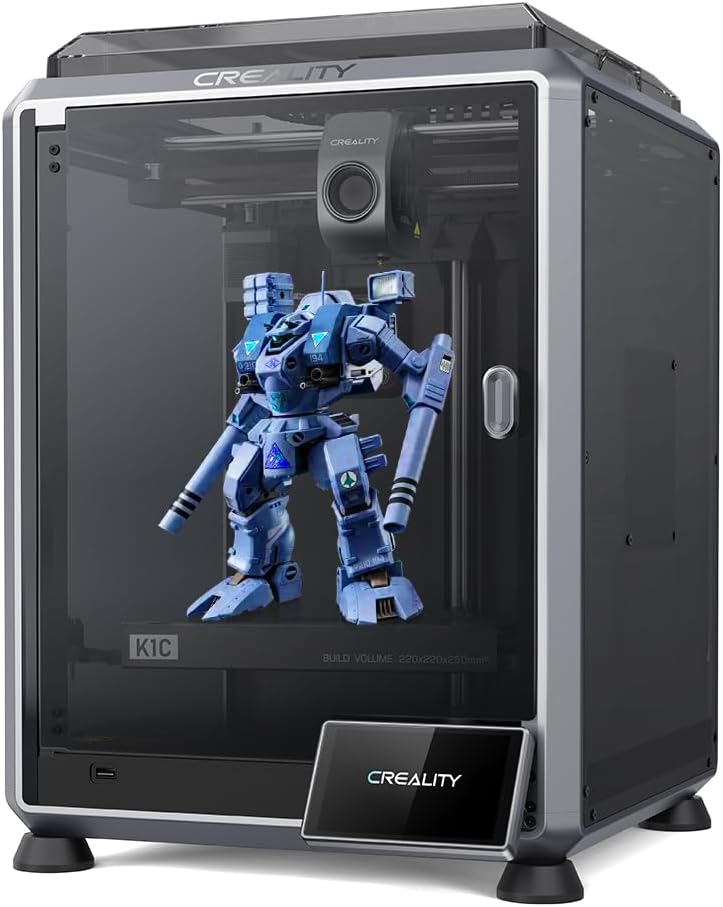
Creality K1C
4.3Editor score
Three hundred c nozzle
Carbon fiber capable
Fast CoreXY motion
Discover the top 3D printer for high temperature filaments. Compare performance, chamber heat, nozzle limits, and engineering-grade material support side by
High temperature filaments demand printers with robust heat chambers and reliable extruders. Selecting the right machine ensures consistent adhesion and prevents warping during complex engineering projects.
We compared ten leading models based on chamber stability, nozzle temperature limits, and print speed. This guide highlights machines capable of handling ABS, PC, and carbon fiber composites effectively.
Each pick showcases unique strengths for different user needs and budgets. Prices change frequently so verify current deals before purchasing your next high temperature capable 3D printer today.
4.3Editor score

4.7Editor score

4.4Editor score
This side-by-side comparison evaluates each printer's build volume, hotend temperature limits, chamber capabilities, and motion system to help you find the ideal tool for engineering filaments.



The Bambu Lab P2S Combo leads our list as the top pick for high temperature printing with advanced airflow management and high-speed performance.
We may earn a commission when you buy through this link, at no additional cost to you.
Its Adaptive Airflow System balances cooling and heat retention while keeping an engineered chamber for materials like ABS and ASA effectively.
Users may need to purchase the Combo version for multi-color capability since the base P2S lacks the AMS 2 Pro integration.
For makers needing reliable performance for engineering materials and vibrant multi-color prints this printer delivers exceptional value today.
This system automatically balances cooling and heat retention ensuring crisp overhangs while maintaining necessary warmth for engineering-grade materials.
With the included AMS 2 Pro you get seamless multi-color printing with built-in filament drying for flawless results on complex projects.
We may earn a commission when you buy through this link, at no additional cost to you.
The Creality K1C offers an affordable entry point for high temperature printing with a reinforced hotend capable of handling abrasive carbon fiber.
We may earn a commission when you buy through this link, at no additional cost to you.
Its clog-free direct extruder features a steel-tipped copper nozzle and titanium alloy heatbreak to prevent heat creep during high temperature runs.
While it lacks an active heated chamber it supports many engineering filaments well enough for hobbyists and small workshops needing versatility.
Budget-conscious users wanting fast speeds and carbon fiber capability will find this printer delivers strong performance at a competitive price.
The enhanced direct extruder grips filament tightly without slackening while the heatbreak design blocks heat creep for reliable printing.
An observant AI camera recognizes spaghetti failures and foreign matter allowing real-time monitoring and automatic issue detection.
We may earn a commission when you buy through this link, at no additional cost to you.
The FLASHFORGE Creator 5 Pro stands out as a premium choice with an active heated chamber ensuring consistent interlayer adhesion for challenging materials.
We may earn a commission when you buy through this link, at no additional cost to you.
Its four independent extruders allow true multi-color printing without color mixing and the HEPA13 filtration makes it safe for office environments.
The industrial-grade architecture delivers precise results at high speeds though users must invest time in initial calibration and setup procedures.
Professionals and workshops needing reliable high temperature performance and multi-material capability will appreciate this printer's robust engineering and safety features.
A stable temperature up to 65 degrees minimizes warping and maximizes adhesion when printing ABS ASA PC or Nylon filaments effectively.
Four completely independent toolheads switch colors by swapping nozzles instantly ensuring pristine color separation without color transition delays.
We may earn a commission when you buy through this link, at no additional cost to you.
The Bambu Lab P1S provides a fully enclosed design that improves performance for advanced filaments while maintaining rapid printing speeds up to 500 mm/s.
We may earn a commission when you buy through this link, at no additional cost to you.
Its automatic bed leveling system simplifies the setup process ensuring high-quality successful prints without the hassle of manual calibration steps.
Users can connect the AMS for multi-color printing but note that carbon fiber reinforced polymers are not recommended for this model.
This printer balances speed and ease of use for those needing reliable results on PETG ABS ASA and other standard engineering materials.
The fully enclosed body improves print performance for advanced filaments by maintaining consistent thermal conditions during long print jobs.
Automatic bed leveling ensures perfect first layers every time reducing failed prints and saving users significant setup time.
We may earn a commission when you buy through this link, at no additional cost to you.
The Bambu Lab A1 delivers full-auto calibration and high-speed precision making it ideal for beginners who want professional quality prints without complex setup.
We may earn a commission when you buy through this link, at no additional cost to you.
Its active flow rate compensation ensures consistently smooth prints while the quiet motor noise canceling creates a comfortable environment for any workspace.
While not optimized for extreme engineering filaments it handles standard materials with ease and supports multi-color printing via the optional AMS lite.
Newcomers and families seeking a reliable and easy-to-use printer will appreciate the simplified interface and hassle-free automated processes.
The printer handles all calibration processes automatically ensuring optimal performance for every print without manual Z-offset or bed-leveling.
Active motor noise canceling provides a quiet printing environment allowing users to focus on work while the machine runs.
We may earn a commission when you buy through this link, at no additional cost to you.
The FLASHFORGE AD5X features advanced IFS technology allowing multi-color printing with a nozzle capable of reaching 300 degrees for broader material support.
We may earn a commission when you buy through this link, at no additional cost to you.
Its fully automatic leveling system ensures a perfectly leveled print bed every time while the large build volume accommodates bigger models effectively.
Though it lacks an active heated chamber users can print ABS PETG and more with reliable results and fast speeds up to 600 mm/s.
This model suits hobbyists needing multi-color options and high temperature capabilities at an affordable price point with minimal manual adjustments.
Advanced Independent Filament System allows printing up to four different colors simultaneously for vibrant intricate designs and artistic projects.
A high-temperature nozzle up to 300 degrees enables versatility for a wide range of filaments including ABS and engineering materials.
We may earn a commission when you buy through this link, at no additional cost to you.
The Anycubic Kobra S1 Max offers a massive 350 mm build volume and a 350 C hotend designed to handle advanced engineering filaments reliably.
We may earn a commission when you buy through this link, at no additional cost to you.
Its enclosed CoreXY structure maintains precision at high speeds while the 65 C heated chamber and 120 C bed support ABS and PA materials.
Real-time AI monitoring detects issues like spaghetti failures and foreign objects reducing failed prints during long-duration production runs.
Large-scale projects needing robust material compatibility will find this printer offers excellent versatility and speed for professional functional prototyping.
A 350 C hotend and 65 C heated chamber handle ABS ASA PC PA and carbon fiber reinforced polymers for advanced industrial projects.
The 350 mm build area enables large-scale projects like helmets footwear and functional prototypes with fewer size limitations.
We may earn a commission when you buy through this link, at no additional cost to you.
The Flashforge AD5X combines ultra-fast CoreXY printing with a 300 C all-metal hotend supporting ABS Nylon and carbon fiber with an optional enclosure kit.
We may earn a commission when you buy through this link, at no additional cost to you.
Direct printing via IFS system allows auto-swap of multiple filaments for vibrant gradients and functional prototypes without manual intervention or purging.
Magnetic PEI spring steel plate ensures perfect first-layer adhesion while filament runout sensors pause prints automatically to prevent costly failures.
Users wanting rapid printing and multi-color versatility will appreciate this model's high-speed capabilities and advanced monitoring features.
Four-color direct printing via IFS enables vibrant gradients for functional prototypes and artistic models without manual intervention or complex setup.
A 300 C all-metal hotend prints ABS Nylon and carbon fiber making upgrades from hobby to engineering-grade projects possible.
We may earn a commission when you buy through this link, at no additional cost to you.
The Snapmaker U1 uses a four-toolhead system with a five-second tool changer enabling true multi-color printing without manual filament swaps or purging waste.
We may earn a commission when you buy through this link, at no additional cost to you.
It combines rigid and flexible materials and engineering materials in a single print offering unprecedented design freedom for functional parts and prototypes.
Automatic toolhead offset calibration and vibration compensation ensure smooth dimensionally accurate prints with minimal manual adjustment and maximum reliability.
Professionals and makers wanting true multi-material capability will value this printer's efficiency and robust locking mechanism validated through over one million swaps.
The SnapSwap system reduces tool change time to just five seconds allowing efficient multi-color printing without manual intervention or purging.
True multi-material and mixed-material printing enables complex projects combining rigid flexible and engineering materials without manual swaps.
We may earn a commission when you buy through this link, at no additional cost to you.
The second FLASHFORGE Creator 5 Pro listing emphasizes near-zero waste and industrial design with an active heated chamber up to 65 degrees for advanced filaments.
We may earn a commission when you buy through this link, at no additional cost to you.
Its four independent toolheads and FlashSwap changer eliminate massive purge waste while the dual HEPA filtration ensures a safe odorless workspace for teams.
CoreXY motion structure and precision linear rails deliver rapid speeds up to 600 mm/s without sacrificing accuracy or eliminating high-speed ghosting effects.
Industrial users prioritizing operational efficiency and safety will appreciate this model's robust engineering and waste reduction features for large production runs.
Four independent toolheads and a FlashSwap changer eliminate massive purge waste drastically slashing operational overhead and material costs significantly.
A fully enclosed active heated chamber up to 65 degrees prevents warping in advanced filaments like ABS PC and PA for robust parts.
We may earn a commission when you buy through this link, at no additional cost to you.
Selecting the right 3D printer for high temperature filaments requires careful attention to thermal management and mechanical reliability.
An enclosed chamber is essential for high temperature printing because it maintains consistent ambient temperatures around the print to prevent warping. Materials like ABS ASA PC and Nylon release volatile fumes and contract quickly when exposed to drafts leading to layer separation. A fully sealed enclosure helps retain heat and reduces the risk of print failure especially during long jobs.
Look for a printer with a solid door and sealed edges to ensure heat remains trapped inside the build area during operation.
Standard nozzles usually reach 250 degrees Celsius which is insufficient for engineering filaments that often require 300 degrees or more. Ensure the printer supports at least 300 degrees nozzle temperature to handle materials like Nylon PC and carbon fiber reinforced polymers effectively. Higher temperature capabilities expand your material choices significantly.
Always verify the maximum nozzle temperature rating in the product specifications before purchasing.
A heated bed prevents parts from detaching during cooling and is crucial for high temperature materials. Most engineering filaments need beds capable of reaching 100 degrees or more to maintain adhesion throughout the print process. Insufficient bed heat leads to curling at the base and potential print failure.
Check the bed temperature limit to ensure it meets the requirements of your intended materials.
High temperature printing requires a hotend designed to resist heat creep and clogging. All-metal hotends are generally more reliable than those with PTFE liners because they can withstand higher temperatures without degrading. A robust hotend ensures consistent extrusion even during long high temperature prints.
Prefer all-metal hotend designs for durability and thermal stability with advanced filaments.
Some printers feature active chamber heating that maintains specific temperatures inside the build volume. This feature is highly beneficial for consistent results with high temperature materials regardless of room conditions. Active heating prevents thermal fluctuations that might compromise part quality or dimensional accuracy.
If you frequently print engineering-grade materials look for a model with active chamber heating capabilities.
High temperature filaments release ultrafine particles and potentially harmful fumes during printing. A printer with built-in HEPA and activated carbon filtration helps protect users and the environment from these byproducts. Proper filtration ensures a safer workspace especially in homes or offices.
Prioritize models with certified air filtration systems for health and safety compliance.
Engineering prints often require rigid structures to maintain accuracy at high speeds. CoreXY motion systems combined with all-metal frames reduce vibration and improve dimensional precision. A stable frame ensures that high temperatures do not affect the mechanical alignment over time.
Choose printers with rigid frames and proven motion systems for reliable high-performance results.
High temperature materials often require advanced slicing settings and material profiles. Ensure the printer supports popular slicers and provides reliable firmware updates. Compatibility with open-source software allows greater customization for specialized projects.
Verify software support before buying to ensure smooth integration with your existing workflow.
Always dry high temperature filaments before printing since moisture absorption leads to poor adhesion and weak parts. Use a dedicated filament dryer or oven at recommended temperatures for your material type.
Keep the printer enclosure clean by regularly removing residue and dust from the build plate and internal surfaces. This maintenance helps maintain consistent temperatures and prevents clogs during printing.
Monitor nozzle wear closely and replace hardened steel nozzles periodically when printing abrasive filaments like carbon fiber. Routine checks ensure consistent flow and prevent failures due to degraded hardware.
Most high temperature capable printers reach between 300 and 350 degrees Celsius. Some industrial models may go higher for specialized materials requiring extreme heat. Always check manufacturer specifications for maximum operating limits.
Yes an enclosed chamber is highly recommended for ABS because it reduces drafts and keeps ambient heat stable. Without enclosure ABS parts often warp or crack during cooling. Closed designs improve success rates significantly.
Materials like Nylon Polycarbonate PC Carbon Fiber Reinforced filaments and PEEK usually require temperatures above 250 degrees. These engineering materials need higher heat to flow properly and bond effectively between layers.
Replace nozzles every few months of heavy use or when you notice inconsistent extrusion. Abrasive filaments wear down nozzles faster so inspect regularly for signs of degradation. Maintenance extends hardware life.
Yes most high temperature printers can print PLA since they support lower temperature ranges too. Just ensure you adjust settings to PLA temperatures around 200 degrees. Versatility allows multi-material use.
Warping usually occurs due to uneven cooling drafts or insufficient bed adhesion. Enclosed chambers help by maintaining even heat distribution. Adjust bed temperature and use adhesives to improve results.
Choosing the right 3D printer for high temperature filaments ensures reliability for advanced projects and consistent results for engineering-grade materials. This list offers versatile options for both hobbyists and professionals.
Prioritize models with reliable thermal management and strong build stability. Features like active chamber heating and high-temperature nozzles will define your printing capabilities and material range.
Remember to verify current deals and warranty options before purchasing. Prices shift regularly so checking verified retailers ensures you secure the best value for your next high temperature capable machine.