
Askar 71F Flat-Field Telescope
4.9Editor score
71mm aperture ED glass
Quadruplet air-spaced APO
Self-flattened OTA design
This guide compares the top apochromatic refractors for astrophotography and visual astronomy, evaluating optics, portability, and features to help you choose
Apochromatic refractors are essential for high-contrast views and sharp astrophotography. They minimize chromatic aberration using special glass elements like ED or triplet designs to deliver clear, color-accurate images of stars and deep sky objects.
We evaluated ten leading models based on optical performance, build quality, and versatility for both visual observation and imaging. Our comparison considers aperture, focal ratio, and included accessories to determine which telescopes offer the best value for different budgets.
Each pick highlights unique strengths such as field flattening, portability, or large apertures for faint targets. Note that prices and availability change frequently, so verify current details before purchasing to ensure you get the best deal available today.
4.9Editor score

4.5Editor score

5.0Editor score
This side-by-side comparison outlines the key specifications and strengths of each apochromatic refractor to help you quickly identify the best fit for your observing goals.




This telescope is a highly rated apochromatic refractor designed for both visual astronomy and astrophotography. It features an 80mm aperture with a triplet optical structure to eliminate chromatic aberration effectively.
We may earn a commission when you buy through this link, at no additional cost to you.
The air-spaced triplet design ensures bright, high-contrast views of deep sky objects like galaxies and nebulae. Users appreciate the 2.5-inch dual-speed focuser which provides precise control during imaging sessions.
While it requires a separate mount and accessories for full functionality, the optical quality and extinction measures make it a strong performer. The magnesium alloy focus reduces weight without sacrificing stability.
Buyers seeking a balance of performance and portability will find this model ideal for targeting Messier objects and capturing detailed astroimages with full-frame cameras.
The triplet apochromatic structure uses S-FPL51 ED glass to virtually eliminate blue-edge chromatic aberration common in simpler designs.
A 1:10 dual-speed toothed focus mount allows fine-tuning of focus which is crucial for sharp stars in long-exposure astrophotography.
We may earn a commission when you buy through this link, at no additional cost to you.
This compact refractor offers exceptional value with its self-flattened field design. It is extremely portable and ideal for travelers or those new to astrophotography seeking an affordable entry point.
We may earn a commission when you buy through this link, at no additional cost to you.
The quadruplet air-spaced APO design provides sharp images across the field without needing a separate flattener. Its lightweight body makes it easy to carry and set up spontaneously for stargazing.
The main trade-off is the smaller 71mm aperture which limits faint object visibility compared to larger scopes. However for its ease of use and optical quality make it a winner for beginners.
It is perfect for bird watching, scenic viewing, and capturing bright deep sky targets with half or full-frame cameras without extra optics.
Weighing only 2.5kg for the OTA it is controlled for size and weight to ensure easy transport and handling.
The field rotator allows 360-degree adjustment for perfect composition alignment whether shooting wide-field or targeting specific celestial bodies.
We may earn a commission when you buy through this link, at no additional cost to you.
This premium telescope bundle delivers a complete astrophotography experience with a large 122mm aperture and included guide camera. It is engineered for serious observers wanting detailed deep sky imaging in one package.
We may earn a commission when you buy through this link, at no additional cost to you.
The FPL-51 triplet lens provides superior correction and clarity allowing faint objects to be captured with high detail. The included guide camera supports autoguiding for precise tracking during long exposures.
Although heavier than smaller refractors the compact design and handle make it manageable for travel. The higher cost reflects the extensive accessories and larger optical performance available.
It is best suited for astronomers who want immediate imaging capability without sourcing separate guide scopes and cameras for their rig.
Includes a mini guide scope and telescope camera to automate tracking and improve image accuracy right out of the box.
The 122mm aperture gathers significantly more light than standard 80mm scopes enabling visibility of fainter deep sky objects.
We may earn a commission when you buy through this link, at no additional cost to you.
This package includes the SV209 field flattener to correct field curvature for edge-of-field sharpness. It supports half and full-frame cameras with a 45mm target surface for wide field images.
We may earn a commission when you buy through this link, at no additional cost to you.
The telescope uses a magnesium alloy focuser which reduces weight and vibration. A hollow dovetail plate enhances stability while keeping the overall load lower for mounts.
Users note that while the bundle adds value it may increase complexity compared to basic OTA purchases. The extinction design also minimizes internal light reflections for cleaner images.
It is a great option for astrophotographers prioritizing edge-to-edge sharpness without buying components separately.
The included flattener ensures stars remain sharp across the entire sensor area which is critical for high-resolution astrophotography.
Magnesium alloy materials reduce weight by over twenty percent compared to aluminum alloys without compromising structural rigidity.
We may earn a commission when you buy through this link, at no additional cost to you.
This refractor uses genuine HOYA FCD1 ED glass to produce brilliant high-contrast views of celestial targets. Its USA-based support ensures reliable service for maintenance or issues.
We may earn a commission when you buy through this link, at no additional cost to you.
The air-spaced triplet design minimizes chromatic aberration making it great for imaging planets and nebulae. It features a retractable dew shield to aid spontaneous stargazing sessions.
Although priced higher than some competitors the precision collimation system helps achieve tight star shapes. The front cell push-pull adjustments make fine-tuning accessible.
It is a solid choice for astronomers who value manufacturer support and optical clarity over budget pricing.
Based in Arkansas the company provides dependable customer service which is a key advantage for long-term telescope ownership.
Proprietary multi-layer coatings on all surfaces improve light transmission and reduce internal reflections for clearer deep sky targets.
We may earn a commission when you buy through this link, at no additional cost to you.
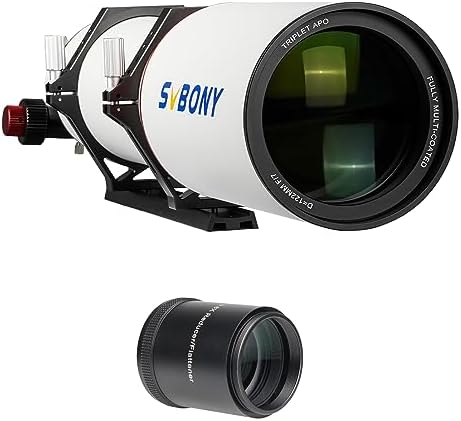
This 122mm refractor bundle offers more light gathering for deep sky targets while maintaining portability. The included dovetail base simplifies mounting and guide scope installation.
We may earn a commission when you buy through this link, at no additional cost to you.
The FPL-51 triplet lens reduces chromatic aberration ensuring sharpness and clarity. A comfortable handle makes moving the telescope easier for users of various experience levels.
The trade-off is the increased weight compared to smaller scopes which may require a sturdier mount. However the improved limiting magnitude allows fainter objects to be seen.
It is ideal for observers wanting a step up in aperture without sacrificing travel capability for astrophotography.
The 122mm aperture allows better resolution of faint deep sky objects due to a higher limiting magnitude than smaller models.
The included dovetail base provides multiple screw options for guide scopes and accessories to improve setup convenience.
We may earn a commission when you buy through this link, at no additional cost to you.
This 102mm aperture model delivers high-contrast views thanks to FMC coating and S-FPL51 ED glass. It is built for visual and photography use with a large focus travel for accessories.
We may earn a commission when you buy through this link, at no additional cost to you.
The 360-degree field rotator simplifies camera alignment. Without rotating the tube which saves time during imaging setup. The dual-speed focuser aids critical focus maintenance.
The main consideration is the need for a mount and accessories to function fully. The hood helps prevent dew and blocks stray light for better visual experience.
It suits observers prioritizing light grasp and ease of focusing for planetary and deep sky views.
The built-in field rotator allows perfect camera alignment without physical tube rotation ensuring easier framing of targets.
With 90mm focus travel and 1:10 ratio the focuser maintains precise focus even with heavy accessories like filter wheels attached.
We may earn a commission when you buy through this link, at no additional cost to you.
This bundle includes a 0.8X focal reducer and field flattener specifically designed for the 122mm SV550 OTA. It corrects field curvature and increases the effective field width for imaging.
We may earn a commission when you buy through this link, at no additional cost to you.
The FPL-51 triplet structure provides clarity and sharpness for faint deep sky objects. Users benefit from improved edge quality and wider framing capabilities right out of the box.
Weight and setup complexity are factors to consider due to additional accessories. However imaging efficiency is enhanced by the integrated correction tools.
It is perfect for advanced astrophotographers wanting maximum coverage with minimal custom component selection.
The 0.8X reducer shortens focal length to allow faster exposures and wider field captures for nebulae and galaxies.
Corrected field curvature ensures stars remain sharp across the edges of the sensor for consistent image quality.
We may earn a commission when you buy through this link, at no additional cost to you.
This kit bundles the 122mm refractor with field flattener and reducer for complete astrophotography readiness. It delivers high clarity for deep sky targets with convenient carrying handles.
We may earn a commission when you buy through this link, at no additional cost to you.
The FPL-51 triplet lens reduces aberration and enhances sharpness. Users note the extensive light baffling and durable construction which support long-term usage in various conditions.
The main limitation is the weight and price compared to basic optical tube assemblies. However the convenience of included accessories often justifies the investment for serious users.
It is an excellent choice for those seeking a turnkey large aperture imaging solution without component hunting.
Pre-matched accessories simplify assembly and calibration allowing quicker setup times for night sky sessions.
Multiple internal extinction barriers prevent stray light and improve contrast for detailed planetary and deep sky imagery.
We may earn a commission when you buy through this link, at no additional cost to you.
This kit provides an 80mm triplet refractor with field flattener for improved edge performance. It is a versatile choice for travelers aiming for quality deep sky imaging in a small footprint.
We may earn a commission when you buy through this link, at no additional cost to you.
The optics utilize FPL-51 glass and multilayer coatings for bright clear images. The included flattener mitigates field curvature for consistent focus across the frame.
Adjusting handle position improves safety during installation. While compact the system may still require a stable mount for optimal results.
It suits casual and advanced users who prioritize portability without sacrificing optical correction for astrophotography.
The SV209 flattener specifically addresses the fringe field curvature issues for cleaner edge detail in captured images.
Adjustable handles increase stability and safety during transport and mounting reducing risk of accidental drops.
We may earn a commission when you buy through this link, at no additional cost to you.
Selecting the right apochromatic refractor depends on your budget and goals. Here are key factors to consider for an informed decision.
Aperture determines light gathering power and resolution. Larger apertures like 122mm show fainter objects than 80mm but add weight and cost. Choose based on target brightness.
Select a size that fits your mount capacity and targets for best results.
Triplet APOs use three lens elements including ED glass to reduce chromatic aberration. This yields sharper colors than doublets or single lenses. Essential for photography.
Look for triplet designs with ED glass for superior color correction.
Focal ratio affects exposure time and image scale. F6 offers wider fields; F7 provides higher magnification. Balance speed and detail needs based on your imaging style.
F6 is faster; F7 gives more magnification for detailed shots.
Some kits come with field flatteners or reducers which save time and cost. Others are bare OTAs requiring separate purchases. Check bundle contents before buying.
Bundles with flatteners simplify imaging workflows significantly.
Portability matters for travel. Magnesium components reduce weight. Ensure the total setup fits your vehicle and mount limits. Heavier scopes need sturdier mounts.
Lighter models suit travel while heavier offer more light grasp.
Dual-speed focusers with 1:10 ratios allow fine adjustments for sharp stars. Ensure travel range fits your accessories like camera adapters or filter wheels.
Dual-speed focusers improve precision for photography.
Internal baffling and matte paint reduce stray light and improve contrast. Aluminum and magnesium alloys provide durability. Check construction details for long-term reliability.
Internal baffling enhances contrast in imaging.
Prices vary widely. Higher costs often reflect larger apertures and bundle value. Balance optical needs against spending limits for best ROI.
Higher budget buys larger apertures and accessories.
Assemble the OTA on a stable mount ensuring all locking screws are secure. Attach a finderscope or camera to align your view with the main optics before observing.
Use the dual-speed focuser to achieve critical focus. If imaging, allow the scope to cool to ambient temperature to minimize internal turbulence that affects image sharpness.
Store the telescope in a dry place with caps on optical surfaces. Clean lenses only with proper tools and avoid touching coatings to maintain optical performance over time.
An apochromatic refractor uses specialized lens elements to minimize chromatic aberration. It delivers sharp images with accurate colors for both visual and imaging.
A 80mm aperture offers good balance for beginners. It is portable yet capable of clear views and decent deep sky imaging with proper mount support.
A field flattener is essential for astrophotography to correct field curvature. Without it stars at the image edges appear blurred and out of focus.
Many models include portable handles and lightweight materials. However larger apertures increase weight. Choose based on your transport capabilities and location access.
Most support full and half-frame cameras. Check back focus length requirements when selecting accessories like flatteners or reducers to ensure compatibility with your camera body.
Triplet designs provide better correction of chromatic aberration than simpler optics. They ensure color accuracy and sharpness critical for high quality astrophotography results.
The top picks include the Askar 71F for budget, the SVBONY SV550 AP0 for overall value, and the SVBONY SV550 122mm for premium imaging capabilities.
Prioritize aperture and optical correction for your primary targets to ensure satisfaction. Balance portability with performance based on your observation habits.
Always verify current prices and availability since models change often. This guide helps narrow choices but market updates are key before purchasing.