
Channel Master TV Antenna Signal Strength Meter
3.9Editor score
Supports OTA TV frequencies
Displays signal level and SNR
Includes carrying bag and stylus
Finding the right cellular signal meter for antenna aiming is crucial for optimizing your signal booster or antenna setup. These tools help you locate the strongest signal source quickly and accurately.
We compared ten real products based on their frequency coverage, measurement accuracy, portability, and user feedback. Each item offers unique features tailored to different installation scenarios.
Each pick shows key specifications and real-world performance insights to help you decide. Prices and availability change frequently so check current listings before purchasing your device.
3.9Editor score

4.3Editor score

4.6Editor score
As an Amazon Associate we earn from qualifying purchases.
This side-by-side comparison highlights the core capabilities of each cellular signal meter to help you choose the right tool for your specific antenna aiming tasks.


The SureCall Five-Band RF Signal Meter is a dedicated tool designed for installing cell phone signal boosters. It supports five distinct frequency bands including PCS, Cellular, AWS, and LTE which are commonly used across major carriers in the United States.
We may earn a commission when you buy through this link, at no additional cost to you.
Its high receiving sensitivity of -110dBm ensures that even weak signals can be detected accurately. This precision is essential when aiming outdoor antennas to maximize signal capture before installation. The rechargeable NiMH batteries provide several hours of continuous operation which reduces downtime during field work.
While the device performs well in most conditions users should note that battery life can vary depending on backlight usage and frequency scanning intensity. Additionally because it targets specific bands it may not be suitable for applications requiring broader spectrum analysis beyond cellular frequencies.
This meter is ideal for homeowners and technicians installing cellular boosters who need reliable feedback without complex setup. If your goal is to optimize a signal booster system quickly this tool delivers the focused performance needed for successful antenna aiming.
The five-band support aligns with common carrier allocations making it easy to find the strongest signal for boosting applications.
Built-in rechargeable batteries eliminate the need for constant battery replacements during extended field installations or troubleshooting sessions.
We may earn a commission when you buy through this link, at no additional cost to you.
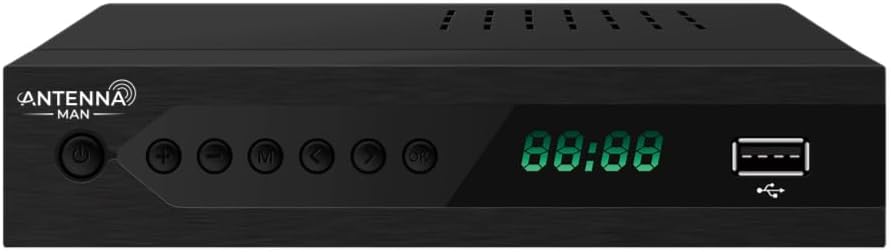
This device serves primarily as an ATSC digital converter box with integrated signal meter capabilities. It is designed for users who want to optimize over-the-air TV reception while also tracking signal strength in real time.
We may earn a commission when you buy through this link, at no additional cost to you.
Its plug-and-play design makes it accessible for non-technical users who need to align an antenna without specialized equipment. The real-time signal strength display allows quick adjustments to find the best viewing angle for maximum channel reception.
However the focus on TV signals means it is not suited for cellular signal meter tasks. Users looking specifically for 4G LTE or cellular booster installation may find this device lacks the necessary frequency bands.
For households focused on improving TV antenna performance this tool offers a straightforward solution. While not a dedicated cellular meter it demonstrates how signal feedback can simplify basic antenna aiming tasks.
Users can adjust the antenna instantly while watching the signal strength change which speeds up the alignment process significantly.
Beyond signal meter the device includes TV tuning and recording features which adds value for home entertainment setups.
We may earn a commission when you buy through this link, at no additional cost to you.
The Berkeley Varitronics Octopus is a professional-grade cellular signal meter engineered for precision tasks such as EV charging station deployment and cellular booster installation. It delivers true RSRP RSRQ and RSSI measurements which are industry standards for LTE signal assessment.
We may earn a commission when you buy through this link, at no additional cost to you.
Unlike typical phones or apps this device requires no SIM cards subscriptions or external devices to operate. This independence ensures consistent performance without network restrictions or app limitations. It supports all major US carriers and regional networks making it adaptable for various deployment scenarios.
The primary trade-off is the cost which reflects its specialized engineering and US manufacturing. While highly accurate it is built for professionals who need reliable data over general consumer convenience. Those who prioritize measurement integrity will find the investment worthwhile.
If you require precise LTE signal data for critical infrastructure or booster installations this meter sets a high standard. Its robust design and lack of dependency on external subscriptions make it a long-term asset for serious antenna aiming and network planning.
True RSRP and RSRQ readings provide the accuracy needed for technical network planning and infrastructure optimization.
By eliminating the need for SIM cards or apps the device ensures uninterrupted operation in any location without service dependencies.
We may earn a commission when you buy through this link, at no additional cost to you.
The RF Explorer Pro Spectrum Analyzer is an all-in-one RF measurement platform combining a spectrum analyzer power meter and tracking generator. It is ideal for engineers and advanced users who need detailed insight into signal environments beyond simple strength readings.
We may earn a commission when you buy through this link, at no additional cost to you.
Its 8-inch high-definition touchscreen provides clear visualization of signals in real time. Features like 2D and 3D waterfalls and GPS heatmaps allow users to map signal behavior over time and location which is critical for optimizing antenna placement in complex environments.
The device supports modular frequency configurations from 3.3 GHz to 7.5 GHz to match specific needs. While powerful the complexity may be overwhelming for casual users focused solely on basic booster installation. However for thorough analysis it offers unparalleled depth.
This analyzer is best for those who need to diagnose interference or tune antennas for specific frequencies. Its portability and battery life ensure it can be used in the field without constant access to power sources.
Waterfall and heatmap tools let you see how signals change over time helping you avoid interference and locate stable peaks.
Choose the frequency range that matches your project needs so you do not pay for unused capabilities.
We may earn a commission when you buy through this link, at no additional cost to you.
This kit is designed for professionals validating Wi-Fi 6 and 6E networks but includes tools that can assist with broader antenna aiming tasks. It provides advanced testing capabilities to troubleshoot and optimize wireless environments effectively.
We may earn a commission when you buy through this link, at no additional cost to you.
The tri-band physical location detection allows users to find access points and clients quickly on 2.4GHz 5GHz and 6GHz bands. The included external directional antenna and spectrum analyzer adapter enhance precision when assessing signal direction and strength.
Remote collaboration tools let engineers work with on-site technicians which saves travel time and costs. While the price is high for casual users the complete kit ensures you have all necessary components for professional deployment without additional purchases.
If your antenna aiming needs involve Wi-Fi infrastructure this kit offers comprehensive support. It may not target cellular bands directly but its analysis tools provide valuable insights for optimizing wireless signal coverage.
The kit supports critical services and key devices ensuring that your network deployment meets performance standards.
Consolidate and manage field test data seamlessly to improve reporting and long-term network planning.
We may earn a commission when you buy through this link, at no additional cost to you.
The Extech 480836 is a high-frequency EMF strength meter designed for measuring radiation levels from mobile phones base stations and microwave sources. It uses a triaxial measurement probe to ensure non-directional accurate readings.
We may earn a commission when you buy through this link, at no additional cost to you.
Its frequency range from 50MHz to 3.5GHz captures many cellular bands allowing users to gauge signal presence. The ability to store up to 99 sets of measurements helps track changes over time or compare different locations.
While it does not show detailed cellular protocols like LTE or RSRP it provides a general sense of RF intensity which is useful for safety and initial aiming checks. Users needing specific cellular data may need supplementary tools.
This meter is suitable for those concerned with EMF levels alongside signal strength. It offers a straightforward way to validate that your antenna placement aligns with expected RF fields.
The triaxial probe ensures readings are not affected by antenna orientation which improves reliability in various environments.
Store multiple readings to compare different locations or monitor signal changes over time without losing data.
We may earn a commission when you buy through this link, at no additional cost to you.
The MINI1300 Antenna Analyzer features a 4.3-inch TFT LCD touchscreen and covers frequencies from 0.1 to 1300MHz. It is designed for SWR measurement and frequency sweeping in HF VHF and UHF bands.
We may earn a commission when you buy through this link, at no additional cost to you.
Its single point scanning and TDR modes allow for detailed antenna tuning and diagnostics. The compact design makes it easy to carry to remote sites or install on a workbench without taking up much space.
Users should note that firmware updates are not supported which means you cannot add new features later. Additionally the frequency range stops at 1300MHz which may exclude some cellular bands like LTE or 5G.
This analyzer is best for hobbyists or technicians working on legacy or lower-frequency antennas. If your project requires HF VHF or UHF SWR tuning it provides a reliable and portable solution.
The large TFT screen simplifies navigation and data reading during complex measurement sessions or outdoor tuning.
Its small size makes it easy to transport to field sites without needing additional protective cases.
We may earn a commission when you buy through this link, at no additional cost to you.
The SA6 is a handheld RF tester that integrates a spectrum analyzer and signal generator in one unit. It covers a wide frequency range from 35 to 6200MHz supporting technologies like 4G LTE GSM and WiFi.
We may earn a commission when you buy through this link, at no additional cost to you.
Its 3.2-inch color touchscreen allows real-time spectrum viewing and the tracking generator helps measure filter and amplifier responses. This versatility makes it suitable for field testing and device debugging without multiple tools.
The device includes USB Type-C connectivity for charging and data logging to a PC. Although it is lightweight users should be aware that battery capacity may vary depending on the manufacturing batch.
For technicians who need a compact RF tool for multiple signal types this analyzer is a strong option. Its support for GSM and LTE bands makes it relevant for cellular antenna aiming and troubleshooting.
Switch between analyzer and generator modes instantly which speeds up diagnostics for communication signals.
Weighing only 380g the device is easy to carry for on-site testing without physical strain.
We may earn a commission when you buy through this link, at no additional cost to you.
This variant offers comprehensive RF analysis coverage from 35 to 6200MHz supporting WiFi GSM GPRS and GLONASS. It includes a tracking generator which enables return loss measurements with optional accessories.
We may earn a commission when you buy through this link, at no additional cost to you.
Its rugged housing is designed for technicians and maintenance teams working in tight spaces. Real-time spectral measurement allows rapid assessment of RF environments for repeater diagnostics or field evaluation.
The package includes charging cables extension cables and a stylus so you can start using it immediately. While not as polished as higher-end models it provides essential tools for budget-conscious users needing basic RF analysis.
If you need an affordable tool for checking LTE or WiFi signal presence this handheld fits the need. It is best for quick assessments rather than deep technical debugging.
Included accessories like cables and a stylus ensure you can begin testing without additional purchases.
Quick full-span scans help you evaluate signal environments rapidly without spending hours on setup.
We may earn a commission when you buy through this link, at no additional cost to you.
The Channel Master Signal Strength Meter is a digital handheld tool designed for precise OTA antenna alignment. It supports all Over-the-Air ATSC TV frequencies within the USA and displays both RF signal level and Signal to Noise Ratio.
We may earn a commission when you buy through this link, at no additional cost to you.
Its built-in rechargeable battery ensures you can work without constant battery replacements. The color touch-screen display with stylus makes it easy to read data even in bright outdoor conditions.
While its primary focus is TV antenna alignment the principles of signal strength measurement apply broadly. Users on a tight budget may find value in its simplicity and included carrying case though it does not support cellular bands.
This meter is ideal for homeowners looking to optimize their TV antenna performance affordably. It demonstrates how signal feedback tools can simplify installation tasks without requiring expensive professional gear.
Showing Signal to Noise Ratio along with level helps you understand signal quality not just strength.
The included case and stylus protect the device and ensure you have everything needed for installation on site.
We may earn a commission when you buy through this link, at no additional cost to you.
Selecting the right cellular signal meter depends on your specific needs such as frequency bands supported measurement accuracy and portability. Understanding these factors helps you choose a tool that fits your installation tasks.
Ensure the meter supports the bands used by your carrier. For cellular boosters look for PCS Cellular AWS and LTE bands. TV tools focus on ATSC frequencies while spectrum analyzers cover broader ranges.
Verify that the frequency range matches your project so you do not miss essential signals during aiming.
Professional meters provide true RSRP RSRQ and RSSI readings which are standard for LTE assessment. General EMF meters show overall intensity but may lack protocol-specific details.
Choose tools with high sensitivity like -110dBm or better to detect weak signals reliably in outdoor environments.
Since antenna aiming often happens outdoors portability is key. Rechargeable batteries or AA options extend field time. Weight and size affect ease of handling on ladders or in tight spaces.
Prioritize devices with at least three hours of operation to complete installations without frequent recharging.
A clear display with backlight helps in dark or bright conditions. Touchscreens offer intuitive control while physical buttons work well with gloves or in windy weather.
Real-time signal strength bars or graphs allow quick adjustments during aiming without digging into menus.
Some devices include tracking generators GPS heatmaps or data logging which are valuable for complex installations. Basic meters focus solely on signal strength which is sufficient for simple booster setups.
Evaluate whether extra features justify the added cost based on your technical requirements.
Ensure the meter supports all major carriers in your region including AT&T Verizon and T-Mobile. Regional variations may affect signal availability so broader support reduces risk.
Check if the tool works without SIM cards or subscriptions to avoid ongoing costs or restrictions.
Field work exposes tools to harsh conditions. Look for rugged housings and protective cases to prevent damage during transport and use.
Quality construction ensures the device lasts through multiple projects without performance degradation.
Professional tools often include manufacturer support or accessory availability. Review warranty terms and availability of replacement parts before purchasing.
Reliable support can save time if the device encounters issues during critical installation tasks.
Start by mounting the antenna at a secure location and connect the meter if required. Power on the device and select the appropriate band or mode for your target carrier.
Rotate the antenna slowly while watching the signal strength display. Pause when the reading peaks to find the strongest signal direction. Use a tripod or helper to hold the meter steady during this process.
Clean the device regularly and store it in a protective case when not in use. Avoid exposure to extreme temperatures and moisture to maintain sensor accuracy and battery life.
Focus on PCS Cellular AWS and LTE bands which are common for boosters. Ensure the device covers your carrier's specific allocations to avoid missing key signals.
TV meters target ATSC frequencies and will not detect cellular signals. You need a meter with GSM LTE or 4G support for accurate cellular antenna aiming.
Most professional cellular signal meters do not require SIM cards or subscriptions. They measure signal directly from the air without depending on network services.
Budget tools show general signal presence but may lack precise metrics like RSRP. Professional meters offer higher accuracy and broader frequency support for critical tasks.
Spectrum analyzers provide detailed signal visualization which helps identify interference and optimize placement. They are ideal for complex environments but may be overkill for simple installations.
Most devices offer three to five hours of continuous use. Check battery specs before heading out to ensure you can complete the task without recharging.
A backlight helps in low-light conditions like dawn or dusk. It is useful for evening installations but not strictly required if you work in daylight.
Professional LTE meters like the Berkeley Varitronics Octopus are built for such sites. They provide the precision needed for reliable connectivity in public infrastructure.
The top picks range from dedicated boosters tools to professional spectrum analyzers each serving distinct needs. The SureCall Five-Band Meter offers balanced performance for most users while the Berkeley Varitronics Octopus stands out for technical precision.
Prioritize frequency coverage and accuracy based on your specific installation goals. Portability and power options matter if you work in remote locations without easy access to power.
Always verify current availability and pricing before buying. Tools and market offerings evolve quickly so checking the latest listings ensures you select the best value for your antenna aiming project.