
G-PLUG 15FT RG8X
4.5Editor score
Pure copper core
Double shielded design
Flexible outdoor rating
This guide compares the top ten coax cables for ham radio setups including performance features and durability ratings to help you choose the right cable.
Finding the right coax cable for your ham radio station is crucial for maintaining signal integrity and minimizing loss across various frequencies. A high-quality cable ensures that your transmitted power reaches the antenna efficiently while reducing unwanted interference from external sources.
We evaluated ten leading coaxial cable options based on their construction quality connector durability and signal performance metrics across common amateur radio bands. Each product was assessed for its suitability in mobile base and marine environments to provide a comprehensive comparison for enthusiasts.
Each pick below highlights specific strengths and ideal use cases for different operator needs ranging from budget-friendly jumper cables to premium low-loss transmission lines. Please note that product availability and pricing may change frequently so verify details before making your final purchase decision.
4.5Editor score

4.7Editor score
4.7Editor score
The following table provides a side-by-side comparison of all ten featured coaxial cables highlighting their key specifications and primary applications for amateur radio operators.


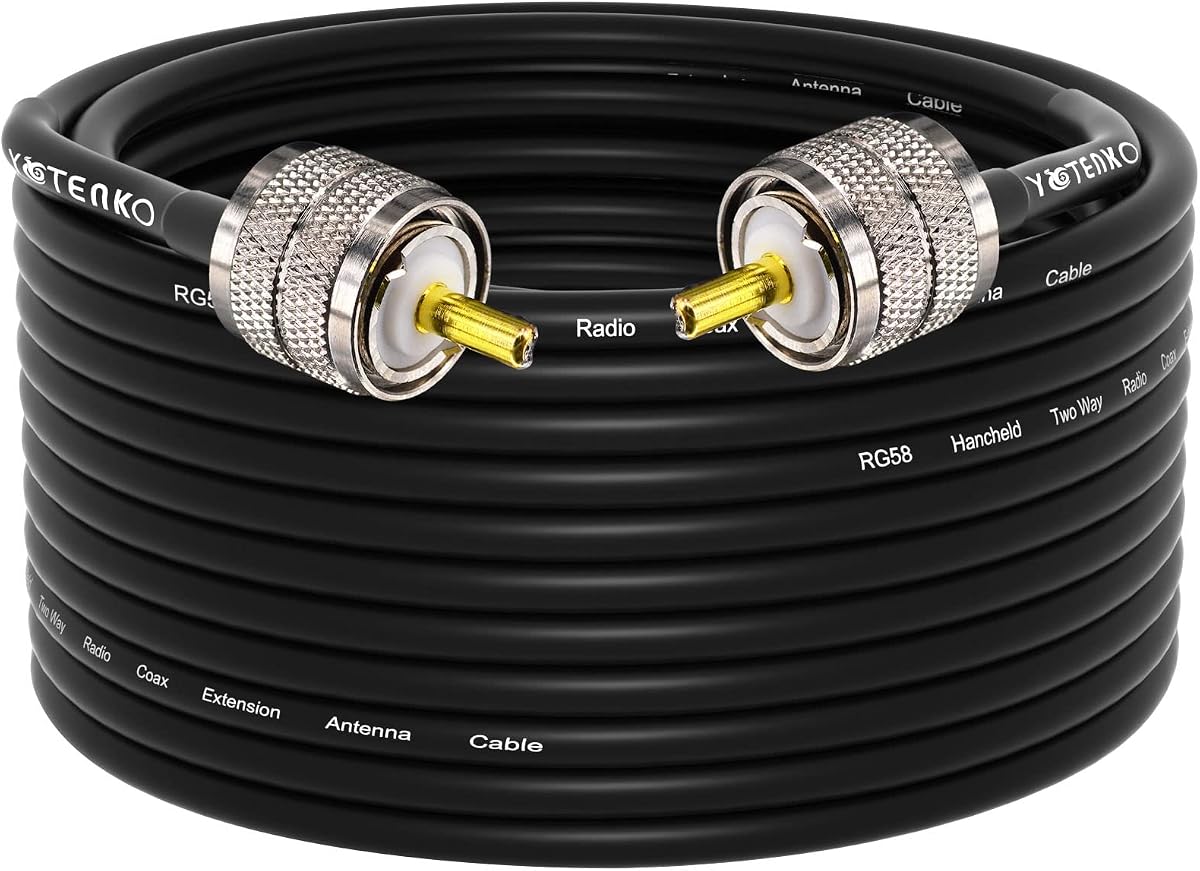

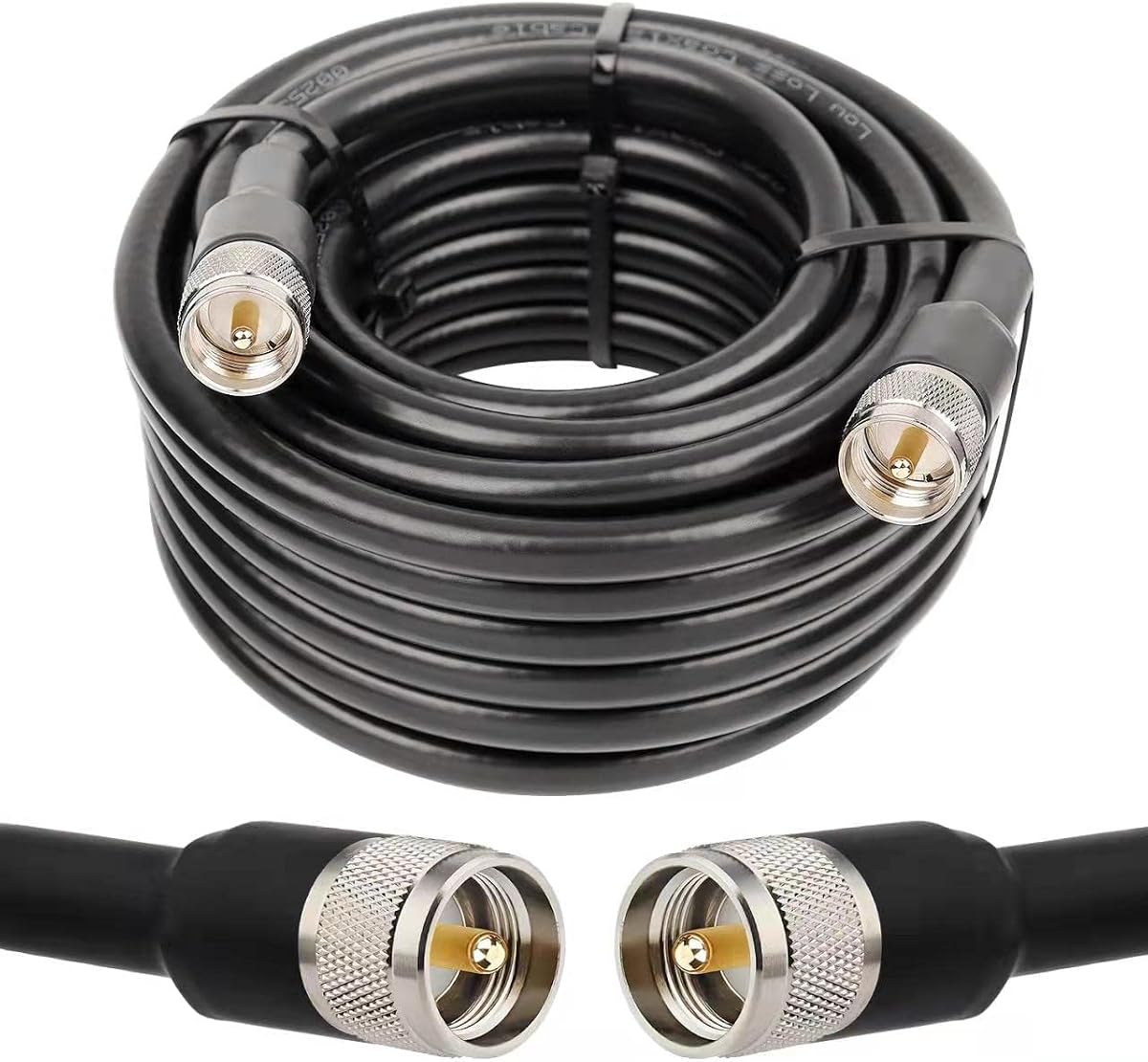

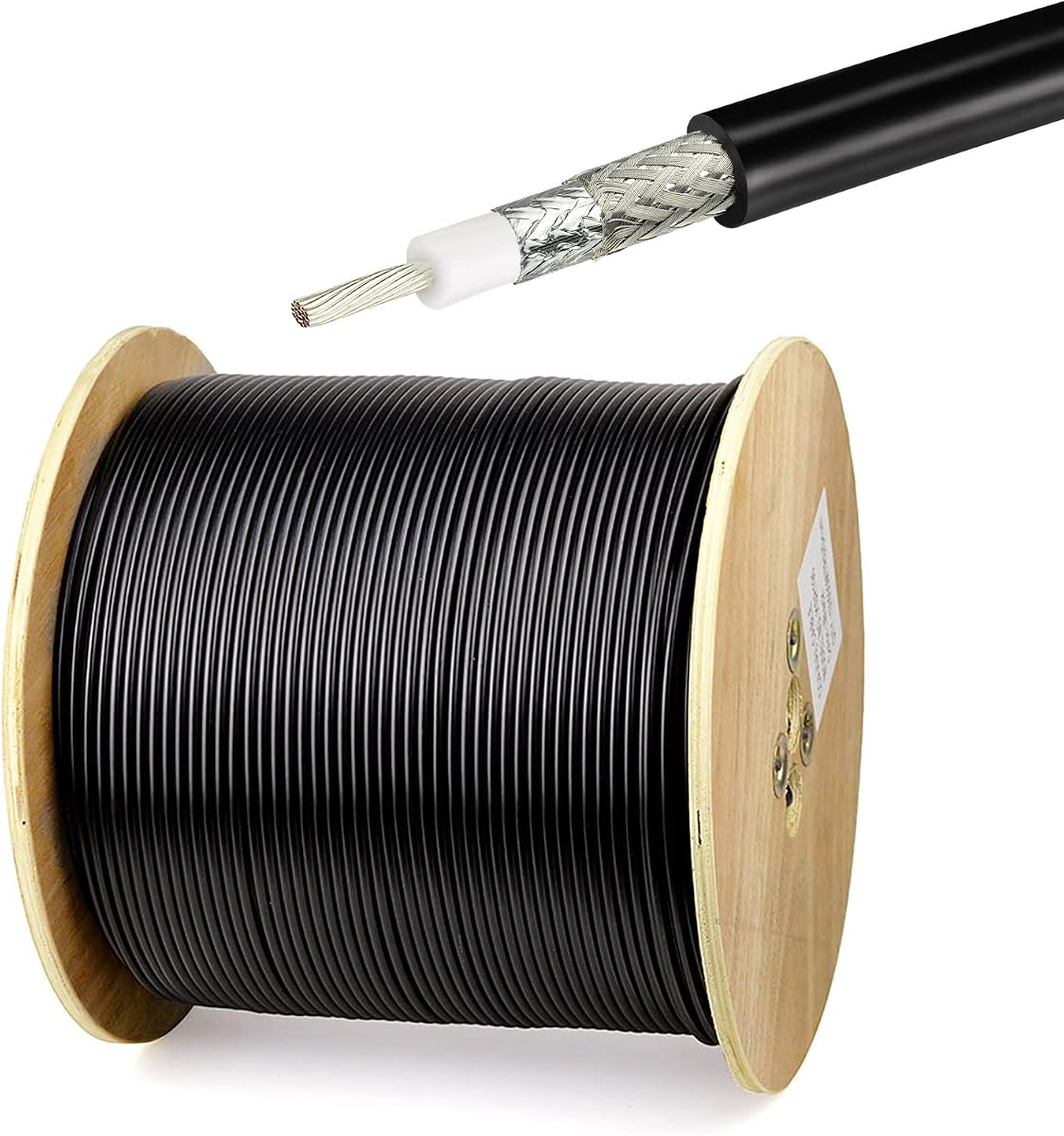
This RG8x Coaxial Cable stands out as a top performer for ham radio operators seeking reliable signal transmission with minimal interference. Rated highly by users, it features a pure copper inner conductor and double shielding to prevent signal leakage effectively across various frequencies.
We may earn a commission when you buy through this link, at no additional cost to you.
The high-quality UHF connectors are fully molded with nickel-plated brass bodies and gold-plated center pins ensuring secure connections that resist corrosion over time. Its sturdy PVC jacket allows for flexible routing in both indoor and outdoor environments without compromising structural integrity.
While this cable is slightly heavier and bulkier than thinner RG58 options, the trade-off is justified by its superior performance in high-powered applications and reduced signal attenuation. The double shielding also minimizes external interference which is critical for clear communication.
We recommend this cable for operators who need a robust link between their transceiver and antenna system especially in mobile or base station setups. Its versatility makes it a practical choice for anyone looking to upgrade from standard cables to a more reliable solution.
The double shielding construction effectively blocks external noise and prevents signal leakage ensuring cleaner reception and stronger transmission.
Nickel-plated brass connectors with gold-plated pins provide a secure oxidation-resistant connection that maintains integrity over extended use.
We may earn a commission when you buy through this link, at no additional cost to you.
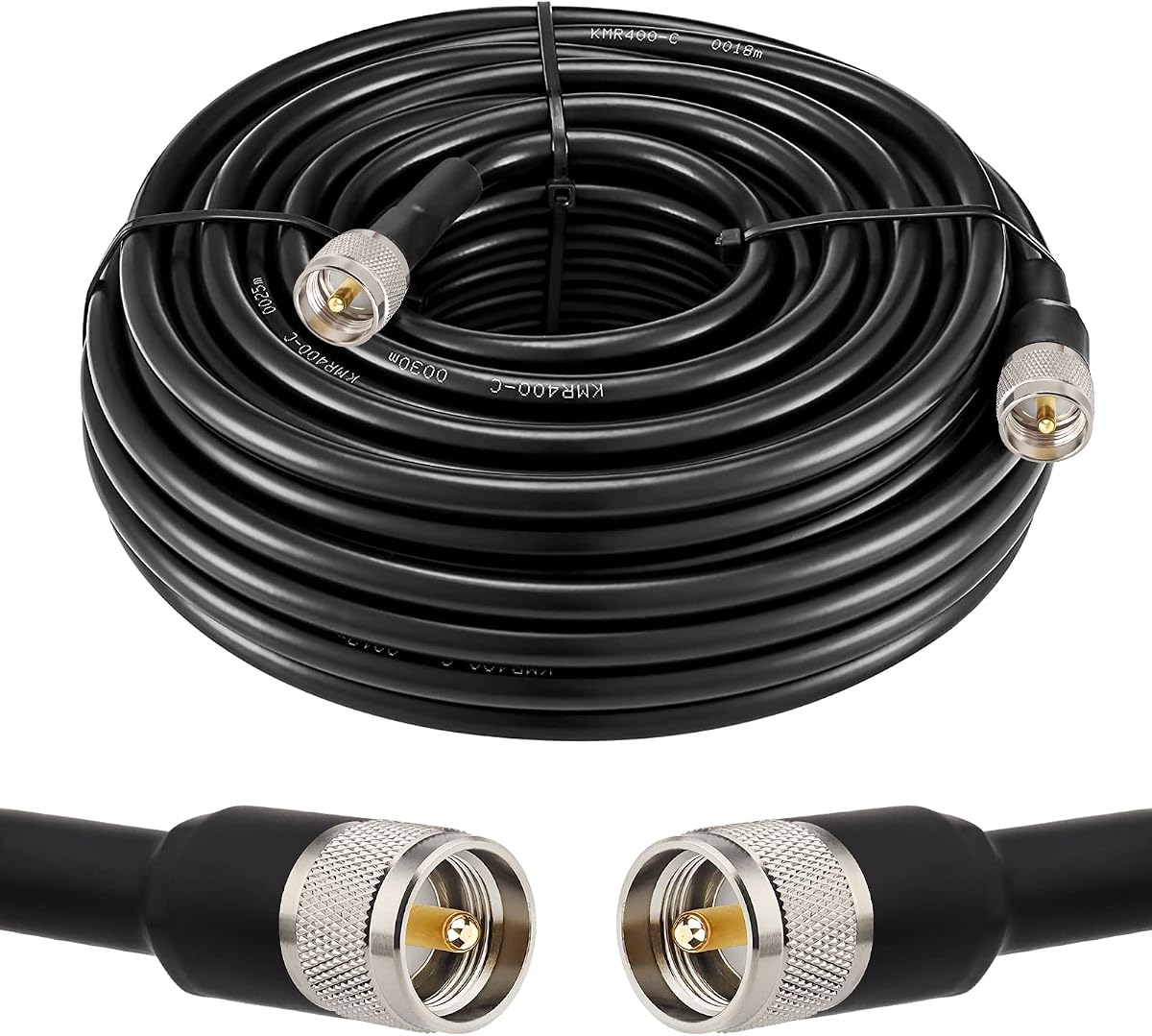
The MOOKEERF 50ft KMR400 cable delivers exceptional low-loss performance making it ideal for long-distance high-frequency use where signal integrity is paramount. With loss under 2.8dB at 450MHz and an SWR of 1.25 or less, it ensures efficient power transfer to your antenna.
We may earn a commission when you buy through this link, at no additional cost to you.
Its well-built structure includes a copper clad aluminium inner conductor and an outer conductor made of aluminum foil and tinned copper braid for maximum signal protection. The jacket is high-quality PVC that is waterproof and durable allowing reliable operation in outdoor environments.
The connection points are reinforced with a 2.2 inch heat shrink tube with built-in adhesive preventing the connectors from pulling out during frequent bending or stress. This attention to detail enhances longevity and reliability compared to ordinary cables with shorter strain relief.
Ham radio operators needing a dependable cable for HF amateur radio marine VHF or antenna analyzers will find this product offers great value despite its premium price. The robust construction ensures it can withstand challenging conditions while maintaining consistent performance.
The cable maintains signal strength over distance with minimal loss ensuring your transmitted power reaches the antenna effectively.
Longer adhesive-lined heat shrink tubes secure the connection between cable and connectors preventing pull-out and mechanical failure.
We may earn a commission when you buy through this link, at no additional cost to you.
This STEREN RG8X Coaxial Cable offers a premium upgrade from RG58 delivering better performance for high-powered applications like base station antennas and HF setups. It is designed to ensure optimal signal quality and durability for a wide range of radio needs including CB and amateur radio.
We may earn a commission when you buy through this link, at no additional cost to you.
The fully molded PL259 connectors are nickel-plated to provide a secure and reliable connection that withstands challenging conditions over time. This durable construction helps maintain consistent signal integrity even when used in various environments or with different antenna configurations.
While it shares similar specifications with other RG8X options its specific design focuses on versatility for indoor and outdoor installations without sacrificing build quality. Users appreciate its ability to serve multiple purposes from vehicle installs to portable radio setups effectively.
For operators looking for a trusted brand and solid performance without the premium price tag of specialized low-loss cables this RG8X option is an excellent choice. It balances cost and reliability well making it a staple for many ham radio stations.
Compatible with tuners meters and various antenna types making it a flexible solution for different station configurations.
Nickel-plated PL259 connectors ensure durability and secure fit reducing the risk of connection failures in the field.
We may earn a commission when you buy through this link, at no additional cost to you.
The G-PLUG 15FT RG8X provides a cost-effective solution for short-distance connections between radios and antennas without compromising on essential signal quality. It features a pure copper core and double shielding to help maintain signal strength and reduce interference in various environments.
We may earn a commission when you buy through this link, at no additional cost to you.
Its durable PL259 connectors are equipped with gold-plated pins and nickel-plated brass bodies ensuring stable and corrosion-resistant connections that support long-term use. The rugged PVC jacket is flexible and designed to withstand outdoor conditions for rooftop or mobile setups.
While limited to a fifteen-foot length this cable is perfect for jumper applications or short runs where longer cables would introduce unnecessary bulk or cost. It supports reliable output for tuning CB radios or dialing in HAM setups efficiently.
Budget-conscious enthusiasts seeking a reliable short coax cable for quick installs or indoor stations will find this option delivers consistent performance at a low price. Its build quality ensures it can handle the demands of everyday radio use without issues.
The short length and flexible jacket make it easy to route through tight spaces for mobile or indoor setups.
Double shielding minimizes external interference ensuring cleaner transmission and reception even in noisy environments.
We may earn a commission when you buy through this link, at no additional cost to you.
This RG58 Coaxial Cable is engineered for high-efficiency ham radio and CB communication with a focus on flexibility and reliable performance over moderate distances. It features an upgraded 6cm strain relief and real bare copper shielding to balance interference rejection with maximum flexibility.
We may earn a commission when you buy through this link, at no additional cost to you.
The ultra-flexible design makes it easy to route through window frames and tight vehicle conduits without causing signal pinching or damage. It delivers consistent performance and signal clarity for long-range two-way radio communication within standard frequency bands.
While RG58 generally has higher loss than RG8X this specific cable is optimized for HF/VHF bands and offers a lightweight design that prevents wear during frequent bending. The extended heat shrink tubing protects connection points effectively during field days or temporary setups.
Mobile radio operators and those requiring a lightweight flexible cable for temporary or stealth setups will appreciate this model's durability and performance balance. It serves as a reliable alternative to thicker cables when routing ease is a priority over raw power handling.
The thin diameter and flexible structure allow for easy routing in tight spaces like vehicle door panels or window frames.
A 6cm heat shrink tube protects solder points from stress ensuring connection integrity during frequent bending.
We may earn a commission when you buy through this link, at no additional cost to you.
The exgoofit RG8X Coaxial Cable offers a substantial 100ft length suitable for long-distance runs between base stations and antennas without compromising signal integrity. It is constructed with 19PCS tinned pure copper strands providing strong conductor performance that handles RF power efficiently.
We may earn a commission when you buy through this link, at no additional cost to you.
Double shielding protects against signal leakage and interference while the flexible PVC jacket ensures the cable remains waterproof for indoor and outdoor use. Fully molded nickel-plated brass UHF connectors with gold-plated center pins provide durable and secure connections at both ends.
Despite its length this cable maintains a balance of flexibility and durability making it easier to route compared to some thicker premium options. The inclusion of a two-year warranty adds peace of mind for operators investing in longer transmission lines.
Operators needing extended runs for outdoor antennas or complex setups will find this cable offers reliable performance and durability at a competitive price point. Its construction supports consistent power delivery over longer distances effectively for amateur radio applications.
The 100ft length allows for flexible antenna placement away from the station without needing additional splices.
Gold-plated center pins and nickel-plated connectors resist corrosion ensuring stable connectivity over time.
We may earn a commission when you buy through this link, at no additional cost to you.
XRDS 100FT KMR 400 is a premium low-loss coaxial cable designed for demanding amateur radio applications requiring superior signal retention over long distances. With a larger center conductor and ultra-low loss characteristics it supports better signal performance than standard RG58 or RG240 types.
We may earn a commission when you buy through this link, at no additional cost to you.
The cable is built with a UV proof rf pvc jacket designed to withstand 20 years of outdoor exposure in harsh environments ensuring long-term reliability. Its clamp connector design provides a secure connection that prevents coming off compared to standard crimp types.
Adhesive-lined heat shrink tubes seal the cable to UHF connectors effectively against moisture and contaminants enhancing durability in outdoor extreme weather. This robust construction justifies its higher cost for operators needing a rugged solution for marine or base station use.
High-power operators and those with antennas in exposed locations will benefit from this cable's enhanced durability and minimal signal attenuation. It is a top choice for installations where longevity and consistent performance are critical priorities.
UV proof jacket and secure clamp connectors ensure the cable withstands harsh weather and mechanical stress effectively.
Larger center conductor reduces attenuation allowing for longer runs without significant power loss to the antenna.
We may earn a commission when you buy through this link, at no additional cost to you.
This MOOKEERF PL259 CB Coax Cable offers low-loss performance comparable to premium LMR400 cable with loss less than 1.5dB at 450MHz ensuring efficient power transmission. It is built with a copper clad aluminium inner conductor and an outer conductor of aluminum foil and tinned copper braid.
We may earn a commission when you buy through this link, at no additional cost to you.
The heavy-duty clamp design for the connector is robust and prevents breaking easily compared to crimp types ensuring reliable connections over time. Adhesive-lined heat shrink tubes seal against moisture and water providing enhanced protection for outdoor extreme weather use.
Its durable waterproof PVC jacket and corrosion-resistant nickel-plated connector shells make it suitable for marine boat VHF radio and other demanding environments. The cable effectively handles high-frequency use without worrying about signal loss or mechanical failure during operation.
Operators needing a rugged low-loss jumper cable for HF amateur radio or marine applications will find this product delivers consistent quality. The thoughtful design details such as the adhesive shrink tube add significant value for long-term reliability.
Loss under 1.5dB ensures efficient signal transfer over 50ft reducing the risk of weak antenna signals.
Clamp design and adhesive shrink tubes secure connections and resist moisture ensuring durability in the field.
We may earn a commission when you buy through this link, at no additional cost to you.
XRDS -RF RG-316 Coax Cable is a miniature coax ideal for tight routing and lightweight installations with a diameter of only 0.1 inches. It features a silver plated copper inner conductor and braid for low signal loss and a flexible teflon jacket suitable for harsh environments.
We may earn a commission when you buy through this link, at no additional cost to you.
The cable supports frequencies up to 6GHz with low attenuation and VSWR ensuring reliable performance for VHF UHF interconnections and antenna setups. Its thin and flexible nature allows for easy integration into compact spaces without inducing signal interference or strain.
While it is not suitable for high-power transmission due to its small size it excels in low-power applications where flexibility and minimal weight are priorities. The stranded core and lightweight design make it a perfect fit for internal station wiring or portable projects.
Ham radio operators and hobbyists needing a thin flexible cable for interconnections or low-power antennas will appreciate its versatility and performance. It balances low loss with extreme flexibility making it a valuable tool for specialized wiring needs.
The 0.1 inch diameter allows routing through very tight spaces where standard cables cannot fit.
Designed to handle frequencies up to 6GHz with low attenuation ensuring clear signal transmission.
We may earn a commission when you buy through this link, at no additional cost to you.
Superbat RG8x Coaxial Cable offers a solid upgrade from RG58 for high-powered applications with low loss and a waterproof PVC jacket for harsh outdoor use. It is compatible with a wide variety of connectors including PL259 SMA BNC and N connectors for flexible station configurations.
We may earn a commission when you buy through this link, at no additional cost to you.
The cable supports better signal transfer with minimum signal loss over large distances and higher frequency use ensuring reliable communication. Its design allows it to be bent and strapped without inducing signal interference making installation straightforward and effective.
Professional RF coaxial cable manufacturers behind this product offer customization options for length which adds value for operators needing specific run lengths. The robust construction ensures it can handle the rigors of regular use without compromising performance over time.
Operators seeking a versatile durable coaxial cable that supports various connectors and conditions will find this option offers great reliability. Its balance of performance and compatibility makes it a practical choice for both amateur and professional RF applications.
Compatibility with multiple connector types allows easy integration into diverse station setups and antenna systems.
Efficient design ensures low loss even over 50ft maintaining strong signal quality for high-frequency transmission.
We may earn a commission when you buy through this link, at no additional cost to you.
Selecting the right coax cable requires understanding your specific frequency needs power levels and environmental conditions to ensure optimal station performance.
Most amateur radio systems operate at 50 Ohms impedance so matching your cable to this standard is essential for minimizing standing wave ratios and maximizing power transfer. Mismatched impedance can lead to signal reflection and potential damage to transmitters.
Always choose 50 Ohm cables unless you have a specific requirement for another impedance standard to maintain system efficiency and safety.
Larger diameter cables like RG8X or KMR400 typically have lower signal loss over distance compared to thinner cables like RG58 making them ideal for longer runs. Higher loss can reduce the effective power reaching your antenna especially at VHF and UHF frequencies.
Consider the length of your run and the frequency you operate on when choosing cable thickness to balance flexibility with signal integrity.
Pure copper conductors offer the best conductivity and signal integrity but may be more expensive than copper clad aluminum options. Copper clad aluminum can provide good performance at a lower cost but may have slightly higher loss over time.
Select a conductor material that balances your budget with the need for minimal attenuation especially for high power or long distance setups.
Connectors such as PL259 must be securely attached with good plating to prevent corrosion and maintain low resistance at connection points. Poor quality connectors can cause signal loss and mechanical failure especially in outdoor environments exposed to moisture.
Look for connectors with nickel or gold plating and robust crimp or clamp designs to ensure durable and reliable connections over time.
If your installation is outdoors choose cables with waterproof jackets and UV resistant materials to withstand exposure to weather and sunlight. Flexible PVC jackets are common but check for ratings that confirm suitability for long-term outdoor exposure without degradation.
Ensure the cable you select is rated for the specific environmental conditions it will face whether indoor or outdoor to maintain longevity.
Select a cable length that minimizes excess slack to reduce signal loss while allowing enough flexibility for neat routing and future moves. Longer cables than necessary add weight and cost without benefit so measure your install distance carefully.
Plan your routing path beforehand to choose a cable diameter that fits through conduits or tight spaces without pinching or damage.
Double shielding provides better protection against external interference and signal leakage compared to single shielded designs especially in electrically noisy environments. Proper shielding is critical for maintaining clear reception and reducing unwanted noise in your signals.
Verify that the cable has multiple shielding layers like foil and braided copper to maximize interference rejection and signal quality.
Higher power stations require cables rated to handle increased heat and electrical load without degradation or melting of the insulation. Thicker cables generally offer better power handling so match this to your transceiver's output power.
Check manufacturer specifications for power ratings to ensure the cable can safely support your transmission levels without failure or overheating.
When installing your coax cable ensure that connections are tightly secured and weatherproofed to prevent moisture ingress that can degrade signal quality over time. Use appropriate ferrules and heat shrink tubing to protect the connection points from mechanical stress and corrosion.
Avoid sharp bends or kinks in the cable during routing as these can damage the internal conductors and insulation leading to signal loss or complete failure. Maintain a gentle bend radius specified by the manufacturer to preserve the cable's structural integrity and electrical properties.
Regularly inspect your coax cables for signs of wear such as cracks in the jacket corrosion on connectors or fraying of the shielding. Clean connectors with contact cleaner and replace damaged sections promptly to maintain optimal performance and prevent interference in your station.
RG8X cables have a larger diameter and thicker center conductor compared to RG58 resulting in lower signal loss and better power handling capabilities. RG58 is thinner and more flexible making it suitable for short runs and mobile use where space is limited while RG8X is better for base stations requiring minimal attenuation.
Measure the distance between your radio and antenna carefully allowing a small amount of slack for movement but avoiding excess length that adds unnecessary loss. Choose the standard length closest to your measured distance to minimize signal attenuation while maintaining routing flexibility.
Outdoor coax cables should have waterproof jackets and UV resistant materials to withstand weather exposure without degradation. Standard indoor cables may deteriorate quickly if exposed to rain or sun so always verify outdoor ratings for permanent installations.
Impedance matching ensures maximum power transfer from your transmitter to the antenna minimizing reflected power that can damage equipment and reduce signal efficiency. Most ham equipment uses 50 Ohm systems so selecting 50 Ohm coax maintains proper system function and safety.
PL259 UHF connectors are the most common for amateur radio setups due to their compatibility with many transceivers and antennas. Other connectors like Ntype BNC or SMA may be used depending on specific equipment requirements and frequency bands.
Regular inspections every few months help identify potential issues like connector corrosion jacket damage or loose connections before they affect performance. More frequent checks are advisable after severe weather events or physical disturbances to ensure continued reliable operation.
Choosing the right coax cable is essential for maintaining signal integrity and minimizing loss across various frequencies in your ham radio station. We highlighted ten top products each offering unique strengths from budget-friendly RG8X to premium low-loss KMR400 options for different operator needs.
Prioritize cable specifications that match your specific operating frequencies power levels and environmental conditions to ensure reliable and efficient transmission. Consider connector quality and durability to avoid future maintenance issues while securing a stable connection for your antenna system.
Please verify current prices and availability before purchasing as product details may change frequently. Investing in a high-quality coax cable will significantly enhance your communication experience and long-term station performance.