
Dissolved Oxygen Meter with ATC
4.0Editor score
Includes calibration powder
Wide 0-40 mg L range
Automatic temperature compensation
This comprehensive guide compares the top dissolved oxygen sensors 2 for aquaculture and labs to help you choose the right model for accurate water monitoring.
Finding the right dissolved oxygen sensor is crucial for maintaining healthy water environments in aquaculture and laboratory settings. Reliable sensors ensure accurate readings that protect aquatic life and support scientific research effectively.
We evaluated ten top-rated models based on accuracy, ease of use, durability, and connectivity features. Each product was selected for its ability to deliver consistent performance across various testing scenarios and environments.
Every pick highlights specific strengths and ideal use cases for different user needs. Please note that product availability and pricing may change over time so verify details before purchasing your chosen sensor.
4.0Editor score
4.4Editor score

4.8Editor score
This side-by-side comparison highlights the key specifications and features of each dissolved oxygen sensor to help you make an informed decision based on your specific monitoring requirements.



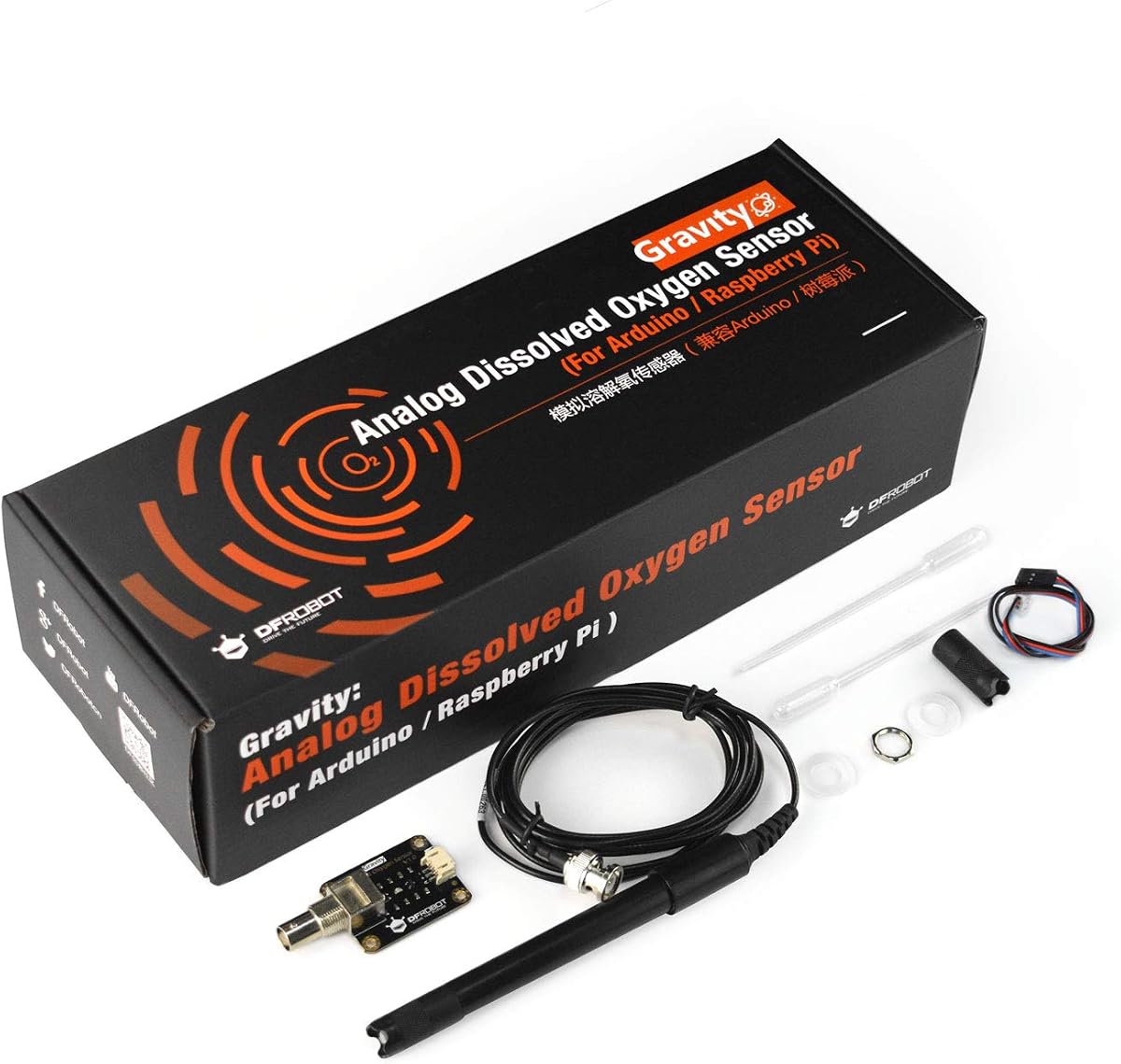
The Gravity Analog Dissolved Oxygen Sensor Kit stands out as a top choice for makers and IoT enthusiasts. With a rating of 4.4 it offers reliable performance for water quality monitoring projects using Arduino or ESP32 boards.
We may earn a commission when you buy through this link, at no additional cost to you.
Its galvanic probe requires no polarization time allowing instant readings whenever needed. The hardware filtering ensures stable signals without complex software processing making it ideal for low power systems.
While the filling solution is not included due to shipping limits the sensor includes a spare membrane cap. This reduces long-term maintenance costs for hydroponics or lab research applications significantly.
This kit is perfect for anyone building smart aquaculture systems or educational lab setups. Its open-source support and quick calibration make deployment fast and efficient for most users.
The galvanic probe technology eliminates the need for pre-heating or polarization time ensuring you can take readings at any moment.
Spare membrane caps and replaceable components mean you do not need to discard the entire probe when consumables run out.
We may earn a commission when you buy through this link, at no additional cost to you.
The LDO Dissolved Oxygen Sensor offers a robust solution for industrial and environmental monitoring needs. Its long cable allows placement in hard-to-reach water bodies while maintaining signal integrity.
We may earn a commission when you buy through this link, at no additional cost to you.
Built for durability it delivers consistent results over time reducing the need for frequent replacements. The user-friendly design minimizes maintenance costs and simplifies daily operations.
Although priced higher than basic kits the investment is justified for professional applications. It improves efficiency by providing quick and stable performance in demanding use cases.
Ideal for large aquaculture facilities or environmental labs this sensor ensures dependable water analysis. Its versatility makes it suitable for both fixed installations and portable field testing.
The 10 meter cable allows flexible sensor placement in ponds tanks or natural water bodies without proximity limits.
Materials are selected for long-term durability ensuring reliable performance in tough industrial or environmental conditions.
We may earn a commission when you buy through this link, at no additional cost to you.
The YSI-605203 is a polarographic sensor designed for accurate laboratory measurements. With a 4.6 rating it is a preferred choice for researchers needing reliable data in controlled environments.
We may earn a commission when you buy through this link, at no additional cost to you.
Its compact packaging and lightweight design make it easy to transport between lab stations. The durable construction ensures it withstands frequent use without compromising accuracy.
While it is a standalone sensor it works best with compatible YSI meters for full functionality. This specialization allows focused performance without unnecessary complexity.
Best for academic or professional labs this sensor delivers consistency over time. It is a solid investment for anyone prioritizing precision in water quality testing.
Polarographic technology ensures high precision measurements suitable for scientific research and detailed water quality analysis.
The lightweight design allows easy transport between different lab stations or field testing sites without bulk.
We may earn a commission when you buy through this link, at no additional cost to you.
This Dissolved Oxygen Meter combines portability with essential features like 99 data memory and an IRDA port for data transfer. It suits aquarium owners and small aquaculture users.
We may earn a commission when you buy through this link, at no additional cost to you.
The large LCD clearly displays DO temperature and pressure ensuring easy reading. Auto temperature compensation and manual salt adjustment allow precise measurements across varied water conditions.
A complete professional kit includes spare membranes and electrolyte bottles for immediate use. This all-in-one approach reduces the need for additional purchases after setup.
Ideal for educational or hobbyist applications this meter balances features with affordability. It provides reliable testing without requiring advanced technical knowledge or expensive equipment.
Store up to 99 readings and use the IRDA port to transfer data for record keeping and analysis.
Includes probe meter batteries membranes electrolytes and a carrying case for immediate testing out of the box.
We may earn a commission when you buy through this link, at no additional cost to you.
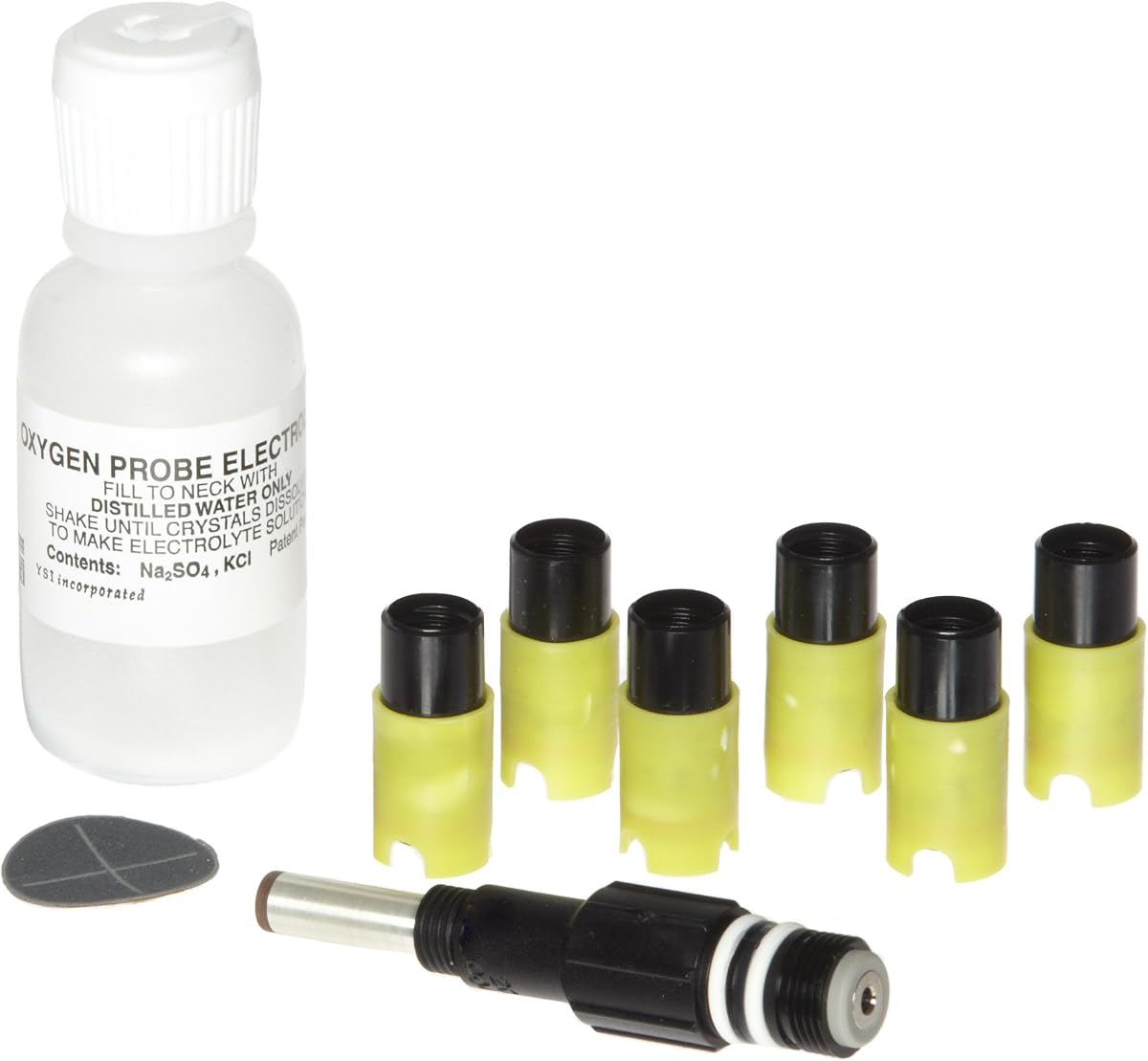
The YSI-605202 is a premium galvanic sensor rated 4.8 for its ease of use and reliability. It is designed for users who value minimal downtime during maintenance.
We may earn a commission when you buy through this link, at no additional cost to you.
Its user-replaceable sensor design requires no tools making swaps quick and simple. Screw-on cap membranes simplify changes reducing the risk of damage during upkeep.
With six membrane caps and a bottle of solution included you are prepared for multiple maintenance cycles. This convenience adds significant value over the long term.
Best for professional aquaculture or industrial monitoring this sensor reduces operational hassles. Its high rating reflects consistent performance and user satisfaction in demanding settings.
No tools are necessary to replace the sensor or membranes allowing quick upkeep without specialized equipment.
Six membrane caps and solution are included reducing the need for immediate additional purchases after setup.
We may earn a commission when you buy through this link, at no additional cost to you.
The Zopsc DO Tester pairs wirelessly with smartphones for real-time water quality monitoring. Its floating waterproof design makes it ideal for field testing in ponds or tanks.
We may earn a commission when you buy through this link, at no additional cost to you.
The app supports eight languages and allows data export via email simplifying reporting for teams. A 500 mAh battery ensures up to five days of continuous operation per charge.
Smart power management dims the display to conserve energy ensuring readiness for long monitoring sessions. This feature is valuable for remote locations with limited power access.
Best for field researchers or aquaculture workers needing mobile access to data this tester offers convenience without sacrificing reliability. It is a practical tool for modern on-site analysis.
Pairs with mobile devices within ten meters enabling real-time data transmission without cumbersome wires during testing.
Sealed ABS housing and float capability protect internal circuits ensuring reliable performance in wet environments.
We may earn a commission when you buy through this link, at no additional cost to you.
The YSI DO200 Kit provides a reliable portable solution for water quality testing. It features high resolution of 0.01 ppm ensuring precise measurements for various applications.
We may earn a commission when you buy through this link, at no additional cost to you.
Automatic temperature compensation and manual salinity inputs allow accurate readings across conditions. Screw-on cap membranes make maintenance straightforward without requiring extra tools.
Its compact design and battery operation suit fieldwork or lab use. The included 9V battery ensures it is ready to use upon arrival.
Best for schools or small labs this kit balances cost and performance. It offers the reliability of YSI at a value-friendly price point for entry-level needs.
A resolution of 0.01 ppm ensures precise detection of dissolved oxygen levels critical for sensitive environments.
Battery powered and compact design allow easy transport to different testing sites without external power needs.
We may earn a commission when you buy through this link, at no additional cost to you.
The YSI 6900 ProDSS is an optical sensor that eliminates the need for membranes or electrolytes. This reduces maintenance significantly while providing highly reliable dissolved oxygen readings.
We may earn a commission when you buy through this link, at no additional cost to you.
Compatible with ProDSS systems it integrates seamlessly into professional water quality monitoring networks. Its industrial grade design ensures durability in challenging environments over time.
Optical technology offers fast response times and long-term stability making it ideal for continuous monitoring. This lowers operational costs associated with consumable replacements in the long run.
Best for facilities requiring low maintenance and high uptime this sensor is a top choice. It represents the future of dissolved oxygen sensing with minimal upkeep requirements.
Optical sensing means no membranes or electrolytes are required reducing maintenance tasks and consumable costs.
Built for industrial grade use ensuring consistent performance in demanding environmental or aquatic monitoring scenarios.
We may earn a commission when you buy through this link, at no additional cost to you.
The DAN&DRE Portable Meter simplifies water testing with one-touch calibration and intelligent features. It is designed for users who need reliable results without complex setup steps.
We may earn a commission when you buy through this link, at no additional cost to you.
Its modular design allows easy electrode replacement extending the meter's life at lower costs. Intelligent temperature compensation ensures accurate readings across a range of water temperatures.
With a response time under fifteen seconds it delivers real-time data for quick decisions. This speed is valuable for dynamic environments where conditions change rapidly.
Best for household aquariums or small fish farms this meter offers simplicity and reliability. It lowers the barrier to entry for accurate water quality management.
Automatic 0 and 100 percent calibration buttons save time and guarantee reliable readings with every test.
The instrument splits into sensor and electronic parts allowing easy electrode replacement to reduce costs.
We may earn a commission when you buy through this link, at no additional cost to you.
This Dissolved Oxygen Meter comes fully equipped with filling fluid calibration powder and spare membranes. Its 0-40 mg/L range covers most needs for aquariums aquaculture and general water testing.
We may earn a commission when you buy through this link, at no additional cost to you.
Automatic temperature compensation and two-point calibration ensure accurate results with minimal effort. The large LCD screen clearly displays data for easy reading in various lighting conditions.
With up to 2000 hours of battery life it supports extended use without frequent battery changes. Extra batteries and spare parts included add convenience for long-term ownership.
Best for beginners or small operations this kit provides everything needed to start. It balances affordability with essential features for consistent water quality monitoring.
Includes meter probe fluids calibration powder and batteries ensuring immediate use without additional purchases.
The 0 to 40 mg/L measurement range accommodates diverse testing needs from household aquariums to small farms.
We may earn a commission when you buy through this link, at no additional cost to you.
Selecting the right dissolved oxygen sensor requires evaluating several key factors based on your specific application and environment.
Galvanic sensors offer instant readings without polarization making them ideal for intermittent use. Polarographic sensors provide high precision but may require stabilization before measurement.
Choose galvanic for quick testing and polarographic for high accuracy laboratory applications.
Ensure the sensor covers your expected oxygen levels typically between 0 and 20 mg/L for most aquaculture. Wider ranges may be necessary for specialized industrial applications.
Select a range that matches your typical water conditions to avoid inaccurate readings.
Look for sensors with automatic or simple two-point calibration to maintain accuracy. Complex setups can be time-consuming for daily testing routines.
Prioritize models with one-touch calibration for consistent results with minimal effort.
Sensors used in fieldwork should have waterproof and shock-resistant designs. Lab-grade units may prioritize precision over ruggedness.
Choose builds that withstand your specific environment to extend device lifespan.
Consider how often membrane caps or electrolytes need replacement. Optical sensors reduce consumable needs compared to electrochemical ones.
Evaluate long-term costs of consumables when selecting your sensor.
Modern sensors may offer Bluetooth or wired connections to smartphones or computers. This simplifies data logging and reporting.
Select connectivity that matches your workflow and record-keeping needs.
Portable units often run on batteries with varying lifespans. Ensure the power source supports your typical testing duration without interruption.
Choose models with long battery life for fieldwork applications.
Ensure the sensor works with existing meters or systems. Some units are standalone while others require a controller.
Verify compatibility to avoid integration issues or extra hardware costs.
Before use ensure the sensor is calibrated using the recommended buffer solutions. Follow manufacturer instructions for two-point calibration to ensure accuracy across your measurement range.
Submerge the probe fully in the water sample avoiding air bubbles on the membrane surface. Allow time for the reading to stabilize before recording data for reliable results.
After each use rinse the probe with deionized water and store it in a moist environment. Replace membranes or electrolytes as scheduled to maintain sensor performance over time.
Calibration ensures the sensor provides accurate readings by compensating for environmental factors. Without regular calibration drift can occur leading to incorrect measurements.
Membranes typically need replacement every few months depending on usage frequency and water conditions. Check manufacturer guidelines for specific intervals to maintain accuracy.
Galvanic sensors provide instant readings without stabilization while polarographic sensors require a stabilization period. Each has benefits depending on your testing needs and environment.
Yes but salinity must be compensated for during measurement to ensure accuracy. Many meters have manual salinity inputs for correct readings.
Temperature impacts oxygen solubility so compensation is vital for accuracy. Automatic temperature compensation adjusts readings based on water temperature.
Optical sensors reduce maintenance needs and eliminate electrolytes. They are ideal for long-term deployments with limited upkeep access.
The top picks highlight excellent options across various user needs and budgets. Whether you seek IoT integration or lab precision there is a model to suit your setup.
Prioritize durability and ease of calibration to minimize operational downtime. Selecting the right sensor depends on balancing accuracy with maintenance requirements.
Always verify current pricing and availability before purchasing since these details can change over time. This ensures you get the best value for your water quality monitoring investment.