
PCIE-1394A 4-Ports
4.4Editor score
Supports IEEE 1394A FireWire 400
Four ports with cables included
Plug and Play on Windows OS
Discover the top Firewire audio interfaces for PC with this expert guide comparing speed, compatibility, and performance for professional audio recording needs.
Finding the right audio interface for your PC setup is crucial for professional sound quality. Firewire interfaces offer stable connections and high bandwidth, making them ideal for demanding recording environments where latency matters most.
This guide compares ten top-rated options ranging from budget expansion cards to premium studio interfaces. We evaluated each product based on connectivity, driver support, and overall value for Windows desktop users seeking reliable audio performance.
Each pick highlights key features and real-world applications to help you choose wisely. Please note that prices and availability can change frequently, so always check the latest listings before making your final purchase decision today.
4.4Editor score

4.6Editor score

5.0Editor score
This side-by-side comparison highlights the core specifications and features of each ranked product to help you quickly identify the best match for your specific recording needs and budget constraints.




The PCIE-1394A 4-Ports stands out as a highly affordable solution for users needing Firewire connectivity on modern desktop PCs. Rated 4.4 stars, this expansion card allows you to interface older 1394A devices like camcorders and hard drives seamlessly.
We may earn a commission when you buy through this link, at no additional cost to you.
Its key strength lies in supporting the IEEE 1394A FireWire 400 protocol with automatic speed negotiation. The card offers four ports including both 6-pin and 4-pin configurations, ensuring compatibility with a variety of legacy hardware without extra adapters.
While some users might need to install legacy drivers for specific Windows versions, the plug-and-play nature makes setup generally straightforward. This trade-off is acceptable given the low cost and the specific need to revive old audio or video equipment.
This product is ideal for technicians or hobbyists maintaining older studios or industrial setups. If you need a simple bridge between new PCs and legacy Firewire devices, this card delivers reliable performance at an unbeatable price point.
This card breathes new life into DV camcorders and external drives by providing reliable connectivity that modern ports lack.
Having both 6-pin and 4-pin ports means you can connect different device types simultaneously without needing hubs.
We may earn a commission when you buy through this link, at no additional cost to you.
The RME Fireface UFX II is a top-tier USB audio interface designed for professionals who demand high fidelity and extensive I/O options. With a perfect 5.0 star rating, it delivers studio-grade sound quality suitable for critical recording and mixing tasks.
We may earn a commission when you buy through this link, at no additional cost to you.
Its main advantage is the massive 30-in/30-out channel capacity combined with direct USB recording capabilities. The included ARC USB remote allows for precise control over levels and routing without touching the front panel of the interface.
The high price is a significant consideration for most buyers, but the durability and feature set justify the investment for serious studios. Users praise its stability and the seamless integration with both Mac and PC environments.
If you run a professional recording facility and need reliable performance with extensive routing flexibility, this interface is an excellent choice. It represents the pinnacle of RME engineering for high-end audio workflows.
The 24-bit/192kHz resolution ensures that every nuance of your performance is captured with pristine clarity.
ARC USB integration gives you physical control over the interface, which is vital for complex mixing sessions.
We may earn a commission when you buy through this link, at no additional cost to you.
The M-AUDIO M-Track Duo is a versatile entry-level interface perfect for podcasters and home recordists. Rated 4.4 stars, it covers recording, live streaming, and podcasting needs with a simple plug-and-play USB connection.
We may earn a commission when you buy through this link, at no additional cost to you.
Key strengths include transparent Crystal Preamps that handle various microphones well and the inclusion of MPC Beats software. This added software value makes it a complete package for beginners looking to start producing music immediately.
While it lacks the higher 192kHz resolution found in premium units, the 48kHz quality is sufficient for most spoken word and music projects. The plastic chassis feels less robust than metal competitors but holds up well for light studio use.
This interface is highly recommended for those new to audio recording who want immediate results without complex setup. The combination of decent sound quality and bundled tools makes it a standout value in the budget category.
The included MPC Beats software provides essential production tools so you can start creating right away.
A USB/Direct switch ensures you hear your recording in real time without any distracting latency.
We may earn a commission when you buy through this link, at no additional cost to you.
The Focusrite Scarlett 2i2 4th Gen is widely recognized as the industry standard for home studios. With a 4.6 star rating, it offers studio-quality sound and smart features that make recording easier for musicians and creators alike.
We may earn a commission when you buy through this link, at no additional cost to you.
Its standout feature is the Auto Gain system which sets perfect levels automatically, preventing clipping even in busy sessions. The Air mode adds a unique sonic character to vocals and guitars, enhancing the overall mix presence significantly.
While it lacks MIDI I/O which some users might need, the USB-C connectivity ensures fast data transfer. The included software suite is extensive, providing everything needed to record, mix, and master tracks professionally.
This interface remains the top recommendation for most users seeking a balance of quality, features, and ease of use. It is a safe investment that will grow with your skills and equipment over time.
Auto Gain takes the guesswork out of setting levels, ensuring you capture great takes without technical headaches.
Air mode enriches harmonics and adds presence, making your recordings sound more polished and professional.
We may earn a commission when you buy through this link, at no additional cost to you.
The RME Fireface UCX II serves as a versatile mid-range option for users needing more inputs than the Scarlett offers. Rated 4.3 stars, it supports macOS, Windows, and iOS making it a flexible choice for various recording environments.
We may earn a commission when you buy through this link, at no additional cost to you.
Its key strength is the 20-in/20-out channel capability which allows for complex recording setups without needing additional hardware. The USB 2.0 interface ensures stable data transfer rates suitable for multitrack recording sessions.
Users may find the range of features overwhelming initially, but the flexibility pays off for those with expanding needs. The build quality is typical of RME, ensuring durability and reliability in professional settings.
For those who need more than basic stereo inputs but do not require a full rack unit, this interface is ideal. It bridges the gap between entry-level interfaces and high-end studio solutions effectively.
Compatibility with iOS expands your recording possibilities by allowing direct recording from mobile devices.
Twenty input channels give you room to grow without needing to upgrade your hardware immediately.
We may earn a commission when you buy through this link, at no additional cost to you.
The RME Fireface UFX III represents the pinnacle of modern audio interface technology. With a perfect 5.0 star rating, it offers an incredible 94-in/94-out channel count and high-speed USB 3.0 connectivity for demanding studios.
We may earn a commission when you buy through this link, at no additional cost to you.
Its primary advantage is the onboard DSP effects which reduce CPU load during complex productions. The extensive digital I/O via ADAT and AES/EBU allows for seamless integration with other studio gear and rack units.
The price point is substantial and places this unit firmly in the professional realm. However, the performance and flexibility it offers justify the cost for high-end facilities that cannot afford latency or connectivity issues.
If you run a commercial studio where efficiency and channel capacity are paramount, this interface is the definitive choice. It sets a new standard for what a USB audio interface can achieve in terms of power and speed.
Built-in DSP effects mean your computer CPU can focus on other tasks while the interface handles effects.
USB 3.0 speeds ensure your setup can handle large projects without bottlenecks for years to come.
We may earn a commission when you buy through this link, at no additional cost to you.
The RME Fireface 802 FS is a robust interface designed for professionals who value reliability above all else. With a perfect 5.0 star rating, it consistently delivers high-quality audio across all channels without compromise.
We may earn a commission when you buy through this link, at no additional cost to you.
One of its standout features is the inclusion of two headphone outputs, which is rare for interfaces in this class. The DSP effects and extensive I/O options make it a central hub for complex recording and mixing workflows.
The price and size may be prohibitive for home users, but for a dedicated studio, it provides unmatched stability. Users appreciate the intuitive control surface and the consistent performance during long recording sessions.
This interface is ideal for engineers who need a central mixing and recording unit that rarely needs adjustment or reboot. Its reputation for reliability makes it a preferred tool for many industry professionals.
Two headphone outputs allow multiple musicians to monitor their performance simultaneously during tracking.
ADAT and S/PDIF I/O ensure you can connect digital mixers and recorders seamlessly.
We may earn a commission when you buy through this link, at no additional cost to you.
This modern Audio Interface offers high-fidelity recording at an accessible price point with a sleek design. Rated 4.4 stars, it features a USB-C connection and supports up to 24-bit/192kHz resolution for clear and detailed audio capture.
We may earn a commission when you buy through this link, at no additional cost to you.
The inclusion of a loopback function makes it particularly suitable for live streamers who need to mix system audio with voice inputs. The sturdy alloy build and illuminated control rings add a premium feel to the unit.
While it lacks the extensive support of major brands, the performance speaks for itself with reliable zero-latency monitoring. This makes it a practical choice for content creators who want professional results without high costs.
If you are looking for a compact and stylish interface for streaming or basic recording, this unit is a strong contender. It balances essential features with a modern aesthetic that fits well in home studio environments.
Loopback capability allows you to stream system sounds and your voice together effortlessly.
The 24-bit/192kHz resolution ensures your recordings capture the full dynamic range of your instruments.
We may earn a commission when you buy through this link, at no additional cost to you.
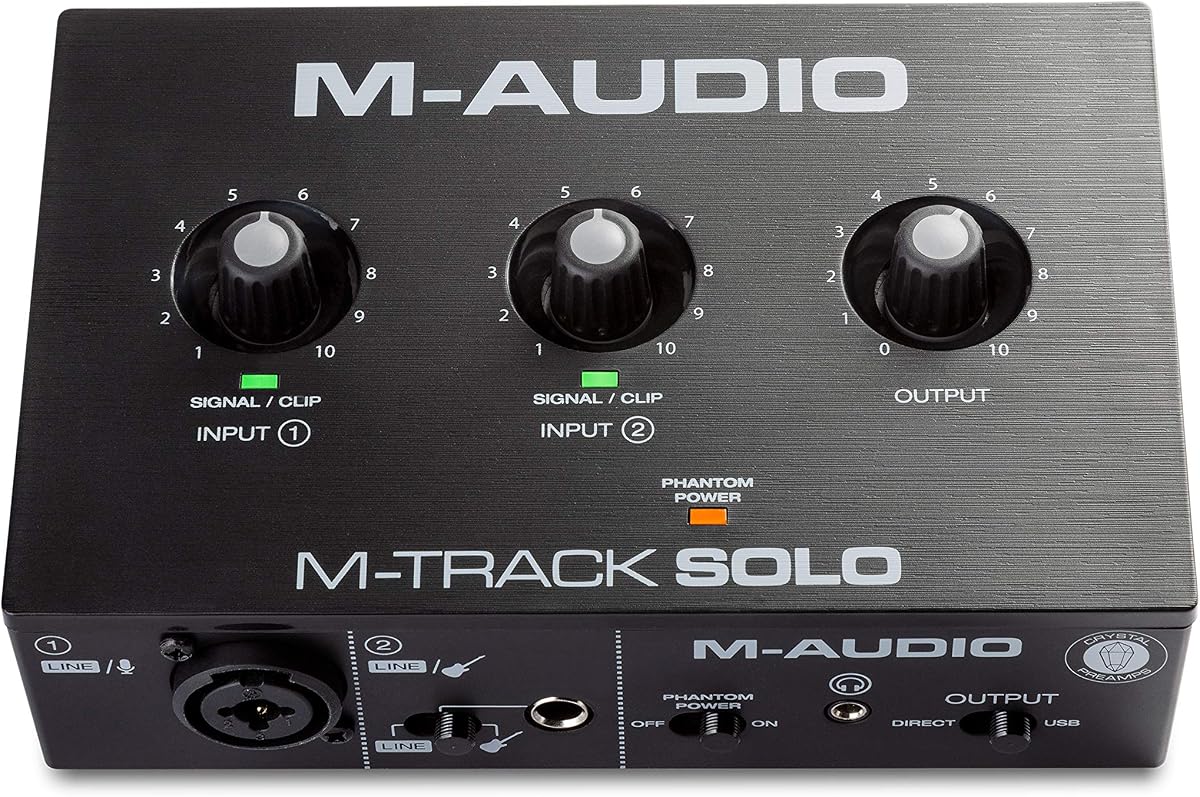
The M-AUDIO M-Track Solo is designed for solo performers who need a straightforward way to record vocals or instruments. With a 4.3 star rating, it simplifies the recording process with a clear layout and essential features.
We may earn a commission when you buy through this link, at no additional cost to you.
It offers one combo XLR input and one line/instrument input along with RCA outputs for connecting to other gear. The transparent Crystal Preamp ensures that your microphone sounds natural and clear during recording sessions.
The limitation to one input channel means you cannot record multiple sources simultaneously, which may restrict certain applications. However, for podcasting or single instrument tracking, this limitation is often acceptable given the low price.
This interface is an excellent starting point for beginners who want to learn the basics of audio recording. The bundled software helps you start making music immediately without needing additional purchases or setup complexity.
With zero latency monitoring, your voice is heard in real time which is vital for smooth podcasting.
MPC Beats software is included so you have a full production suite available right out of the box.
We may earn a commission when you buy through this link, at no additional cost to you.
The PreSonus AudioBox 96 25th Anniversary edition honors a legacy of reliable audio interfaces with solid performance. Rated 4.3 stars, it delivers studio-grade converters and high-quality preamps suitable for personal and portable recording.
We may earn a commission when you buy through this link, at no additional cost to you.
It features two high-headroom instrument inputs that can handle guitars and basses without distortion easily. The bundled software value is significant, including Studio One Artist and Ableton Live Lite to support your production journey.
While it relies on older USB 2.0 technology, it remains compatible with most modern computers and offers bus power for portability. The inclusion of MIDI I/O makes it more versatile than many competitors at this price point.
For those who value a balanced feature set including MIDI and DAW software, this interface is a smart choice. It is a robust tool that offers professional results without demanding an excessive budget or power supply.
MIDI I/O lets you connect keyboards and controllers for full music production capabilities.
Bus power means you can take your setup anywhere without needing extra cables or adapters.
We may earn a commission when you buy through this link, at no additional cost to you.
Selecting the right audio interface depends on your specific recording needs and system capabilities. This guide breaks down the essential factors to consider before making your purchase.
Firewire interfaces require a specific card or port which modern PCs may not have natively. Ensure your desktop has an available PCIE slot or USB adapter support for the chosen interface.
Always check your motherboard specifications before buying to confirm compatibility with the required connection standards.
The number of inputs and outputs determines how many instruments or mics you can record simultaneously. Consider whether you need stereo recording or multitrack sessions for bands.
Select a channel count that matches your typical recording needs without overpaying for unused capacity.
Legacy Firewire devices may require specific drivers that can be challenging to find on modern operating systems. Research the availability of updated drivers for your Windows version before purchasing.
Look for interfaces with robust driver support to avoid installation issues and ensure stable performance.
Many interfaces come with DAW software that can save you money on additional tools. Check which programs are included and whether they meet your production requirements.
Prioritize packages that include professional editing software to enhance the value of your purchase.
Interfaces made from metal tend to be more durable and resist damage during transport better than plastic models. Physical durability is important for portable setups or frequent use.
Invest in a sturdy chassis if you plan to move your equipment regularly between locations.
Prices vary widely between basic expansion cards and premium studio units. Set a clear budget that aligns with the quality and features you realistically need.
Balance cost with performance to find an interface that offers the best value for your specific situation.
The quality of the microphone preamps directly affects the clarity of your recordings. High-quality preamps provide more gain and less noise which is essential for professional results.
Read reviews focusing on preamp noise floors to ensure clean recordings even with low output microphones.
Zero latency monitoring allows you to hear your recording in real time without delay. This feature is critical for keeping performance in time and feeling natural.
Look for interfaces with direct monitor switches to manage latency effectively during recording.
Begin by installing the necessary drivers from the manufacturer website before connecting the hardware. Proper installation ensures that your computer recognizes the device immediately upon connection.
Connect the interface to your PC using high-quality cables and secure all connections tightly. Check that your audio settings in the operating system are configured to use the interface as the default device.
Regularly update your drivers to maintain compatibility with new operating system updates. Keep the unit clean and free from dust to prevent overheating and ensure long-term reliability.
A Firewire audio interface connects audio gear to your PC for recording and playback. It provides high bandwidth and low latency which is essential for professional music production and live streaming.
Most modern PCs do not include native Firewire ports. You will likely need a PCIE expansion card or a USB adapter to connect a Firewire interface to newer computers.
USB is more common and easier to use for most home users. However, Firewire can offer lower latency and better performance in certain professional scenarios where stability is paramount.
Yes, installing specific drivers is crucial for optimal performance and compatibility. Generic drivers may work for basic tasks but specialized drivers reduce latency and improve audio quality.
Most interfaces require a computer to process and store audio data. Some models allow direct monitoring but full recording capabilities depend on a connected PC or mobile device.
A standard sample rate of 48kHz is suitable for most music and video projects. Higher rates like 96kHz or 192kHz are useful for high-fidelity work but require more storage space.
Use direct monitoring features on the interface to hear inputs without delay. Also ensure your buffer size is set low enough in the audio software for real-time performance.
Many modern interfaces support both Mac and PC systems. However, always verify compatibility with your specific operating system version before purchasing to avoid driver issues.
Choosing the right audio interface for your PC involves balancing performance, connectivity, and budget. The models listed above offer a range of solutions from affordable expansion cards to premium studio units.
Focus on what matters most to your workflow such as channel count or software tools when making your final decision. Prioritizing essential features will help you find the best fit for your studio setup.
Always check current availability and pricing before purchasing since these values can change frequently. With the right interface, you can ensure professional sound quality and reliable recording experiences for years to come.