
SOLPERK Solar Panel Kit
4.5Editor score
20W monocrystalline cells
Built-in charge controller
Waterproof durable frame
This guide compares the top marine solar panels for boats in October 2026, evaluating efficiency, durability, and features to help you choose the right solar
Marine solar panels are essential for keeping your boat's batteries charged while you are away from shore power. They provide reliable energy for electronics, lighting, and essential systems. Choosing the right panel ensures you stay powered up during long voyages or weekend trips.
We evaluated ten top-rated marine solar panels based on efficiency, durability, and specific marine features. Our analysis covers rigid and flexible options from trusted brands like Renogy and Callsun. Each product was reviewed for performance in harsh maritime environments.
This guide highlights the best picks for budget, premium, and overall performance. You will find detailed specs and pros for every option listed. Please note that product prices and availability can change frequently over time.
4.5Editor score

4.8Editor score
4.6Editor score
The following table provides a side-by-side comparison of all ten selected marine solar panels. It highlights key specifications to help you quickly identify the best fit for your specific boat size and power requirements.


This Callsun panel stands out as the top choice for marine applications due to its impressive 25.6% efficiency and bifacial technology. It offers a robust solution for boaters needing reliable power generation even in challenging conditions.
We may earn a commission when you buy through this link, at no additional cost to you.
The N-type cells ensure high performance while the bifacial design captures reflected light from the deck to boost total output. The dual-module anti-shade design is crucial for boats where rigging or masts may cast shadows.
While the price point is higher than standard panels, the energy gain and reliability justify the cost for serious off-grid use. The low temperature coefficient ensures you lose minimal power during hot summer days on the water.
Boaters seeking maximum efficiency and durability should strongly consider this model for their solar array needs.
The transparent backsheet captures reflected sunlight to significantly increase energy harvest beyond standard panels.
Independent parallel sections allow the panel to keep producing power even when part of the surface is blocked.
We may earn a commission when you buy through this link, at no additional cost to you.
The SOLPERK kit offers an accessible entry point for marine solar power with its low cost and included controller. It is perfect for maintaining small batteries on smaller boats or tenders without complex wiring needs.
We may earn a commission when you buy through this link, at no additional cost to you.
Its monocrystalline cells provide decent efficiency while the built-in controller prevents overcharging. The adjustable bracket helps you optimize sun exposure throughout the day for better charging results.
Though it cannot power large systems alone, it excels at keeping auxiliary batteries topped up. The robust frame ensures it withstands marine environments without rusting quickly.
For boat owners on a tight budget needing basic trickle charging, this kit is a solid and reliable choice.
Everything needed for installation is included in the box to simplify the setup process for users.
The upgraded controller improves charging efficiency significantly compared to standard basic charge regulators.
We may earn a commission when you buy through this link, at no additional cost to you.
SUNER POWER delivers a smart charging solution with its Ultra-Smart MPPT controller that maximizes power harvest. This makes it more efficient than PWM controllers for maintaining marine batteries during shorter sun exposure.
We may earn a commission when you buy through this link, at no additional cost to you.
The visual indicators let you see exactly how charged your battery is at a glance. Selectable modes for AGM and Lithium ensure the charging algorithm matches your specific battery chemistry perfectly.
While the wattage is low, the smart features make it superior to basic kits. Safety features like over-voltage protection give peace of mind when leaving the system unattended for long periods.
Boaters wanting smarter monitoring and battery care without high wattage will appreciate this detailed functionality.
MPPT technology constantly adjusts to find the peak power point for better energy extraction.
Built-in protections prevent damage from overcharging or short circuits to extend battery life.
We may earn a commission when you buy through this link, at no additional cost to you.
This Renogy panel combines high efficiency with trusted durability for marine use. The N-Type cells ensure it outperforms standard panels while the aluminum frame resists salt and corrosion well.
We may earn a commission when you buy through this link, at no additional cost to you.
The 16BB technology helps prevent microcracks from vibration which is common on boats. Its low degradation warranty gives confidence that output will remain high for many years of service.
While it requires a flat mounting surface, the robust construction handles wind and wave spray effectively. It is an excellent mid-wattage option for powering standard onboard electronics.
For those needing a reliable standard panel with proven longevity, this Renogy model is a top contender.
Low degradation ensures the panel maintains 80% output after twenty five years of marine use.
Advanced cell design reduces risks from microcracks caused by constant boat movement and vibration.
We may earn a commission when you buy through this link, at no additional cost to you.
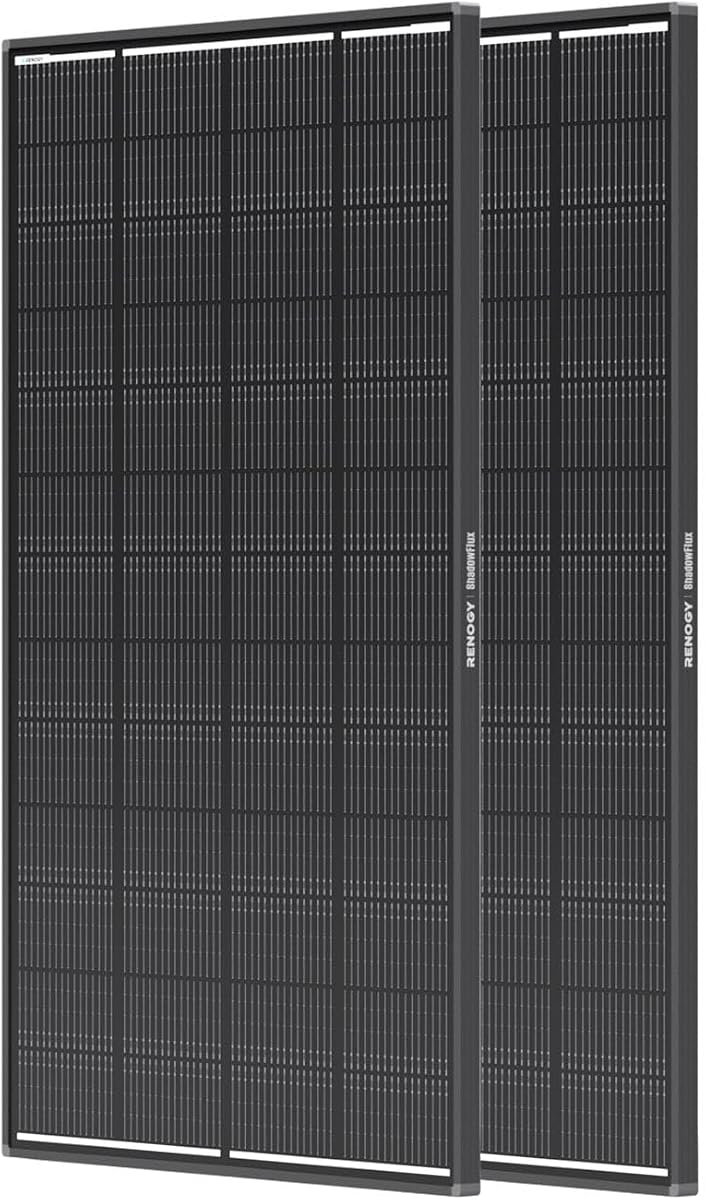
The ShadowFlux technology is a game changer for boats with masts or rigging that cast shadows. This panel mitigates the power loss typically caused by partial shading issues on deck areas.
We may earn a commission when you buy through this link, at no additional cost to you.
Its lightweight rigid design makes it easier to handle during installation compared to other 200 watt panels. The N-Type cells ensure high performance even if the boat moves or tilts slightly.
While not flexible, its shade tolerance makes it safer for complex boat layouts. The compact size helps save valuable roof space while delivering strong power output.
Mariners dealing with unavoidable shading should prioritize this model for consistent energy generation.
Advanced engineering reduces the negative impact of shadows so production stays steady during partial shading.
Smaller footprint allows fitting more power on limited roof areas compared to older designs.
We may earn a commission when you buy through this link, at no additional cost to you.
This flexible panel solves the problem of curved boat surfaces that rigid panels cannot fit. Its lightweight build makes it much easier to install on cabin roofs or curved decks using adhesive.
We may earn a commission when you buy through this link, at no additional cost to you.
The 240 degree bend capacity allows it to follow hull contours perfectly without gaps. PERC cell technology ensures efficient power conversion while the all-black look maintains a sleek aesthetic.
It is vital to install it on a clean and dry surface to ensure it stays secure in rough seas. With proper care, it offers a clean solution for adding solar power to complex shapes.
Boaters needing to fit panels on curves will find this flexible option indispensable for their setup.
Ultra-flexible design allows mounting on curved decks or hatches where rigid panels fail.
Weighing half of a rigid panel reduces top weight and eases mounting strain significantly.
We may earn a commission when you buy through this link, at no additional cost to you.
The 120 watt size hits a sweet spot for many boats needing power without bulk. Its compact dimensions allow installation in tight spots where larger 200 watt panels would not fit.
We may earn a commission when you buy through this link, at no additional cost to you.
With the same ShadowFlux tech as larger models, it handles partial shading well. The N-Type cells ensure high efficiency so you get strong power even from a smaller surface area.
This panel is excellent for adding incremental capacity to existing systems or for smaller craft. The durability ensures it stands up to the harsh conditions found on open water.
If space is at a premium on your boat this panel offers the right balance of size and power.
Smaller footprint allows installation in cramped spots on deck or cabin roofs effectively.
High efficiency cell tech delivers strong wattage relative to its reduced physical size.
We may earn a commission when you buy through this link, at no additional cost to you.
This massive 400 watt panel delivers serious power for large boats or off-grid systems. It consolidates two 200 watt outputs into a single compact unit to save valuable mounting real estate.
We may earn a commission when you buy through this link, at no additional cost to you.
The anti-shading technology ensures that even with complex rigging, energy production remains high. Its sturdy build withstands high winds and salt exposure making it ideal for serious marine expeditions.
While expensive, the high output means fewer panels are needed to reach energy goals. This reduces wiring complexity and installation effort significantly on larger vessels.
Boaters needing high capacity and efficient use of roof space should consider this powerful option.
Four hundred watts allows powering of air conditioning or larger appliances on board easily.
Compact design allows more power on limited roof space compared to standard setups.
We may earn a commission when you buy through this link, at no additional cost to you.
The 50 watt panel offers a step up from 20W while keeping smart monitoring features. Visual indicators let you track charge levels without needing a separate monitor on the boat.
We may earn a commission when you buy through this link, at no additional cost to you.
MPPT technology maximizes the harvest from the smaller panel so it is more effective. The included safety features protect your battery from overcharging even if left unattended.
It is perfect for small to mid sized boats needing slightly more charging than basic trickle kits. The smart charging adapts to your battery type for better health and longevity.
Those wanting more capacity with full visibility into charging status will love this kit.
Indicator lights show charge status clearly so you know battery state at all times.
Advanced controller optimizes current for different battery chemistries safely and efficiently.
We may earn a commission when you buy through this link, at no additional cost to you.
The POWOXI kit provides a tiny trickle of power to keep batteries from draining completely. It is ideal for boats sitting in storage for long periods between seasons.
We may earn a commission when you buy through this link, at no additional cost to you.
The compact size and frame make it easy to place on a dashboard or inside a cabin window. Safety features prevent damage to the battery ensuring safe unattended charging overnight.
While it cannot charge a battery from flat it maintains existing charge levels well. It is a budget friendly add-on to prevent dead batteries during winter layups.
Boaters looking for a simple maintenance fix for storage season should pick this compact unit.
Small size and low output are perfect for maintenance during long storage periods.
Tiny footprint allows placement on dashboards or windowsills without taking up space.
We may earn a commission when you buy through this link, at no additional cost to you.
Selecting the right marine solar panel involves understanding power needs, space limits, and environmental factors. This guide explains the key elements you must evaluate before buying.
Determine how much power your boat needs by calculating total daily watt-hour usage of electronics and systems. A small boat needing lighting may need only 20 to 50 watts while larger vessels with refrigerators may require 200 watts or more.
Always aim for a system that produces more power than your average daily usage to account for cloudy days and inefficiencies in the battery charging process.
Higher efficiency panels generate more power from the same amount of surface area which is crucial on smaller boats. Look for panels using modern N-Type or PERC cells which offer higher efficiency than older technologies.
Efficient panels cost more upfront but save valuable space and weight while delivering better performance in low light or hot conditions.
Assess the surface area available on your boat for installation. Curved surfaces require flexible panels while flat roofs work well with rigid frames. Ensure the mounting method can withstand marine wind and wave forces.
Use the right hardware such as stainless steel brackets or marine grade adhesives to secure the panel firmly and prevent it from being lost at sea.
Marine environments demand panels with high protection ratings against water and corrosion. Look for IP67 or higher ratings on junction boxes and connectors to handle salt spray and rain effectively.
Ensure the frame is made of corrosion resistant aluminum or durable plastic that will not degrade under UV exposure and salt air over time.
Shadows from masts or rigging can drastically reduce solar output on boats. Choose panels with anti-shading technology or bypass diodes that allow power production even when part of the panel is shaded.
Testing the layout or using software tools can help identify optimal placement to minimize shading issues during typical cruising conditions.
A strong warranty indicates manufacturer confidence and protects your investment against defects and degradation. Look for at least a five to ten year warranty on materials and longer output guarantees.
Check that the manufacturer has accessible support channels for technical advice in case issues arise during installation or operation on the water.
Solar panels range from affordable trickle chargers to expensive high efficiency systems. Set a budget based on your needs but remember that higher quality components often pay off in longevity and performance.
Balance upfront costs with long term value by choosing panels that offer high efficiency and durability to avoid replacing them too soon.
Start by cleaning the solar panel surface regularly to remove salt deposits and debris that block sunlight. Use fresh water and a soft cloth to ensure maximum light absorption without scratching the glass.
Connect the panels to a marine grade charge controller to regulate voltage and prevent battery damage. Ensure all cables are secured and protected from chafing against sharp edges or moving parts.
Inspect the mounting hardware and seals annually for signs of wear or corrosion. Replace any damaged seals or loose screws immediately to prevent water intrusion that could damage internal components.
Yes marine solar panels typically require a battery bank to store energy for use when the sun is not shining. Direct connection without storage is rare and generally unsafe for sensitive electronics on boats.
Flexible panels are lightweight and sit flush against the surface making them very resistant to wind lift. However proper adhesive or mechanical securing is still essential to prevent edge peeling or shifting.
You only need an inverter if you want to run AC appliances from your solar system. DC loads like lights and electronics can run directly off the battery bank with a DC to DC converter if needed.
High quality marine solar panels often last over twenty five years with minimal efficiency loss. Durability depends on the materials used and proper care to prevent salt and UV damage.
MPPT controllers are more efficient and harvest more power especially in varying light conditions. PWM controllers are cheaper but less efficient making MPPT the better choice for most marine systems.
Mixing different panel types or sizes can be tricky due to voltage and current mismatches. It is best to use panels with similar specifications to ensure balanced performance and safety in the array.
We reviewed ten top marine solar panels ranging from compact trickle kits to high output systems. Each option offers distinct advantages depending on your boat size and power requirements.
Prioritize efficiency and durability to ensure your solar setup performs reliably over years of exposure to harsh marine elements.
Prices and availability change frequently so check current listings to confirm the best deals for your specific needs today.